Iran's Supreme Leader Issues Defiant Warning to U.S. During Critical Nuclear Negotiations
In a tense atmosphere overshadowed by military posturing and diplomatic maneuvering, Iran's supreme leader delivered a stark warning to the United States on Tuesday, asserting that efforts to overthrow his government are doomed to failure. This declaration came as indirect talks between Washington and Tehran commenced in Geneva, aimed at resolving the long-standing nuclear dispute that has escalated with recent U.S. military deployments in the Middle East.
High-Stakes Talks Amid Military Buildup and Regional Drills
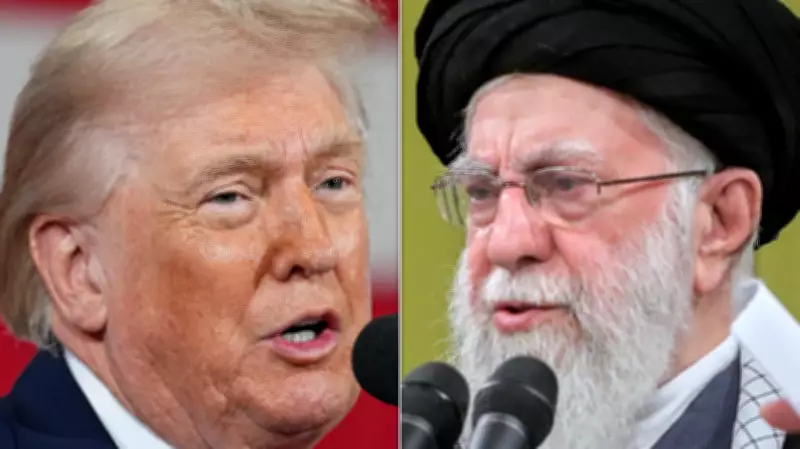
The negotiations, mediated by Oman, involve key figures such as U.S. envoy Steve Witkoff and Jared Kushner, alongside Iranian Foreign Minister Abbas Araqchi. These discussions unfold against a backdrop of heightened tensions, including a U.S. battle force deployment to the region and Iran's military drill in the Strait of Hormuz—a crucial waterway for global oil shipments. U.S. President Donald Trump has openly advocated for "regime change" in Iran, citing it as a potential positive outcome, while also claiming Tehran desires a deal to avoid severe consequences.
Trump remarked aboard Air Force One, "We could have had a deal instead of sending the B-2s in to knock out their nuclear potential. And we had to send the B-2s." This reference harks back to June, when U.S. B-2 bombers, in coordination with Israel, targeted Iran's nuclear facilities, leading Tehran to halt uranium enrichment activities temporarily.

Khamenei's Defiant Rhetoric and Iran's Stance on Sanctions
Shortly after the talks began, Iranian media circulated comments from Supreme Leader Ayatollah Ali Khamenei, who dismissed U.S. capabilities to force out his government. He stated, "The U.S. President says their army is the world's strongest, but the strongest army in the world can sometimes be slapped so hard it cannot get up." This defiant tone underscores the resilience of Iran's clerical rule, established since the 1979 Islamic Revolution.
A senior Iranian official emphasized that the success of the Geneva talks depends on the U.S. avoiding unrealistic demands and demonstrating seriousness in lifting crippling economic sanctions. These sanctions have exacerbated a cost-of-living crisis in Iran, sparking street protests that have weakened the Islamic rulers, with thousands of lives lost in the crackdowns.
Broader Issues: Nuclear Program, Missiles, and Regional Dynamics
The nuclear dispute centers on conflicting views: Washington and its ally Israel suspect Iran of aspiring to build a nuclear weapon, threatening Israel's existence, while Iran insists its nuclear program is peaceful, despite enriching uranium to levels near weapons-grade purity. Iran is a signatory to the Nuclear Non-Proliferation Treaty, which allows civilian nuclear power in exchange for forgoing atomic weapons, whereas Israel maintains a policy of ambiguity regarding its own nuclear capabilities.
Washington seeks to expand the talks to include non-nuclear issues like Iran's missile stockpile, but Tehran refuses, willing only to discuss nuclear curbs in exchange for sanctions relief. U.S. Secretary of State Marco Rubio noted the challenges in reaching a deal but affirmed the U.S. willingness to engage. The meeting, held at the Omani ambassador's residence in Geneva under heavy security, reflects the precarious nature of these negotiations, with U.S. officials preparing for potential military operations against Iran if ordered.
Economic and Global Implications
The tensions have ripple effects beyond politics, impacting global oil markets. Benchmark Brent oil prices dipped in Asian trade as investors weighed risks of supply disruption from the Strait of Hormuz drills. Iran's participation in these talks is crucial for regional stability, as Gulf Arab states advocate diplomacy to end the dispute. As both sides navigate these complex issues, the outcome of the Geneva talks could significantly influence Middle East geopolitics and international security frameworks.