Hamas Declares Readiness to Transfer Gaza Governance to Palestinian Committee
In a significant development reported by AFP, the Hamas militant group has stated it is ready to transfer governance of the Gaza Strip to a Palestinian committee. This announcement comes amidst the protracted and devastating Israel-Hamas war, which has resulted in immense human suffering and infrastructural damage across the coastal enclave.
A Potential Shift in Administrative Control
The declaration, if acted upon, could mark a pivotal moment in the political landscape of the region. For years, Hamas has maintained de facto control over Gaza since its takeover in 2007, following a brief conflict with the rival Fatah party. The group's governance has been characterized by its Islamist ideology and ongoing hostilities with Israel.
The reported willingness to cede administrative authority suggests a possible strategic recalibration. Analysts speculate this move could be aimed at easing international pressure, facilitating humanitarian aid delivery, or creating political space for broader Palestinian unity talks. However, the specifics of the proposed committee—its composition, mandate, and the conditions of the transfer—remain unclear at this time.

Context of Ongoing Conflict and Humanitarian Crisis
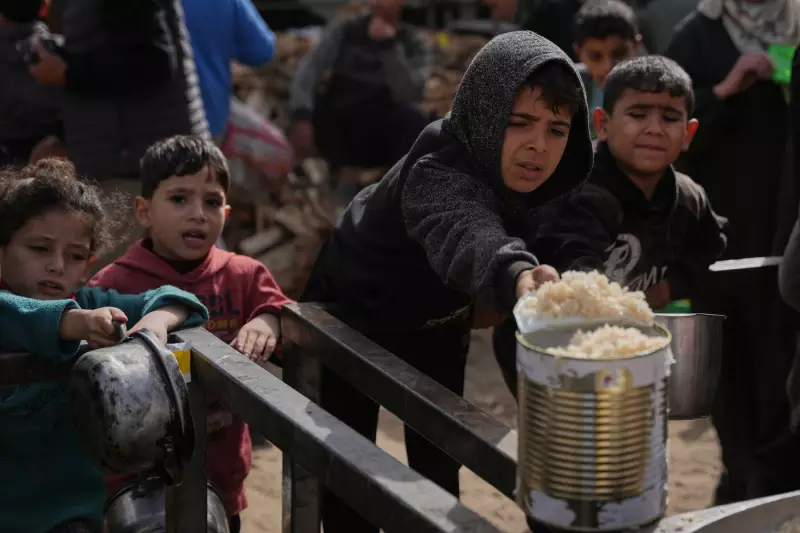
This news emerges against a backdrop of severe humanitarian distress in Gaza. Recent imagery from the central Gaza Strip, such as from Nuseirat, shows Palestinian children lining up for donated food at community kitchens, underscoring the dire need for basic sustenance among the civilian population. The conflict has severely disrupted food supply chains, healthcare, and essential services.
The war, which reignited in late 2023, has seen cycles of intense violence, ceasefires, and renewed fighting. The potential governance transfer is unlikely to immediately resolve the deep-seated political and security issues at the heart of the Israeli-Palestinian conflict. Key questions persist regarding security control, the future role of Hamas's military wing, and the stance of the Israeli government and other international actors.
Regional and International Implications
The development will be closely watched by regional powers and the international community. It could influence diplomatic efforts led by entities such as Egypt, Qatar, and the United States, who have previously mediated between the parties. The response from the Palestinian Authority, based in the West Bank, will also be critical, as it has long sought a reunification of Palestinian governance under its leadership.
For the people of Gaza, any change in administration must translate into tangible improvements in daily life—access to food, water, medicine, and reconstruction. The path from declaration to implementation is fraught with challenges, but this signal from Hamas introduces a new variable into the complex equation of the region's future.