WASHINGTON — Republican senators slammed the deal President Donald Trump’s administration negotiated to end his disastrous war on Iran, but twisted themselves into knots to avoid directly pointing a finger at anyone involved in the debacle.
The deal, which ultimately resembles a much weaker version of the nuclear deal former President Barack Obama’s administration negotiated a decade ago, is proving to be a bitter pill for the most hawkish members of the Senate Republican Conference, who seem reluctant to admit that long-sought-after military strikes on Iran achieved almost none of Trump’s stated goals.
Sen. Roger Wicker (Miss.), the chair of the Senate Armed Services Committee, said it looks like the U.S. “negotiated away” its military victories and that the economic benefits to Iran make the concessions given by Obama in 2015 look like “a pittance” by comparison. “President Trump has pursued peace through strength,” Wicker said in part of a lengthy, scathing statement. “I hope the intermediaries working on this deal are not undermining that objective.”

Sen. Ted Cruz (Texas) similarly blamed unnamed other members of the administration for the agreement, which Trump desperately sought as the unpopular war spiked oil and gas prices and ate away at the president’s already weak approval ratings. “History demonstrates that sending billions of dollars to theocratic lunatics who want to murder us is a very bad idea, and I think the president is receiving very, very poor advice on this deal,” Cruz told The Independent.
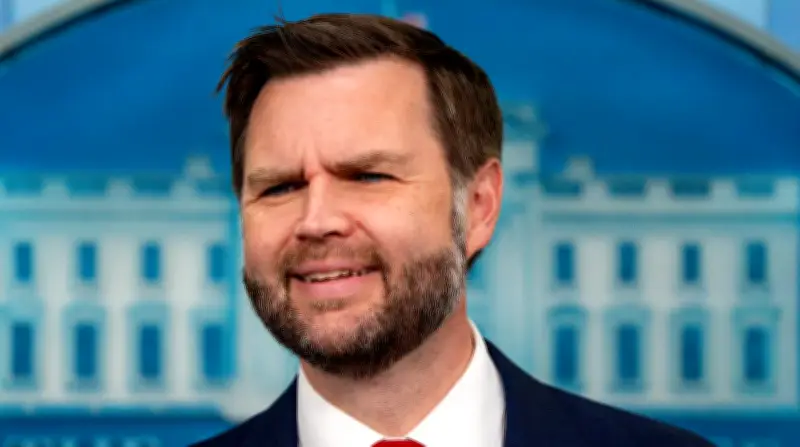
The barely hidden subtext of Cruz’s and Wicker’s statements is a finger pointed at Vice President JD Vance, who privately opposed the attack on Iran, helped negotiate the agreement to end the war and has been the public face of the administration’s efforts to sell the deal to the public. Vance had long advocated for a less militaristic foreign policy than most Republicans.
Vice President JD Vance on June 18 told reporters that today marks the start of the 60-day period for U.S.-Iran talks that should lead to a final agreement to end the war.
Trump joked Wednesday that his vice president would take the fall if the deal falls through. “If it works out, I’m going to take the credit. If it doesn’t work out, I’m blaming JD,” Trump said. Sen. John Cornyn (R-Texas), who lost his reelection bid last month after Trump endorsed his Republican primary opponent, said the president might have meant it. “It wasn’t a joke,” Cornyn told reporters, adding that he thought Trump struck a weak deal because the war is unpopular.
Sen. Thom Tillis (R-N.C.), an occasional Trump critic who often blames the president’s mistakes on unnamed advisers, defended Vance. “Nobody should judge the vice president or anybody based on the two-pager,” he said, referring to the brief memorandum of understanding outlining the deal. “People criticizing the two-page summary have never been involved in complex negotiations or have an agenda.”
The deal, which would give Iran sanctions relief and a $300 billion multinational redevelopment fund in exchange for reopening the Strait of Hormuz, also gives the U.S. and Iran 60 days to negotiate trickier aspects of any peace agreement, especially those surrounding Iran’s nuclear program. Without a bombing campaign, Obama had convinced Iran to allow international monitoring of those sites, a concession the Iranians are seen as unlikely to make today.
A major difference between then and now is that Iran won itself leverage by closing the Strait of Hormuz, which caused gas prices to rise. The subsequent political pain hurt the domestic standing of Western political leaders, including Trump.
The $300 billion fund, in particular, has rankled Republicans. “I just want to make sure the financial incentives are conditioned upon Iran’s performance,” Senate Majority Leader John Thune (R-S.D.) told reporters. Most Republicans withheld criticism of the president, with some saying they hadn’t read the document and others noting the MOU gives the two sides another 60 days to strike a final deal.

“It just sets up the parameters for starting the real negotiation, so it’s the document to figure out how we’re going to create the document,” Sen. James Lankford (Okla.) said. “If they continue on their quest to have a nuclear weapon, then we’ve lost, and so I think it’s just, we just got to play it out. I’m glad that the straits are opening up. I’m glad that gas prices are going down,” Sen. Jim Justice (R-W.Va.) told reporters.
The harshest comments, unsurprisingly, came from two comparatively moderate Republicans with a history of criticizing the president. “It doesn’t appear to me that it puts us in that much of a different position than prior to the beginning of the war,” Sen. Lisa Murkowski (R-Alaska) said. Sen. Bill Cassidy (R-La.), who lost his reelection bid last month after Trump endorsed one of his opponents, called the deal the worst foreign policy blunder in decades. “Before the war, the strait was open, Iran was being crushed by sanctions, and 13 service members were still alive,” Cassidy said in a statement Wednesday. “Now, 13 Americans are dead, families have paid billions at the pump, sanctions will be lifted, and the bombing has stopped.”