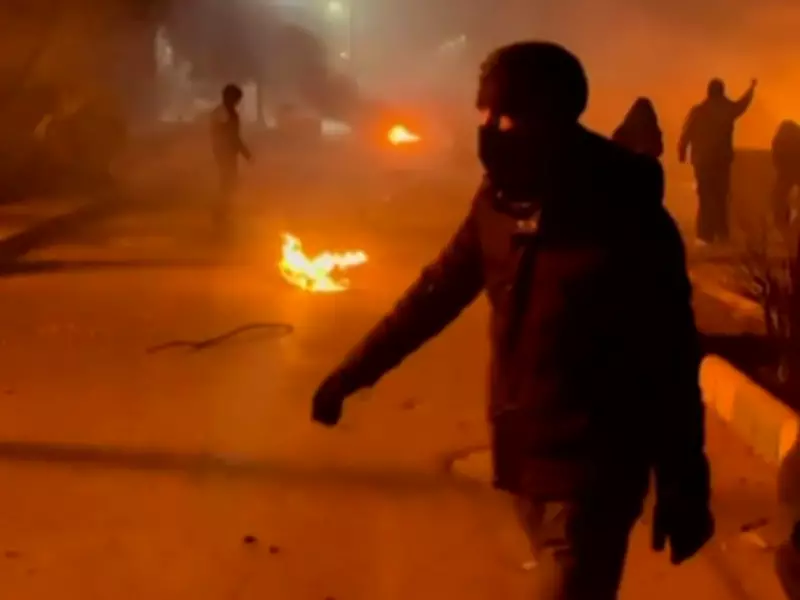
Edmonton Resident Voices Support for U.S. Military Action in Iran Amid Family Separation
On a quiet evening at Pub 1905 in Edmonton, the atmosphere is subdued. Only a handful of patrons occupy the pool tables along Jasper Avenue, with the bar manager multitasking as server and custodian after a minor spill. This ordinary scene belies the extraordinary personal burden carried by Iraj, the establishment's manager, who maintains his cheerful demeanor while anxiously awaiting his wife's arrival from Iran.
A Family Divided by Geography and Politics
Iraj, who immigrated to Canada at age nine, has been separated from his spouse, who resides in Mashhad, Iran's second-largest city. A carefully coordinated plan is underway to reunite them in Edmonton by autumn, with Iraj working closely with Canadian government officials to ensure all legal requirements are met. "I hope to travel abroad this fall to escort her back personally," he explained. "I don't want her navigating airports alone during such uncertain times."
The couple's separation has been compounded by escalating geopolitical tensions. Iraj last spoke with his wife two days following initial U.S.-Israeli military strikes in Iran, and communication has since been interrupted. Despite this worrying silence, he expresses strong support for the military intervention.

"Finally, Trump Strikes": A Perspective from Within
"She managed to contact me after the first strike," Iraj recalled. "When I asked if everyone was okay, her response was 'finally, Trump strikes.' That was our collective hope." His wife had reportedly grown disillusioned in the days preceding the attack, doubting whether Western powers would follow through on their threats. Iraj, however, remained convinced by the strategic military buildup.
"She thought they wouldn't actually attack and felt generally despondent," he said. "But I told her you don't mobilize that many troops without purpose—the fuel costs alone represent billions in expenditure."
Paradoxical Relief Amid ConflictRemarkably, Iraj reports feeling greater anxiety before the military action began than during the current conflict. "I was more frightened prior to the Trump attack because Iran operates as an open dictatorship," he revealed. "Now that action is underway, I sleep better, though prolonged uncertainty still weighs on me."
He acknowledges the human cost of the intervention while maintaining his support: "Unfortunately, the price for freedom sometimes includes the loss of lives over there. But my wife faced greater danger under an unchallenged authoritarian regime."
Hopes for Political Transformation
The death of Ayatollah Khamenei during initial attacks has fueled Iraj's hope for fundamental political change. His family originally left Iran to escape theocratic rule, and he now envisions a secular government emerging from the current turmoil. "I'm hopeful for regime change so my wife won't need to leave through clandestine means," he shared.
Due to security concerns, Iraj requested his last name be withheld, fearing Iranian authorities might connect him to his wife and complicate her departure. His story highlights the complex human dimensions of international conflicts, where geopolitical decisions directly impact personal lives and family reunification efforts.
The emotional toll of separation- Iraj maintains daily operations at his Edmonton pub while coordinating his wife's immigration
- Communication blackouts following military strikes have increased anxiety
- The couple follows established legal channels rather than emergency extraction methods
- Iraj balances hope for political change with concern for immediate family safety
As military operations continue, Iraj represents countless individuals worldwide whose family bonds are tested by international tensions, clinging to hope for both personal reunion and broader political transformation in his homeland.