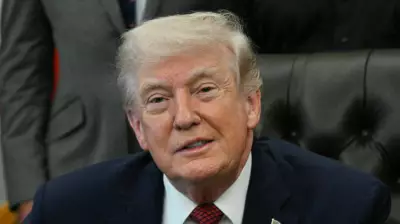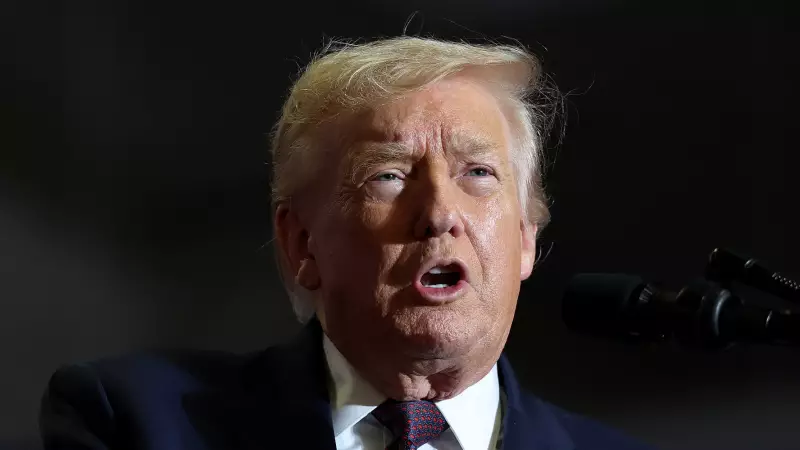
A group of Democratic senators has urgently called on President Donald Trump to reverse a recent order recalling close to 30 career ambassadors from posts worldwide. They warn the move creates a dangerous leadership vacuum at a time when global adversaries are actively seeking to expand their influence.
An Unprecedented Diplomatic Drawdown
The Trump administration, in the days leading up to December 24, 2025, ordered more than two dozen career diplomats serving across Europe, Asia, Africa, and Latin America to return to Washington. The stated goal is to ensure U.S. missions abroad reflect the administration's "America First" priorities.
In a letter addressed to President Trump and obtained by Reuters, ten Democrats on the Senate Foreign Relations Committee labeled the abrupt mass recall an "unprecedented move." They stated that no other administration has taken such action since Congress established the modern Foreign Service a century ago.

The senators emphasized that there is no clear plan to replace these experienced diplomats with qualified candidates. This recall exacerbates an existing problem, bringing the total number of empty U.S. ambassadorial posts to well over 100. This figure represents approximately half of all such American diplomatic positions globally.
Consequences for U.S. Global Standing
The lawmakers, including Senate Foreign Relations Committee ranking member Jeanne Shaheen and Senator Chris Murphy, outlined serious risks. They argued that as over 100 U.S. embassies operate without senior leadership, competitors like China and Russia will maintain regular, high-level communications with foreign leaders.
"We will have effectively abandoned" these relationships, the letter states, allowing adversaries to expand their reach and influence in ways that could limit or harm U.S. interests. They provided specific examples, noting that Washington would lack top-level presence in crucial regions from the Indo-Pacific to Africa, the Balkans, and Latin America.
This absence, they contend, puts the United States at a disadvantage in countering China's expanding economic influence. The senators highlighted that China has ambassadors in all of these countries, while U.S. posts sit empty.
A Clash With the "Deep State"
The recall fits a broader pattern of tension between the Trump administration and the federal bureaucracy. While political appointees traditionally leave when a new administration takes office, career diplomats are often considered bipartisan. They typically serve three to four years in overseas posts regardless of a change in government.
President Trump has long expressed suspicion of the bureaucracy, repeatedly pledging to "clean out the deep state" by removing officials deemed disloyal. In February 2025, he ordered Secretary of State Marco Rubio to revamp the U.S. Foreign Service to ensure his policies were "faithfully" implemented.
This recall follows other significant reductions at the State Department. In July 2025, the administration fired more than 1,300 State Department diplomats and civil servants. Combined with deferred resignations and early retirements, the total workforce reduction amounted to roughly 3,000 employees—more than 11% of its total foreign and civil service officers.
The State Department and the White House did not immediately respond to requests for comment on the senators' letter. However, a senior department official earlier in the week described the mass recall as "a standard process in any administration."
In their concluding appeal, the Democratic senators noted that the recalled ambassadors "have demonstrated their commitment to faithfully execute the policies of administrations of both parties for decades." They urged President Trump to reverse the decision immediately "before more damage is done to America’s standing in the world."