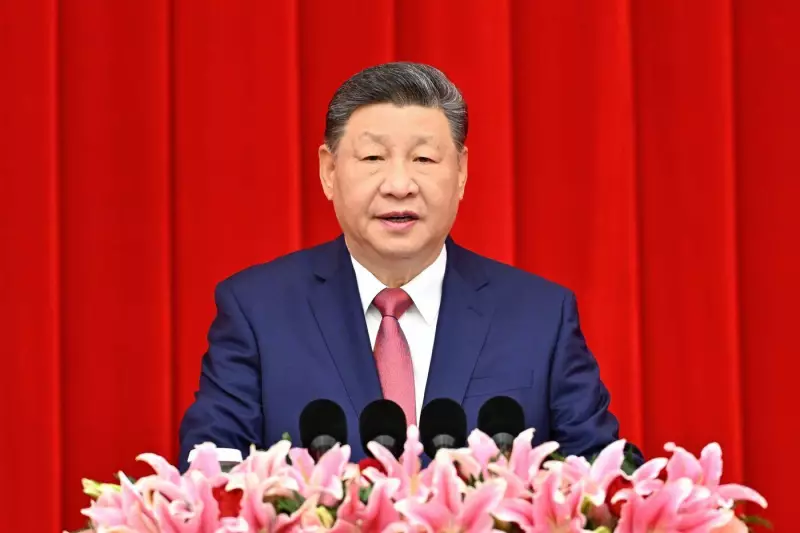
Chinese President Xi Jinping used his final public address of 2025 to celebrate the nation's strides in technological innovation while delivering a firm restatement of Beijing's long-standing goal to bring Taiwan under its control.
New Year's Address Focuses on Sovereignty and Innovation
The speech was delivered on Wednesday, December 31, 2025, at a New Year gathering in Beijing hosted by the National Committee of the Chinese People's Political Consultative Conference (CPPCC). Xi, who also serves as the general secretary of the Communist Party of China Central Committee and chairman of the Central Military Commission, framed technological self-reliance as a cornerstone of national strength.
While the Chinese leader did not unveil specific new policies, his remarks underscored the dual priorities that have defined his tenure: driving indigenous innovation to reduce foreign dependence and pursuing what Beijing calls the "complete reunification" of the motherland. The commitment to Taiwan was presented not as a new threat but as a persistent and unwavering national objective.

The Context of the Taiwan Pledge
Xi's renewed promise regarding Taiwan comes amid ongoing geopolitical tensions. China views the self-governing island democracy as a breakaway province that must eventually be reunited with the mainland, by force if necessary. This stance is consistently rejected by Taiwan's government, which maintains that only the island's 23 million people can decide their future.
The Chinese president's annual New Year's Eve speech is closely analyzed for signals on policy direction. This year's emphasis on technological progress aligns with China's massive state-led investments in sectors like semiconductors, artificial intelligence, and telecommunications, areas where it seeks to rival or surpass the United States and its allies.
Implications for International Relations
The juxtaposition of technological achievement with the Taiwan sovereignty claim is significant for Canada and other Western nations. It reinforces a Chinese foreign policy approach that links economic and technological prowess with the assertion of core national interests. For countries like Canada, which maintains unofficial ties with Taiwan and navigates a complex relationship with Beijing, such statements are a reminder of the persistent flashpoints in the Indo-Pacific region.
Analysts note that while the tone of the address was consistent with previous years, its timing at the close of 2025 sets a clear agenda for the coming year. The focus suggests that under Xi's leadership, China will continue to prioritize technological advancement as a means of securing its geopolitical goals, including its claims over Taiwan.