Carney's Pragmatic Foreign Policy Marks a Departure from Liberal Tradition
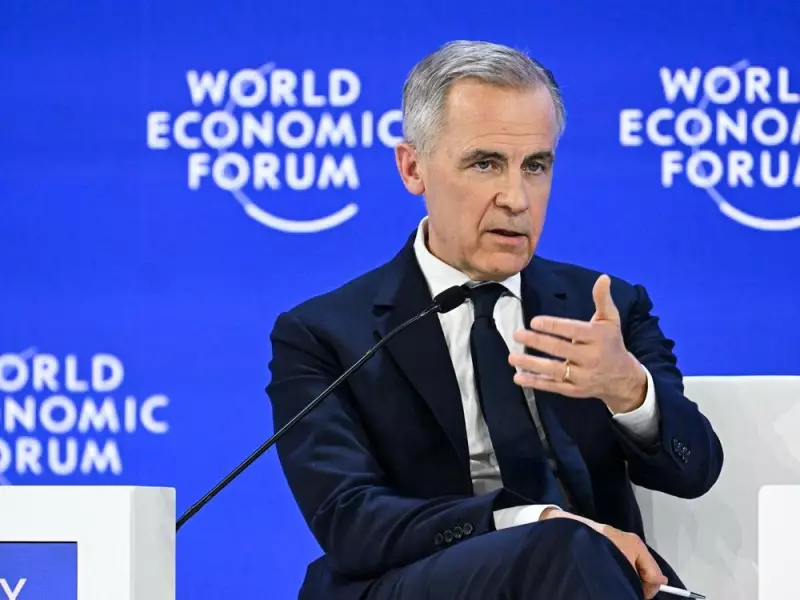
Prime Minister Mark Carney's recent statements at the World Economic Forum in Davos have signaled a significant shift in Canada's approach to international diplomacy. "The old order is not coming back. We should not mourn it," Carney declared, offering a bracing dose of realpolitik that contrasts sharply with the preening and pretence that characterized previous Liberal administrations.
A Changing Global Landscape
Carney's remarks come at a time when many Canadians are understandably preoccupied with the political turbulence in the United States. The reality, however, is that simply wishing for the departure of controversial figures like former President Donald Trump does little to advance Canadian interests. As Carney's approach suggests, Canada must adapt to a world where traditional alliances and expectations are being fundamentally reshaped.
The contrast between Carney's pragmatic stance and the approaches of his predecessors is particularly striking. Former Prime Minister Justin Trudeau often emphasized Canadian "soft power" and moral leadership, yet his tenure was marked by inconsistent policy responses to changing American administrations. When Joe Biden won the White House, Trudeau disbanded his cabinet committee on Canada-U.S. relations, only to re-establish it when Trump returned to power.

Three Approaches to Canadian Realpolitik
Examining the foreign policy approaches of three Liberal prime ministers reveals distinct philosophical differences:
- Jean Chrétien's Pragmatic Engagement: The former prime minister pursued trade missions with a focus on economic interests, often downplaying human rights concerns with a characteristic shrug and chuckle. His approach prioritized practical outcomes over moral posturing.
- Justin Trudeau's Moral Lecturing: Trudeau positioned Canada as a global moral authority, lecturing both international partners and domestic audiences while relying on Canada's reservoir of international goodwill—largely derived from not being the United States.
- Mark Carney's Unapologetic Realism: The current prime minister has embraced a more transparent form of pragmatic engagement, acknowledging uncomfortable realities while pursuing Canadian interests without the pretence of moral superiority.
The End of Pretence in Foreign Relations
Carney's willingness to engage with controversial regimes represents a significant departure from previous Liberal approaches. When he engages with Qatar despite its support for Hamas, or with China despite numerous human rights concerns, he does so without the moral window dressing that characterized earlier administrations.
This approach may be bewildering to some observers, particularly those accustomed to Canada's traditional role as a moral arbiter on the world stage. However, as Carney's remarks suggest, the era of relying on Canada's "wildly undeserved reserve of international goodwill" may be coming to an end. In a world where economic realities increasingly trump moral considerations, Carney's pragmatic approach acknowledges that pretence serves little practical purpose.
The prime minister's focus appears to be squarely on advancing Canadian prosperity and security in a rapidly changing global environment. While his outreach to certain regimes may cause discomfort, it represents a clear-eyed assessment of the challenges facing Canada in an era where traditional assumptions about international relations no longer hold.
As Canada navigates this new reality, Carney's approach suggests that the country must balance its values with practical considerations, engaging with the world as it is rather than as we might wish it to be. This represents not just a shift in tactics, but a fundamental rethinking of Canada's role in an increasingly complex and competitive global landscape.