Prime Minister Carney's Davos Address Signals End of Global Status Quo
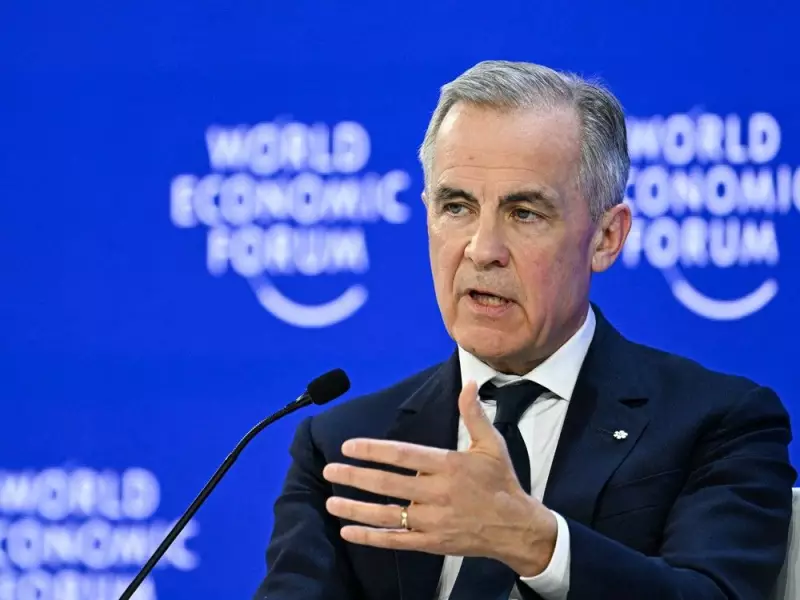
In a significant address at the World Economic Forum's annual meeting in Davos, Switzerland, Prime Minister Mark Carney delivered a powerful message about the transformation of international relations. Speaking on Tuesday during a plenary session attended by influential global leaders, Carney declared that "the old order is not coming back," marking a pivotal moment in discussions about Canada's role on the world stage.
A New Reality of Unconstrained Geopolitics
Carney began his speech in French, stating it was both a pleasure and a duty to address the forum at what he described as a turning point for Canada and the world. He outlined what he called "the rupture of the world order," characterizing it as the end of a pleasant fiction and the beginning of a brutal reality where great power geopolitics operates without constraints.
The Prime Minister emphasized that middle powers like Canada are not powerless in this new environment. He argued that these nations possess the capacity to construct a new order that integrates fundamental values including human rights respect, sustainable development, solidarity, sovereignty, and territorial integrity of states.

The Power of Honesty in International Relations
Carney made the compelling assertion that "the power of the less powerful begins with honesty." He noted that daily reminders of great power rivalry and the fading rules-based order have created an environment where Thucydides' ancient observation that "the strong do what they can, and the weak suffer what they must" has resurfaced as a presumed inevitability of international relations.
"Faced with this logic," Carney observed, "there is a strong tendency for countries to go along to get along. To accommodate. To avoid trouble. To hope that compliance will buy safety." He firmly rejected this approach, stating unequivocally that such compliance will not achieve security in the current global landscape.
Drawing Inspiration from Dissident Philosophy
The Prime Minister drew upon the work of Czech dissident Václav Havel, specifically referencing Havel's 1978 essay "The Power of the Powerless." Carney recounted Havel's analysis of how oppressive systems sustain themselves not primarily through violence, but through the participation of ordinary people in rituals they privately know to be false.
Carney described Havel's concept of "living within a lie," where systems maintain power not through truth but through collective willingness to perform as if they were true. The fragility of such systems, he noted, emerges from the same source: when even one person stops performing the expected rituals, the illusion begins to fracture.
A Call to Action for Nations and Corporations
Carney issued a direct challenge to both countries and corporations: "It is time for companies and countries to take their signs down." He referenced the metaphorical signs that entities display to signal compliance with systems they don't genuinely believe in, drawing a parallel to Havel's greengrocer who displays political slogans without conviction.
The Prime Minister reflected on Canada's historical position within the international framework, noting that for decades, Canada prospered under what was called the rules-based international order. The nation joined its institutions, praised its principles, and benefited from its predictability, while pursuing values-based foreign policies under its protection.
Carney's speech represents a significant articulation of Canada's evolving foreign policy perspective at a critical juncture in global affairs. His message emphasizes that middle powers must move beyond passive accommodation and actively participate in shaping a new international framework that reflects contemporary values and realities.