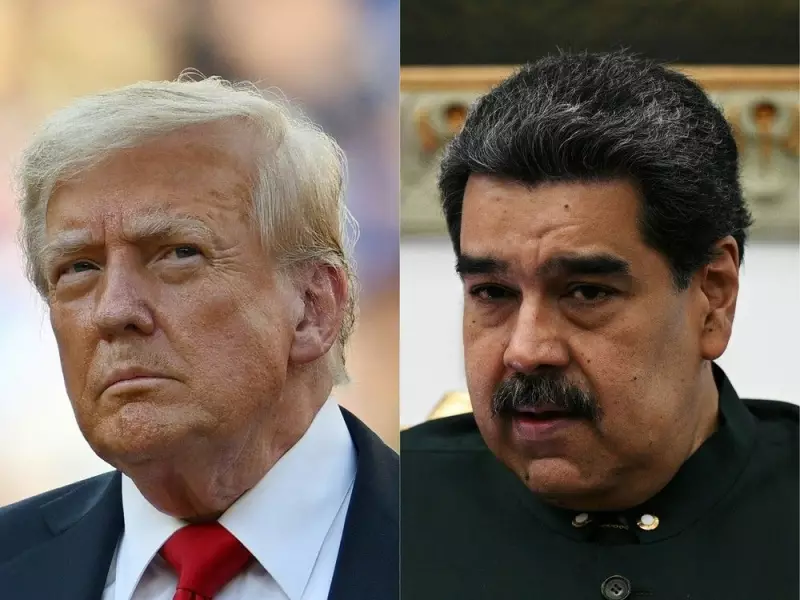
In a stunning development that has sent shockwaves through international diplomacy, U.S. military forces captured Venezuelan President Nicolás Maduro and his wife on January 3, 2026. The operation, ordered by U.S. President Donald Trump, resulted in the Venezuelan leader being transported to the United States to face charges of narco-terrorism conspiracy and other crimes in New York.
International Reactions and Canadian Stance
The dramatic capture has ignited a fierce global debate over sovereignty, international law, and the future of regime change. Venezuela immediately demanded an emergency meeting of the UN Security Council, calling the strikes an illegal act of war.
In Canada, Foreign Affairs Minister Anita Anand issued a statement on social media platform X, reiterating Canada's longstanding position. "Since 2019 when Canada closed its embassy in Venezuela, we have refused to recognize any legitimacy of the Maduro regime and opposed its repression of the Venezuelan people," Anand wrote. She called on all parties to respect international law and expressed solidarity with Venezuelans seeking a peaceful, democratic society.

Political Support and Opposition Voices
Conservative Leader Pierre Poilievre offered unequivocal support for President Trump's action. In a post on X, Poilievre congratulated Trump "on successfully arresting narco-terrorist and socialist dictator Nicolas Maduro, who should live out his days in prison." He argued that the legitimate election winner, Edmundo Gonzalez, should take office alongside opposition figure Maria Corina Machado.
Machado, who was awarded the Nobel Peace Prize in October 2025 while in hiding, had previously dedicated the award to the Venezuelan people and to Trump for his support. She hailed the military intervention as the "HOUR OF FREEDOM" for her country.
The Daunting Question of 'What Comes Next?'
While the removal of Maduro was celebrated by some, it immediately raised profound questions about the path forward. President Trump's declaration that the U.S. will 'run' oil-rich Venezuela until a safe transition of power evokes troubling memories of past regime change endeavors, notably the 2003 invasion of Iraq.
Complicating the political landscape, Trump surprisingly downplayed a leading role for opposition leader Maria Corina Machado, suggesting she lacks sufficient support and respect within Venezuela. Instead, he indicated an intention to work with Maduro's vice-president, Delcy Rodriguez. However, Rodriguez condemned Maduro's capture as a "barbaric" act of "kidnapping" and demanded his immediate release, signaling potential hurdles for U.S. plans.
The editorial stance of the source material acknowledges Maduro's oppressive rule but cautions against the perils of foreign-led occupation, framing the central challenge not as the dictator's removal, but the establishment of a stable and legitimate government for the Venezuelan people in its aftermath.