Canada and France Strengthen Arctic Presence with New Greenland Consulates
In a significant diplomatic move highlighting growing international interest in the rapidly changing Arctic region, both Canada and France have officially opened consulates in Nuuk, Greenland's capital. This development comes as geopolitical tensions escalate in the far north, with multiple nations seeking to expand their influence in an area experiencing unprecedented transformation due to climate change.
Symbolic Significance Beyond Physical Footprint
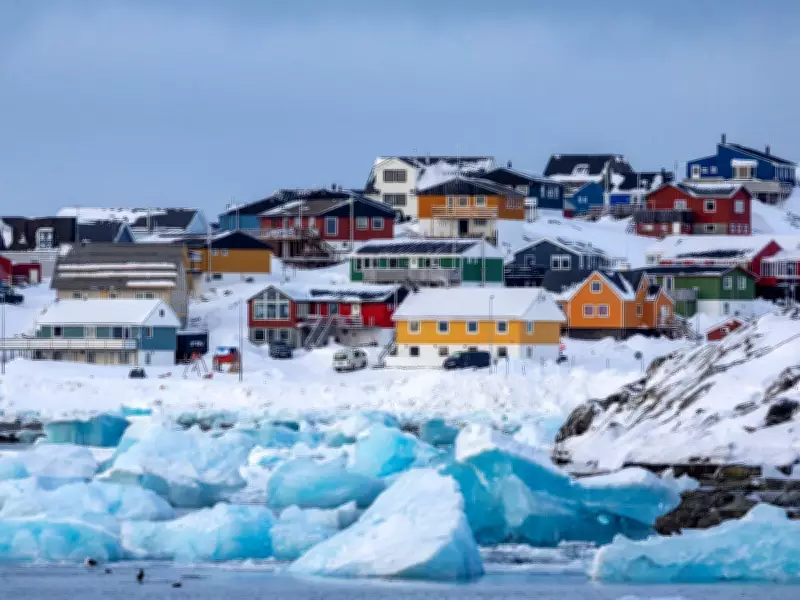
Canada's new diplomatic outpost in Nuuk occupies a modest terracotta-red building shared with Iceland's government, staffed by a small team serving approximately 19 Canadian expatriates and occasional stranded tourists. Despite its physical limitations, the consulate carries substantial symbolic weight, representing Canada's renewed commitment to Arctic engagement after decades of relative neglect in the region.
Foreign Minister Anita Anand emphasized the strategic importance of this development, stating that the consulate directly responds to Canada's Arctic foreign policy objectives and advances pragmatic diplomacy. "This is a milestone that directly responds to our Arctic foreign policy and our goal to advance pragmatic diplomacy," Anand explained. "It will also underline the importance that Canada places on cooperation in Arctic security."

Geopolitical Context and Regional Security Concerns
The timing of these diplomatic openings coincides with increased Arctic activity from global powers, including Russia and China, who have been expanding their presence in the region. This expansion has prompted Canada to respond with both defense buildups and enhanced diplomatic engagement. The situation has been further complicated by former U.S. President Donald Trump's controversial 2019 declaration that the United States "needs" Greenland for security reasons, creating persistent sovereignty concerns for both Canada and Greenland.
Andreas Osthagen, research director for Arctic and ocean politics at Norway's Fridtjof Nansen Institute, warned that "it's a matter of when, and not if" Trump resumes his expansionist rhetoric regarding the Arctic region. This uncertainty has created an environment where Arctic nations feel compelled to strengthen their diplomatic and security positions.
France's Parallel Diplomatic Initiative
France has simultaneously established its own consulate in Nuuk, with new consul Jean-Noel Poirier emphasizing that his presence underscores President Emmanuel Macron's commitment to the sovereignty and territorial integrity of Denmark and Greenland. "We have a clear red line: we will not do anything that is not fully aligned with what our Danish friends want," Poirier stated, highlighting the delicate diplomatic balance required in the region.
Shared Challenges and Common Interests
Canada and Greenland face similar challenges created by a rapidly warming Arctic that is becoming increasingly accessible to international shipping, resource extraction, and military activities. Both nations have experienced intermittent but persistent challenges to their sovereignty from U.S. expansionist rhetoric, creating natural alignment in their Arctic policies.
The Canadian delegation to the consulate opening included Governor General Mary Simon, who represents King Charles III in Canada, underscoring the high-level importance Ottawa places on this diplomatic initiative. Canada also plans to open a diplomatic mission in Anchorage, Alaska, creating a strategic diplomatic presence that brackets the country between its two longstanding Arctic allies.
Strategic Positioning in a Transforming Region
These diplomatic developments reflect the complex reality facing Arctic nations as climate change accelerates regional transformation. The opening of multiple consulates in Greenland represents more than routine diplomatic expansion—it signals a fundamental shift in how nations are approaching Arctic governance, security, and international relations.

As the Arctic continues to globalize and become more accessible, diplomatic presence has become a crucial tool for nations seeking to protect their interests, influence regional development, and navigate the complex web of international relationships that define contemporary Arctic politics. The small terracotta-red building in Nuuk may be modest in size, but its implications for Canada's Arctic future are substantial and far-reaching.