Anand Emphasizes Diplomatic Priorities Over Trade in U.S. Meeting
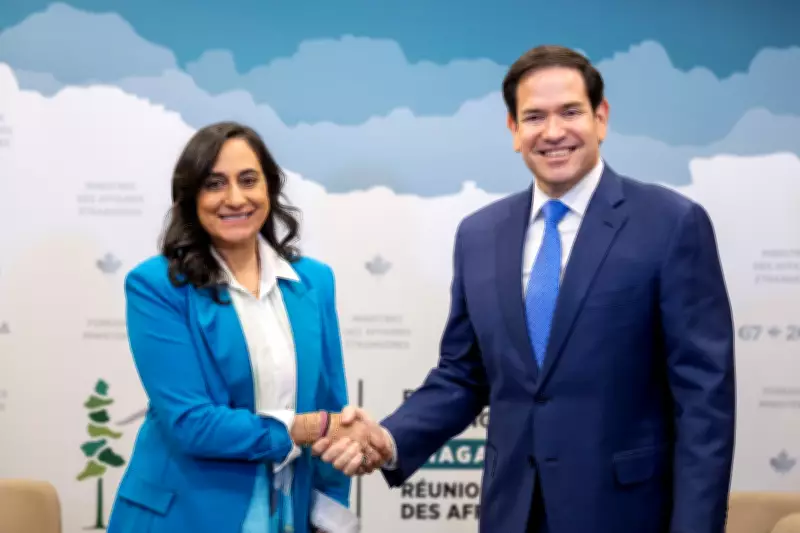
Foreign Affairs Minister Anita Anand has stated that discussions regarding a broader trade relationship were not the focus of her recent conversations with U.S. Secretary of State Marco Rubio. The bilateral meeting took place during the G7 Foreign Ministers' Meeting held in Niagara-on-the-Lake, Ontario, on Wednesday, November 12, 2025.
Clarifying the Agenda of High-Level Talks
In a move that underscores the nuanced nature of international diplomacy, Minister Anand highlighted that the talks with Secretary Rubio centered on other pressing global and bilateral issues rather than comprehensive trade negotiations. This clarification comes amid ongoing economic and political dialogues between Canada and the United States, two nations with deeply intertwined economies.
The meeting, captured in official photographs, shows Anand and Rubio engaged in discussions at the scenic Niagara-on-the-Lake venue, a location often chosen for its symbolic value in fostering cross-border cooperation. The G7 gathering itself serves as a critical platform for coordinating foreign policy among the world's leading democracies.

Context of Canada-U.S. Relations
While trade remains a cornerstone of the Canada-U.S. relationship, encompassing billions in annual exchanges, Anand's remarks suggest a strategic prioritization of other diplomatic matters at this juncture. These could include:
- Security and defense collaborations within the NATO framework
- Joint efforts on climate change and environmental policies
- Humanitarian and global health initiatives
- Geopolitical stability in regions of mutual concern
This approach aligns with Canada's broader foreign policy objectives, which often balance economic interests with commitments to multilateralism and international law. The emphasis on non-trade topics may also reflect the current administration's focus on reinforcing diplomatic alliances beyond purely economic terms.
Implications for Future Bilateral Engagements
Anand's statement does not diminish the importance of trade but rather highlights the multifaceted nature of the Canada-U.S. partnership. It signals that while economic discussions are ongoing through other channels, high-level meetings like this one are reserved for coordinating on urgent global challenges.
The Niagara-on-the-Lake meeting provided an opportunity for both officials to strengthen personal rapport and align on key international issues ahead of future summits. Such diplomatic engagements are crucial for maintaining smooth relations, especially given the complex history and occasional tensions between the two neighbors.
As Canada continues to navigate its role on the world stage, Anand's leadership in these talks reinforces the country's commitment to proactive and principled foreign policy. The focus on broader diplomatic priorities over immediate trade talks may set a tone for upcoming interactions, emphasizing collaboration on shared global responsibilities.