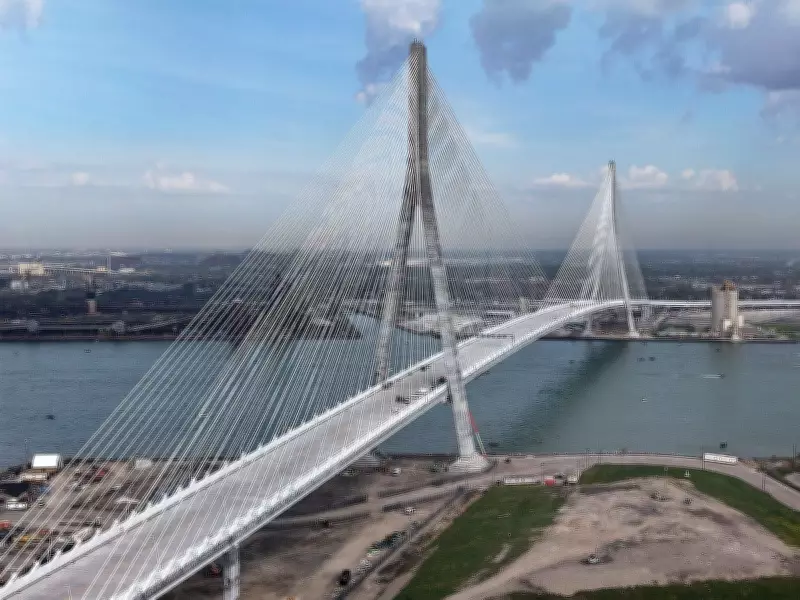
Windsor Mayor Drew Dilkens has expressed that the Gordie Howe International Bridge should not be opened at the expense of a disadvantageous agreement with the United States, citing a reduced urgency for additional cross-border capacity. Dilkens voiced his concerns following a recent conversation with U.S. Ambassador to Canada Pete Hoekstra, which took place in Ottawa last week.
Concerns over trade negotiations
Hoekstra indicated that a deal is being proposed to Canada but warned that it might not be favorable. Dilkens emphasized that Canada should not accept a bad deal simply to expedite the bridge's opening. The mayor fears that Canada might surrender leverage in ongoing trade talks in exchange for an accelerated timeline for the bridge, which has been under development for over two decades.
“I would hate to see my leadership and my country falling on bent knee and giving in on something and giving up any leverage that we might have,” Dilkens said.

Bridge significance and financing
The six-lane Gordie Howe International Bridge, connecting Highway 401 in Windsor to Interstate 75 in Detroit, is a critical infrastructure project aimed at expanding cross-border trade capacity. It provides an alternative to the aging Ambassador Bridge. Canada has financed the entire $6.4-billion cost of the project and plans to recover the investment through toll revenues.
Dilkens noted that Canada has already borne a significant financial burden and argued that delaying the opening would be preferable to accepting unfavorable terms. “If it takes another year, I hate to say it, but I would be OK if it meant that we didn’t take a bad deal,” he stated.
Changing economic conditions
The mayor pointed out that the original rationale for the bridge, rooted in post-9/11 security concerns and anticipated trade growth under earlier agreements, no longer holds. U.S. tariff policies and broader trade disruptions have weakened projections for cross-border traffic growth. “That need today doesn’t exist,” Dilkens said of the originally forecast demand levels. “It will in the future, but it doesn’t exist today.”
Uncertainty continues to surround the final agreement governing the bridge’s opening and revenue structure. In April, Hoekstra told Detroit-area media that no finalized deal is in place and raised questions about whether Canada can recover its investment through tolls. Under the current arrangement, Canada will recoup costs via tolls before Michigan receives a share of the revenue.