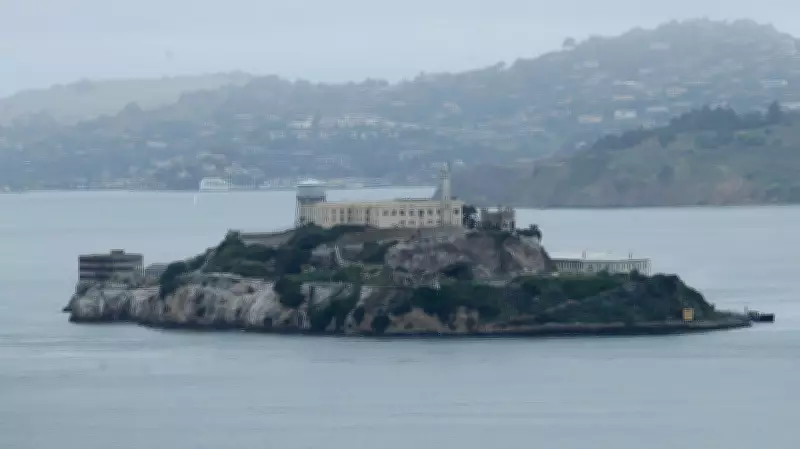
The White House has unveiled a bold proposal to allocate $152 million for the reactivation of the former Alcatraz prison island, aiming to convert the iconic San Francisco Bay tourist site into a modern, high-security correctional facility. This initiative, announced on Friday, follows up on President Donald Trump's social media directive last year to reopen and expand Alcatraz to incarcerate America's most dangerous criminals.
Budget Proposal Details
The funding request is embedded within a proposed budget released by the White House to finance the government for the 2027 fiscal year. Typically, such spending proposals are considered as suggestions by lawmakers in Congress, but this one specifically targets the Federal Bureau of Prisons to cover the initial costs of rebuilding Alcatraz into what is described as "a state-of-the-art secure prison facility." Since its closure in 1969, Alcatraz has been managed by the National Park Service, attracting millions of visitors annually.
Historical Context and Trump's Vision
In May of last year, President Trump announced on social media that he was directing the Bureau of Prisons, the U.S. Department of Justice, and other agencies to "reopen a substantially enlarged and rebuilt ALCATRAZ, to house America's most ruthless and violent Offenders." This move harks back to the prison's origins in 1934, when it was promoted as America's most secure facility due to its isolated island location, cold waters, and powerful currents. No successful escapes were ever officially confirmed, with five prisoners recorded as "missing and presumed drowned."

Before shutting down, Alcatraz incarcerated infamous figures such as Al Capone and James "Whitey" Bulger. The Bureau of Prisons' website notes that the prison was closed primarily because operational costs were prohibitively high, being nearly three times more expensive than any other federal prison at the time.
Implications and Public Reaction
The proposal to return Alcatraz to active duty raises significant questions about its impact on tourism, historical preservation, and federal spending priorities. While the White House emphasizes enhanced security for housing violent offenders, critics may argue about the feasibility and cost-effectiveness compared to modern prison alternatives. As this budget request moves through congressional review, it will likely spark debates over the balance between public safety and cultural heritage.