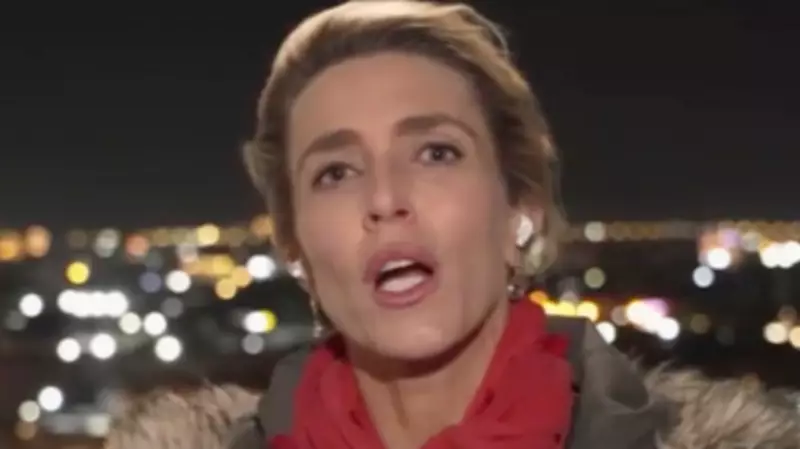
CNN's chief international correspondent Clarissa Ward delivered a scathing critique of President Donald Trump and his administration on Wednesday, condemning their use of pop culture-laden memes to downplay the severity of the ongoing deadly conflict with Iran. Ward, a Peabody Award-winning journalist, argued that this approach amplifies "the worst stereotypes about America" and its exercise of global power.
A Journalist's Personal Shame and Professional Concern
Speaking via satellite from Iraq on "The Late Show with Stephen Colbert," Ward expressed deep personal and professional dismay. "Obviously as a journalist I'm really not supposed to say this, but I feel deeply ashamed," she told Colbert. She emphasized that the situation extends beyond her individual feelings, stating, "It matters how people in Iran feel about it."
Ward described the expanding Iran conflict as "particularly disconcerting," noting that more than a dozen nations are now involved with unpredictable consequences. "Nobody can tell how far the repercussions will reach," she warned, highlighting the global instability created by the hostilities.

Video Game Footage and Real-World Consequences
The Trump White House has recently circulated several videos combining actual footage of U.S. military strikes on Iranian targets with clips from popular entertainment franchises. These include scenes from the Call of Duty and Grand Theft Auto video game series, along with material from television shows and films such as the 2008 comedy "Tropic Thunder."
"I think it just plays into the worst stereotypes about America and how America wields its power and what America cares about," Ward told Colbert. She connected this media strategy to regional perceptions, noting that "for so many in this region who have just felt dehumanized and humiliated for decades now, yeah, it's just, it's a lot."
The Human Cost of Conflict
The war has already extracted a devastating human toll. At least seven U.S. military service members have lost their lives, while Iranian casualties exceed 1,200 people. Among the most tragic incidents was an airstrike on a girls' school in Minab that killed at least 175 individuals, including dozens of children between the ages of 7 and 12.
A preliminary military investigation reportedly confirmed Wednesday that the United States was likely responsible for this deadly school strike. When questioned about the ongoing inquiry later that same day, President Trump responded plainly, "I don't know about it." The conflict also claimed the life of Iran's Supreme Leader Ayatollah Ali Khamenei during the initial stages of attacks.
A Pattern of Graphic Social Media Content
The current administration has demonstrated little hesitation about sharing footage of lethal military actions throughout Trump's second term. Last year, the White House social media accounts posted clips showing suspected drug smugglers and alleged Houthi rebels being bombed to death, establishing a pattern of using dramatic visuals to communicate military operations.
President Trump launched U.S. strikes against Iran on February 28, offering multiple justifications for the war. These include preventing Iran from rebuilding its nuclear weapons program—despite Trump announcing last year that these facilities had been "totally obliterated"—along with regime change objectives and promises of freedom for the Iranian people.
Contradictory Messages to the Iranian Public
While announcing military actions, Trump publicly urged Iranians to "take over your government." However, Ward reported that this encouragement clashes with the reality on the ground. "For all the declarations from the U.S., from President Trump, from Israel's Prime Minister Benjamin Netanyahu, about Iranians, 'Take to the street, take your country back,' the few Iranians that we've been able to get in touch with ... are mostly hiding," she revealed.
Ward described a population seeking shelter from "relentless bombardment," adding that continuing U.S.-Israeli strikes combined with Iranian security forces threatening to shoot protesting civilians have effectively discouraged organized resistance efforts.

"For those ordinary Iranian people, I can only imagine how horrifying it is right now to have just so little sense of where this is going and what the metric is for victory for the United States," Ward concluded, painting a picture of profound uncertainty and fear among civilians caught in the conflict.