Lech Walesa: Trump Could Be 'Traitor' or 'Exceptional' Leader, Nobel Prize at Stake
In a striking interview with AFP, former Polish President and Nobel Peace Prize laureate Lech Walesa presented two starkly contrasting interpretations of Donald Trump's dealings with Russia, suggesting the U.S. leader could be viewed as either a "traitor" or an "exceptional" political strategist.
Two Competing Narratives
Speaking on the eve of the fourth anniversary of Russia's full-scale invasion of Ukraine, Walesa acknowledged the surface appearance of Trump's relationship with Moscow. "On the surface, today, he seems to be Russia's lackey, simply a traitor. That's one way of looking at it," Walesa stated bluntly.
However, the former Solidarity leader proposed an alternative interpretation that paints Trump as a cunning political operator. According to Walesa, Trump might be "an extremely intelligent political leader" who understands that direct confrontation could trigger catastrophic consequences.

The Nuclear Calculus
Walesa elaborated on this second perspective, suggesting Trump's approach might be designed to prevent nuclear escalation. "He knows that if the United States joined the anti-Putin chorus, Putin would have no choice but to use nuclear weapons," Walesa explained, describing Russian President Vladimir Putin as "irresponsible."
The former Polish president characterized Trump's strategy as "a very cunning, very clever game: not pushing Putin to use nuclear weapons, playing the friend." By adopting this approach, Walesa argued, Trump was accomplishing two objectives simultaneously:
- Buying time to avoid immediate nuclear confrontation
- Forcing European nations to organize their own defense against Russia without American leadership
"If the United States enters the game, it's nuclear war," Walesa warned, emphasizing the high-stakes nature of the geopolitical situation.
Nobel Peace Prize Implications
The distinction between these two interpretations carries significant implications for Trump's legacy and potential recognition. Walesa made clear that should Trump prove to be "exceptional" in his handling of the Russia-Ukraine conflict, he would merit the Nobel Peace Prize—an award Walesa himself received in 1983 for his role in Poland's peaceful transition from communism.
"But if he is a traitor, he doesn't deserve it," Walesa added, creating a clear dichotomy in potential outcomes. For now, however, the former Polish leader believes "it's too early to judge" which characterization applies to Trump.
Historical Context and Current Stance
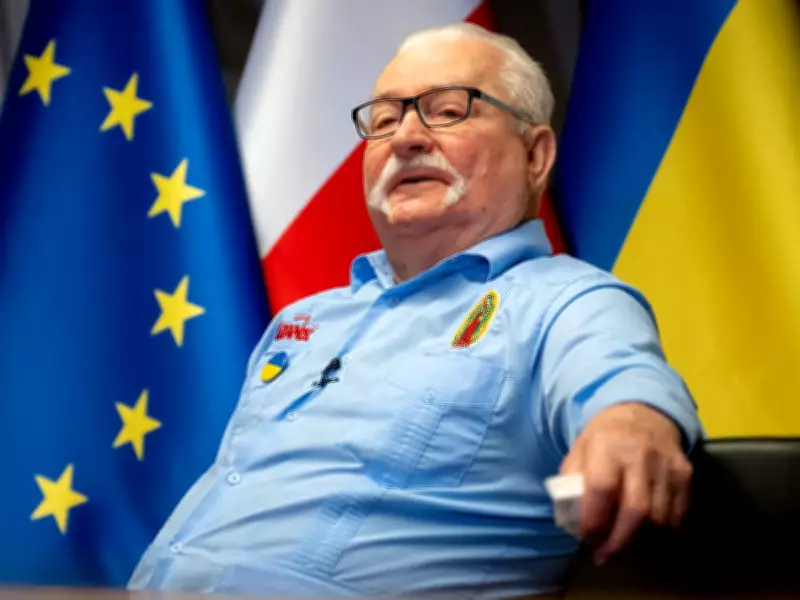
At 82 years old, Walesa continues to receive visitors in his office at the heart of the former Gdansk shipyards, where his activism as leader of the Solidarity trade union helped dismantle the Iron Curtain. Though he has held no official positions since his presidency ended in 1995 and has become a more divisive figure within Poland, Walesa remains an influential voice internationally.
His current focus has shifted decisively toward the Ukrainian cause. "We must help Ukraine with all our might," Walesa declared, expressing "remorse" about past decisions regarding Poland's neighbor. He issued a stark warning about the broader implications of Russian success: "If Russia conquers Ukraine, we can start learning Chinese and Russian. The United States will lose for good."
A Recent Controversy
Walesa also referenced a recent meeting with Venezuelan opposition leader Marina Corina Machado, who offered Trump her 2025 Nobel Peace Prize medal during a Washington visit. "I told her she had rushed things," Walesa revealed, suggesting premature judgment of Trump's geopolitical strategy.
The former electrician turned statesman, still recognizable by his legendary handlebar moustache, continues to leverage his hard-won experience with authoritarian systems to analyze contemporary global tensions. His dual interpretation of Trump's Russia policy reflects both the complexity of current international relations and the high stakes involved in navigating the Ukraine conflict.