Challenges in Verifying Mark Carney's Claims on 'Protected' Jobs
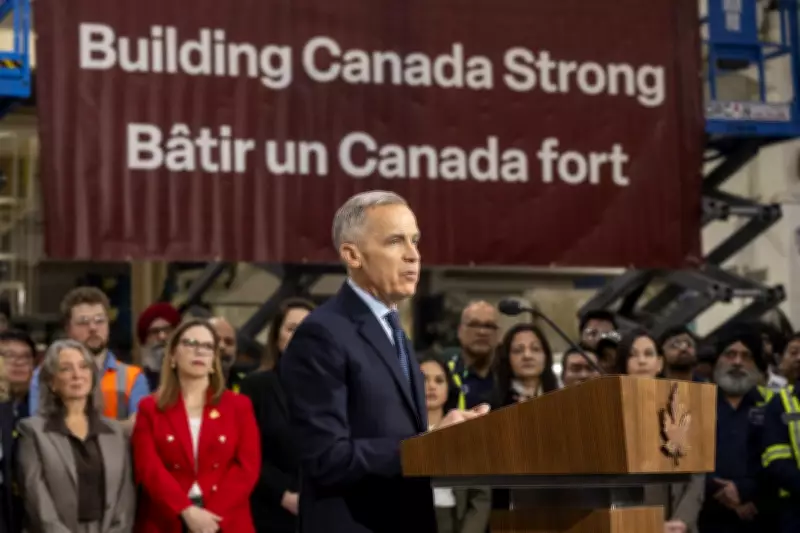
Prime Minister Mark Carney's recent statements regarding "protected" jobs have sparked significant debate and scrutiny across political and economic circles. During a visit to an auto-parts plant in Woodbridge, Ontario, on February 5, 2026, Carney made assertions about job security measures that are now under the microscope. However, verifying the accuracy and specifics of these claims has proven to be a complex task, highlighting broader issues in political transparency.
The Context of Carney's Announcement
Carney's remarks were delivered in a high-profile setting, emphasizing his government's commitment to safeguarding employment in key sectors. He pointed to policies aimed at protecting jobs from economic fluctuations and global competition. Yet, the lack of detailed, publicly accessible data to support these claims has made it difficult for analysts and the public to assess their validity. This opacity raises concerns about how political promises are communicated and evaluated.
Why Verification Is Difficult
Several factors contribute to the challenges in verifying Carney's claims. First, the term "protected" jobs is not clearly defined in official documents, leading to ambiguity about which positions are included and what protections entail. Second, data on job security measures are often fragmented across government departments, making it hard to compile a comprehensive picture. Third, political rhetoric can sometimes outpace actual policy implementation, creating a gap between announcements and outcomes.

Economic analysts and labor experts have noted that without transparent reporting mechanisms, it's challenging to hold leaders accountable for such claims. They argue that clearer metrics and regular updates are needed to track progress on job protection initiatives. This lack of verification can erode public trust and hinder informed debate on economic policies.
Implications for Political Discourse
The difficulty in verifying Carney's claims underscores a larger issue in modern politics: the need for more rigorous fact-checking and data-driven discussions. As voters seek reliable information to make decisions, the onus is on political figures to provide evidence-backed statements. This case serves as a reminder of the importance of transparency in fostering accountable governance.
Moving ForwardTo address these challenges, stakeholders are calling for enhanced disclosure requirements and independent audits of job protection claims. By improving access to information, governments can build credibility and ensure that political discourse is grounded in verifiable facts, ultimately strengthening democratic processes.