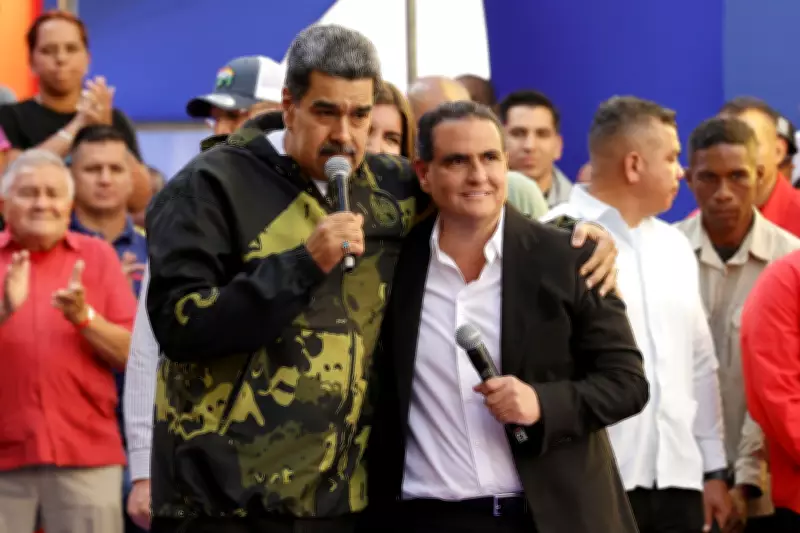
Venezuela announced on Saturday that it has deported Alex Saab, a close ally of President Nicolas Maduro, to the United States to face judicial proceedings. The move represents a significant shift in diplomatic relations between the two countries.
Background on Alex Saab
Alex Saab, a Colombian-born businessman, has been a key figure in the Maduro administration, often acting as an intermediary for the Venezuelan government. He was indicted in the United States on charges related to money laundering and corruption, accused of exploiting Venezuela's currency control system for personal gain.
Saab's arrest in Cape Verde in 2020 sparked a legal battle, with Venezuela arguing that he was a diplomat and should be immune from prosecution. However, Cape Verde eventually extradited him to the United States in 2024.

Details of the Deportation
The Venezuelan government confirmed that Saab was handed over to U.S. authorities to face judicial proceedings. The decision to deport him comes amid ongoing negotiations between Venezuela and the United States, which have been exploring avenues for easing sanctions and normalizing relations.
According to a statement from the Venezuelan Foreign Ministry, the deportation was conducted in accordance with international law and bilateral agreements. The ministry emphasized that Saab would be subject to due process in the United States.
Reactions and Implications
The deportation has drawn mixed reactions. Some analysts view it as a concession by the Maduro government, potentially paving the way for further diplomatic engagement with the United States. Others see it as a strategic move to distance the administration from controversial figures associated with corruption.
In Washington, the U.S. Department of Justice welcomed the development, stating that Saab's arrival in the United States would allow for the prosecution of his alleged crimes. The case is expected to proceed in federal court in Florida.
Broader Context
The deportation of Alex Saab occurs against the backdrop of heightened tensions between the United States and Venezuela. The U.S. has imposed multiple rounds of sanctions on Venezuelan officials and entities, while also supporting opposition leader Juan Guaido's claims to the presidency.
However, recent signals from both sides suggest a potential thaw. Earlier this year, the U.S. eased some sanctions on Venezuela's oil sector, and talks have been held regarding the release of political prisoners.
It remains to be seen whether Saab's deportation will lead to further cooperation or if it represents a one-off gesture by the Maduro government. The international community is closely watching the developments, as they could have significant implications for the geopolitical landscape in Latin America.