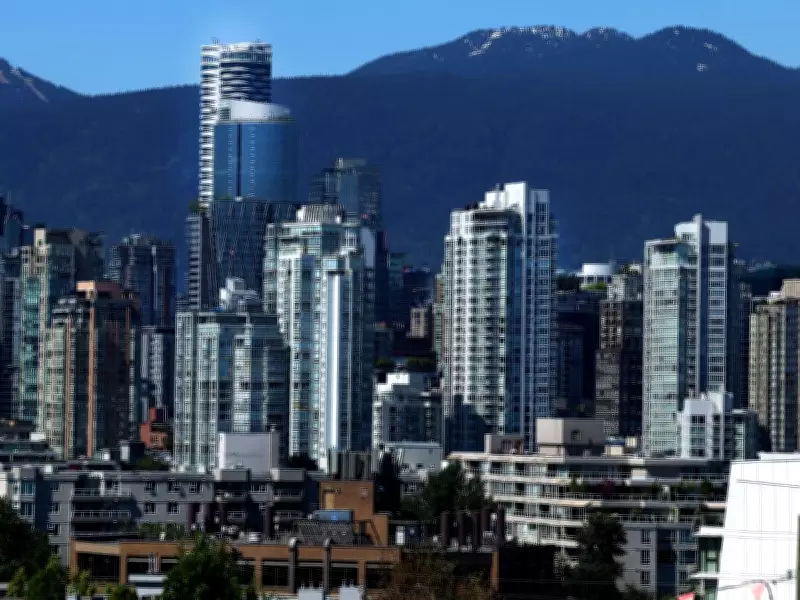
Vancouver is once again asking a familiar question: How tall should the city grow? Framed through the city's continuing review of the higher buildings policy, the discussion is presented in terms of skyline, views and architectural expression. It asks residents what they value — mountain views, variation in building form, the overall shape of the skyline — and where additional height might be appropriate.
These are important questions. Vancouver's skyline, set against the North Shore Mountains, is one of its defining features. The system of protected view cones, first introduced in 1989, has long ensured that this relationship between city and landscape remains intact. These sightlines weren't incidental — they were deliberately designed and protected as a public good, based on the understanding that without intervention, they would be gradually lost to private development.
Together with the higher buildings policy, adopted in 1997, this created a careful balance. Most buildings would remain within defined limits, preserving shared access to views and maintaining a coherent skyline. A small number of "higher buildings" could exceed those limits — but only under strict conditions.

But the significance of that policy was never just about height. It was about how height was used. Additional height was treated as an exception — something to be earned. Projects seeking to exceed established limits were expected to demonstrate architectural excellence, contribute to the public realm and deliver meaningful public benefits, from amenities to housing. Height, in other words, functioned as a bargaining tool.
That logic matters. Because when height is limited, it has value. And when it has value, it can be negotiated. Planning tools don't simply shape buildings — they shape the distribution of value.
What the current review introduces — quietly but significantly — is the possibility of expanding where tall buildings are allowed downtown. On its surface, this appears to be a technical adjustment: an update to reflect growth, changing conditions and new priorities. But when read alongside recent planning decisions across the city, it suggests something more fundamental.
In Vancouver today, rezoning doesn't necessarily mean building. Increasingly, it means something else: securing entitlements — legal permissions that inflate a property's value regardless of whether anything is actually constructed. This distinction is critical. Because entitlements have value independent of outcomes. They can be held, leveraged or traded. They can sit idle while land values rise. They can reshape the economics of a site long before a single unit of housing is delivered.
A recurring concern in Vancouver's planning history has been what happens when public goods — like shared access to views — are gradually privatized. Removing or weakening view protections doesn't simply alter the skyline, but also redistributes access to the city's most defining features. The higher buildings policy was built around a clear idea: additional height should be limited and tied to public benefit. The question facing the current review is whether that idea will be transformed from exception to entitlement.