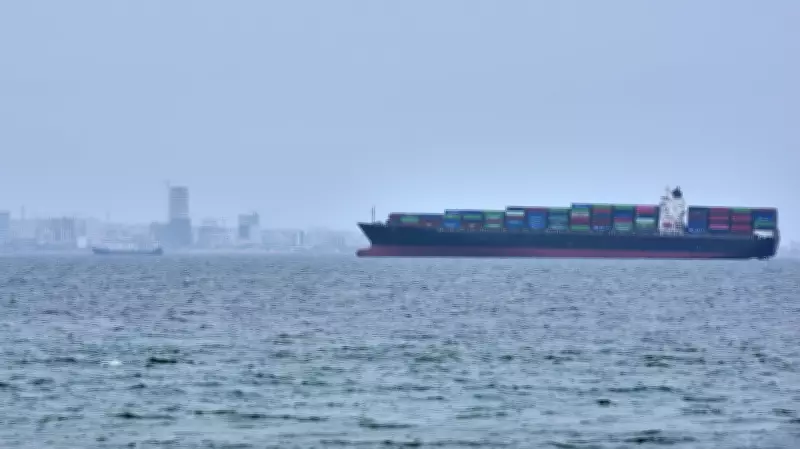
The United States is urging other nations to form an international coalition aimed at restoring freedom of navigation in the Strait of Hormuz, according to a State Department cable reviewed by Reuters. This comes as oil prices surged to their highest levels in over four years, driven by fears of prolonged disruptions to global fuel supplies.
Conflict Impact on Global Energy Markets
Two months into the war, which began with U.S.-Israeli strikes on Iran, the critical sea channel remains closed, effectively cutting off 20% of the world's oil and gas supplies. This has led to soaring global energy prices and heightened concerns about a potential economic downturn.
The United States is advocating for an international coalition to restore freedom of navigation in the Strait of Hormuz, as confirmed by a State Department cable seen by Reuters.

Efforts to Resolve the Conflict
Efforts to resolve the conflict have reached an impasse. The U.S. is attempting to break this deadlock through a naval blockade of Iran's oil exports, which are the country's economic lifeline. With talks stalled, U.S. President Donald Trump is scheduled to receive a briefing on Thursday regarding plans for a series of new military strikes on Iran, in an effort to compel it to return to negotiations, according to an Axios report late Wednesday.
This news spurred significant gains in oil prices, with the benchmark Brent crude contract briefly topping $125 a barrel, partly due to technical factors related to the contract's expiration later on Thursday. Since the beginning of the year, Brent prices have more than doubled, reaching their highest since March 2022, fueling inflation and driving pump prices to politically painful levels worldwide.
Iran's Stance and Threats
Iran has pledged to continue disrupting traffic through the Strait as long as it feels threatened, which could lead to further Middle East oil supply disruptions from a conflict that has already killed thousands. Tehran warned on Wednesday of "unprecedented military action" in response to the continued U.S. blockade of Iran-linked vessels. Trump has stated that Iran cannot possess a nuclear weapon, while Tehran maintains that its nuclear ambitions are peaceful.
"They don't know how to sign a non-nuclear deal. They'd better get smart soon!" Trump said in a social media post on Wednesday, without elaborating on what such a deal would entail. The post featured a mock-up image of him wearing dark glasses and wielding a machine gun, captioned, "No more Mr. Nice Guy."
Diplomatic Efforts and Mediation
As Washington and Tehran exchange public threats, mediator Pakistan is working to avoid escalation while the two sides exchange messages on a potential deal, a Pakistani source said on Wednesday. Trump held talks on Tuesday with oil executives and "discussed the steps President Trump has taken to alleviate global oil markets and steps we could take to continue the current blockade for months if needed and minimize impact on American consumers," a White House official said.
Uranium Dispute and Economic Pressure
The war has cost the U.S. military $25 billion so far, according to a senior Pentagon official, providing the first official estimate of the conflict's price tag. The State Department cable indicated that the United States is inviting other countries to join a new international coalition, dubbed the "Maritime Freedom Construct," which would share information, coordinate diplomatically, and help enforce sanctions to enable ships to navigate the Strait of Hormuz.
France, Britain, and other countries have held talks on contributing to such a coalition but have stated they are only willing to help open the Strait after hostilities cease.
Iran's Nuclear Program and Internal Unity
Iran seeks U.S. acknowledgment of its right to enrich uranium for what it says are peaceful, civilian purposes. It currently has a stockpile of about 440 kg (970 lbs) of uranium enriched to 60%, which could be used for several nuclear weapons if further enriched. Iran's parliament speaker and top negotiator, Mohammad Baqer Qalibaf, accused Trump of trying to divide Iranians and force Iran to surrender through the blockade.

"The solution for confronting the enemy's new conspiracy is only one thing: maintaining unity, which has been the bane of all the enemy's conspiracies," Qalibaf said in an audio message on messaging app Telegram.
Human Rights and Economic Toll
Iran has executed at least 21 people since the start of the war with the United States and Israel two months ago, and arrested more than 4,000 on charges related to national security, U.N. human rights chief Volker Turk said on Wednesday. In a sign of the war's toll on Iran's economy, its currency fell to a record low on Wednesday, according to the Iranian Students' News Agency. Inflation stood at 65.8% for the month to April 20, the central bank said.
Iran's Proposal and U.S. Response
Iran's latest offer for resolving the war, suspended since April 8 under a ceasefire deal, would set aside discussion of its nuclear program until the conflict is formally ended and shipping issues resolved. This did not meet Trump's demand to tackle the nuclear issue at the outset. The Pakistani source said the United States had shared "observations" on the Iranian proposal and it was now up to Iran to respond. "(The) Iranians asked for time till the end of the week," the source told Reuters.
U.S. intelligence agencies, tasked by senior administration officials, are studying how Iran would respond if Trump were to declare a unilateral victory, two U.S. officials and a person familiar with the matter said.
Current Situation and Domestic Pressure
Tehran has largely blocked all shipping apart from its own from the Gulf through the Strait of Hormuz since the U.S. and Israel began airstrikes on Iran on February 28. The U.S. began its blockade this month. Iran no longer has a single, undisputed clerical arbiter at the pinnacle of power since the strikes killed several senior political and military figures, including Supreme Leader Ayatollah Ali Khamenei. The elevation of Khamenei's wounded son, Mojtaba, to replace him has handed more power to hardline commanders of the elite Islamic Revolutionary Guard Corps, Iranian officials and analysts say.
Meanwhile, Trump faces domestic pressure to end a war for which he has given shifting rationales to a U.S. public struggling with surging gasoline prices. His approval rating fell to the lowest of his current term, a Reuters/Ipsos poll showed.