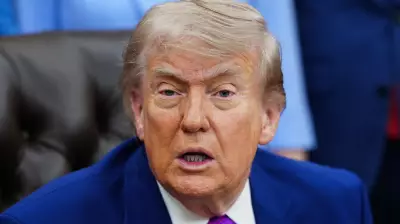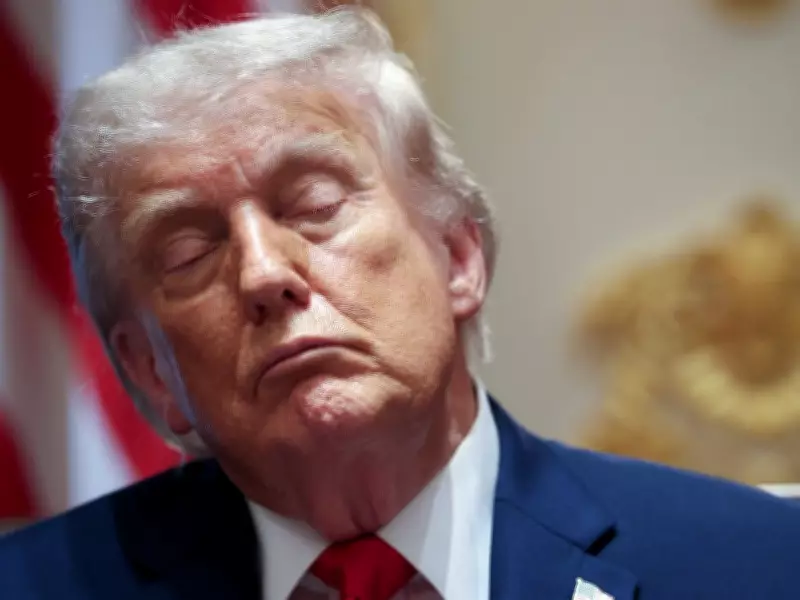
The United States and Iran have reached a preliminary agreement to extend a ceasefire by 60 days and discuss the future of Tehran's nuclear program, according to a person familiar with the matter. The deal, which requires approval from President Donald Trump, has raised hopes for a resolution to a three-month conflict that has caused thousands of casualties and disrupted the global economy.
Negotiations and Reactions
The source, speaking on condition of anonymity due to the sensitive nature of the talks, confirmed an earlier report by Axios. President Trump has yet to endorse the terms. Both nations have previously indicated progress, with Trump repeatedly stating that the US was close to securing an agreement, only for the standoff to persist.
Mohammad Bagher Ghalibaf, the speaker of Iran's parliament and a key figure in the country's wartime leadership, expressed skepticism on Friday, stating, "We have no trust in guarantees or words; the only criterion is action; no action will be taken before the other side acts." In a post on X, Ghalibaf added, "The winner of any agreement is the one who is better prepared for war the day after."

US and Iranian Positions
Vice President JD Vance told reporters on Thursday that the US and Iran are "going back and forth on a couple of language points," including issues related to Tehran's nuclear capabilities. He noted that Iran appears to be negotiating in good faith and that progress is being made.
Iran's semi-official Tasnim news agency reported that the text of a possible memorandum of understanding has not been finalized and has changed in recent days. The agency, which is affiliated with the Islamic Revolutionary Guard Corps, also stated that Western media reports on the draft agreement were inaccurate.
US Treasury Secretary Scott Bessent declined to confirm an interim deal on Thursday, stating only that negotiations continue. He reiterated Trump's three "red lines": reopening the Strait of Hormuz, Iran surrendering highly enriched uranium, and ending its nuclear program.
Current Status and Mediation
A fragile truce has been in place since early April, occasionally interrupted by isolated military strikes. Axios reported that Trump asked for "a couple of days" to consider the agreement.
Iranian President Masoud Pezeshkian posted on X that he had "emphasized Iran's commitment to diplomacy" in calls with the prime ministers of Malaysia and Pakistan. Pakistan, a mediator in the negotiations, announced that Foreign Minister Ishaq Dar will meet with US Secretary of State Marco Rubio in Washington on Friday to discuss "Pakistan's efforts to promote regional peace and stability through dialogue and diplomacy."
Market Impact
The MSCI All Country World Index, a broad measure of global equities, climbed to an all-time high on Thursday as easing tensions fueled expectations for lower oil prices and stronger economic growth. Brent crude fell as much as 2.1% to $91.73 a barrel, down from a high of $126.41 a month ago.