Unwritten Rules of Canadian Politics: What's Technically Allowed in Governance
In Canadian politics, many foundational elements operate not through explicit legal statutes but through a complex web of traditions, norms, and unwritten conventions. This reliance on informal rules was highlighted recently when Prime Minister Mark Carney assembled a majority government entirely by luring floor-crossers from other parties—a move defended by Liberal partisans as technically permissible under existing regulations.
The Floor-Crossing Phenomenon
When questioned about the democratic legitimacy of his engineered majority, Carney responded in a Radio-Canada interview, "We're working with the MPs Canadians chose." Indeed, there is no written rule preventing elected officials from switching party allegiance en masse. However, this incident underscores a broader reality: Canada's political system is maintained by a latticework of conventions rather than rigid legal frameworks.
Any cursory examination of the Canadian constitution reveals that numerous actions, while unconventional, are technically legal. From the office of the prime minister to military deployments, many aspects of governance rely on established norms rather than explicit guidelines.

War Powers and Royal Prerogative
One striking example involves war powers, which remain an issue of royal prerogative in Canada. The prime minister retains virtually limitless authority to deploy the Canadian Armed Forces without parliamentary approval. While Canada's last official declaration of war—against Nazi Germany in World War II—followed a democratic process involving Senate and House of Commons motions, there is no legal requirement for such steps.
The Governor General, as commander-in-chief, oversees a military that swears allegiance to the Crown, not to Parliament or the prime minister. Conventionally, military deployments require the Governor General's approval, but there is no written law preventing unilateral action. In theory, the Governor General could issue orders-in-council to dispatch invasion forces without consulting elected officials, relying solely on the argument that such actions are not explicitly prohibited.
The Monarch's Theoretical Authority
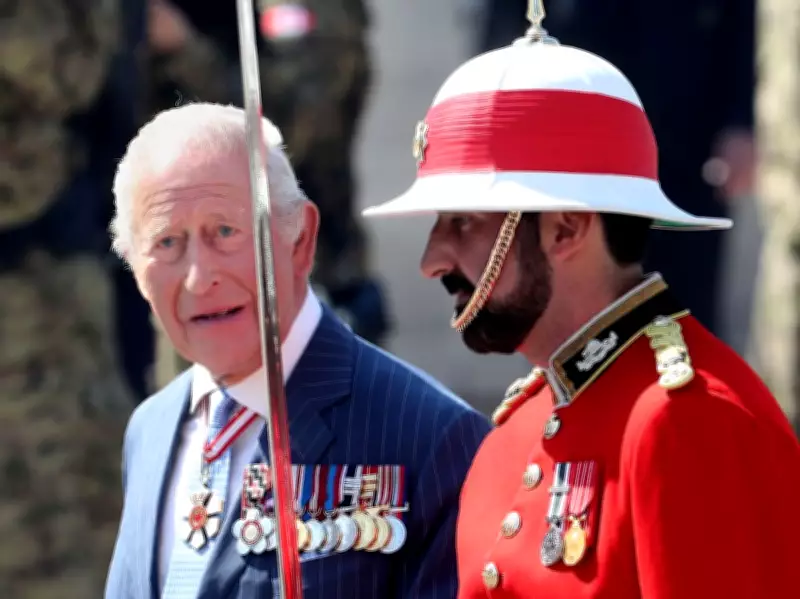
Similarly, the powers of King Charles III as the king of Canada are largely symbolic but technically extensive under the British North America Act. The constitution states, "The Executive Government and Authority of and over Canada is hereby declared to continue and be vested in the King." In practice, this has been a ceremonial arrangement since Confederation, but if interpreted literally, it grants the monarch significant authority.
King Charles III could theoretically arrive in Canada, dissolve Parliament, appoint allies to the Senate, and reshape federal agencies with loyalists—all without violating written law. While such scenarios are improbable due to established conventions, they highlight the gap between legal technicalities and political realities.
The Importance of Political Norms
These examples illustrate how Canada's stability depends on adherence to unwritten rules. Floor-crossings, war declarations, and royal interventions are governed by traditions that prevent arbitrary exercises of power. As political debates continue over the legitimacy of tactics like floor-crossing, it is essential to recognize that many aspects of Canadian democracy are upheld not by statutes but by shared commitments to normative behavior.
In an era of increasing political polarization, understanding these conventions becomes crucial for maintaining the integrity of governance. While the letter of the law may allow for extraordinary actions, the spirit of Canadian democracy relies on respecting the unwritten codes that have long guided the nation's political landscape.