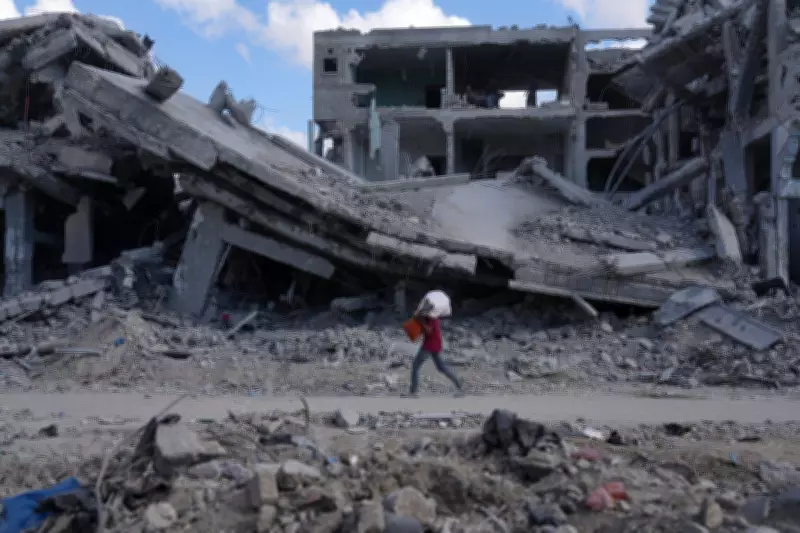
Massive Financial Commitment Required for Gaza's Recovery
A comprehensive assessment conducted by the United Nations and the European Union has concluded that the reconstruction of the Gaza Strip will necessitate a staggering financial commitment exceeding US$71 billion over the coming decade. This figure underscores the profound scale of destruction inflicted during the recent conflict between Israel and Hamas, which has left critical infrastructure, housing, and public services in ruins.
Decade-Long Road to Recovery
The detailed report, released jointly by the international bodies, outlines a long-term framework for rebuilding the war-torn enclave. The funds are earmarked for a wide array of essential projects, including the restoration of hospitals, schools, water and sanitation systems, and the reconstruction of thousands of homes destroyed or severely damaged in the hostilities. The assessment highlights that the damage is not merely superficial but represents a systemic collapse of Gaza's urban and social fabric, requiring a sustained and coordinated international effort.
The sheer magnitude of the required investment reflects the catastrophic impact of the war on civilian life and infrastructure, stated a senior UN official involved in the assessment. The planning assumes a stable ceasefire and political environment to allow for the safe and effective delivery of construction materials and humanitarian aid.

Humanitarian Crisis and Immediate Needs
Beyond the long-term reconstruction costs, the report also emphasizes the ongoing humanitarian crisis. Even with a pause in fighting agreed upon in October 2025, which facilitated the release of remaining hostages, the immediate needs of Gaza's population remain acute. Millions of residents continue to face severe shortages of food, clean water, and medical supplies, compounding the challenges of rebuilding.
The joint UN-EU assessment serves as a critical call to action for the international donor community. It stresses that without immediate and substantial financial pledges, the recovery process will be critically delayed, potentially exacerbating instability and human suffering in the region. The decade-long timeline indicates that the path to normalcy for Gaza's residents will be arduous and require unwavering international support and cooperation.