UN Chief Condemns US-Israeli Airstrikes on Iran, Urges Immediate Return to Negotiations
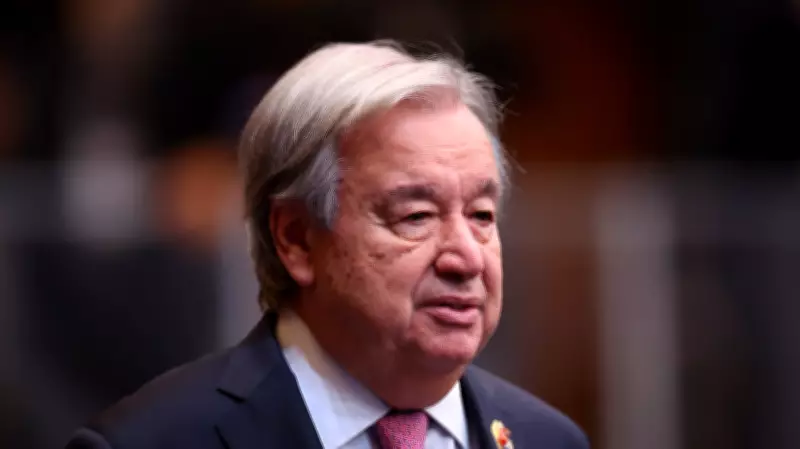
In a critical emergency session of the United Nations Security Council on Saturday, Secretary-General António Guterres strongly condemned the recent U.S.-Israeli airstrikes on Iran. He called for an immediate return to diplomatic negotiations, warning that the region and the world are on the brink of a potentially devastating escalation. Guterres emphasized that every effort must be made to prevent further conflict, stating that the alternative could be a wider war with severe consequences for civilians and regional stability.
Escalating Tensions and International Responses
The airstrikes, which reportedly resulted in the death of Iran's Supreme Leader Ayatollah Ali Khamenei, have heightened fears of a protracted conflict. Iranian Foreign Minister Abbas Araghchi, in a letter to the secretary-general, accused the United States and Israel of violating Iran's sovereignty and the U.N. Charter, asserting Iran's right to self-defense. He urged the Security Council to take immediate measures to halt what he termed an unlawful use of force and ensure accountability for the aggression.
In contrast, Israel's U.N. Ambassador Danny Danon defended the airstrikes, labeling criticism as hypocrisy. He argued that Iran is responsible for the actions of its proxies in the Middle East and its nuclear and missile programs, claiming that the U.S. and Israel acted to prevent an irreversible and immediate threat. The emergency meeting was called by five council members: Bahrain, France, Russia, China, and Colombia.

European Leaders Advocate for Diplomatic Solutions
In a joint statement, the leaders of Britain, France, and Germany strongly condemned Iranian retaliatory attacks in the region, which they said violated the sovereignty of Bahrain, Iraq, Jordan, Kuwait, Qatar, Saudi Arabia, and the United Arab Emirates. They did not condemn the U.S.-Israeli airstrikes. Instead, they called for a resumption of U.S.-Iranian talks on Tehran's nuclear program, emphasizing that the Iranian people must be allowed to determine their own future. These three countries, part of the 2015 nuclear deal with Iran, have been leading efforts to reach a negotiated solution, especially after the U.S. withdrawal from the deal in 2018 under former President Donald Trump.
Trump, in a social media post, commented on Khamenei's passing, calling it a significant opportunity for the Iranian people to reclaim their country. The Security Council meeting occurred on the final day of the United Kingdom's presidency, with the United States set to take over the rotating presidency for March.
The situation underscores the urgent need for de-escalation and dialogue to avoid a broader conflict that could destabilize the Middle East and impact global security. As tensions mount, the international community watches closely, hoping for a peaceful resolution through diplomatic channels.