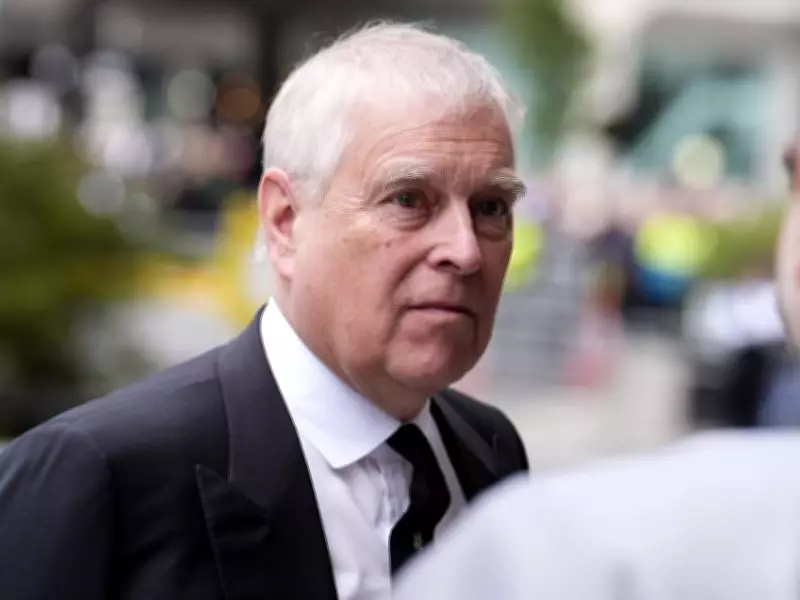
UK Government Considers Removing Former Prince Andrew from Royal Line of Succession
The British government is actively considering introducing significant legal changes to formally remove Andrew Mountbatten-Windsor, the former Duke of York, from the Royal Family's line of succession. This move comes in the wake of his recent arrest and the ongoing investigation into allegations of misconduct in public office, despite his long-standing denials of any wrongdoing.
Recent Developments and Government Stance
Andrew Mountbatten-Windsor, who was stripped of his "prince" title in October due to his close associations with the late convicted sex offender Jeffrey Epstein, remains eighth in line to the British throne. The 66-year-old was arrested last week on suspicion of misconduct in public office and released without charge after eleven hours, though the investigation continues.
Darren Jones, Prime Minister Keir Starmer's chief secretary, informed lawmakers that the government is not ruling out action regarding the line of succession at this stage. He emphasized that further steps will be considered in due course, indicating a cautious but determined approach.

Defence Minister Luke Pollard has been vocal about the necessity of introducing legislation to prevent Andrew from ever becoming King, calling it the "right thing to do" regardless of the investigation's outcome. Pollard confirmed on BBC Radio 4's Any Questions that the government has been collaborating with Buckingham Palace on plans to stop the former prince from being "potentially a heartbeat away from the throne." He stressed the importance of cross-party support and noted that any legislative action should only proceed after the police investigation concludes.
Complex Legal and International Implications
James Murray, chief secretary to the treasury, highlighted the complexity of the situation, pointing out that the live police investigation must first "play out" before any decisions can be made. The process of removing Andrew from the line of succession is expected to be lengthy and intricate, requiring the backing of approximately a dozen countries that also recognize the British monarch as their head of state, including Canada, Australia, Jamaica, and New Zealand.
Ultimately, removing him would necessitate an act of Parliament, which requires approval from lawmakers. The Liberal Democrats party has expressed support for the move, with leader Ed Davey stating that it would be "intolerable" for Andrew Mountbatten-Windsor to succeed to the crown. Internationally, Australia's Prime Minister Anthony Albanese has backed any U.K. government plan to oust Mountbatten-Windsor, emphasizing the gravity of the allegations and the need for a full and fair investigation.
Current Line of Succession and Historical Context
The current line of succession places King Charles' son Prince William as heir to the throne, followed by his three children: Prince George, Princess Charlotte, and Prince Louis. Prince Harry is fifth in line, with his children, Prince Archie and Princess Lilibet, at sixth and seventh. Andrew Mountbatten-Windsor, who was second in line at his birth, now occupies the eighth position, with his daughters and their children following in subsequent places.
The last time a royal was removed from the line of succession was in December 1936, when King Edward VIII abdicated to marry American divorcee Wallis Simpson. At that time, the law was amended to strike him and any descendants from the list. More recently, the Succession to the Crown Act of 2013 restored individuals who had been excluded due to marrying a Catholic, marking the last parliamentary change to the succession.
Ongoing Investigation and Royal Response
Thames Valley Police, the force that arrested Andrew, continued searching his former longtime residence, Royal Lodge, over the weekend, with unmarked police vehicles present as of Monday. Buckingham Palace has not publicly commented on the government's plans to remove Andrew from the line of succession. However, King Charles has emphasized that the law must take its course in the investigation, reaffirming the royal family's commitment to duty and service.

As the investigation unfolds and the government deliberates, the potential removal of Andrew Mountbatten-Windsor from the royal line of succession represents a significant moment in British constitutional history, reflecting broader societal and legal scrutiny of the monarchy's future.