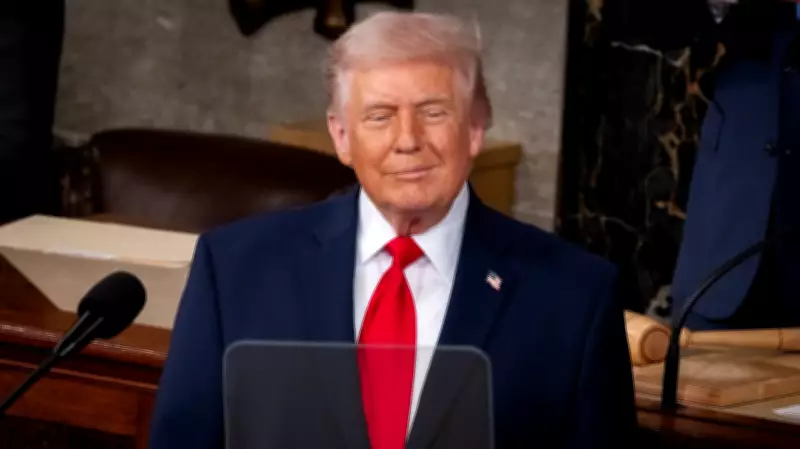
Trump's State of the Union Address: A Blend of Fiction and Fear
President Donald Trump delivered his longest State of the Union speech on Tuesday, weaving together exaggerated economic boasts and alarming warnings about minorities. The address, which lasted over an hour, oscillated between promises of a booming economy and grim tales of violence attributed to immigrants and Democrats.
Economic Claims Versus Reality
Trump asserted that the U.S. is experiencing "a turnaround for the ages", with factories, jobs, and trillions of dollars flowing into the country. He claimed inflation is "plummeting downward" from historic highs and that incomes are rising rapidly. However, these statements contradict economic data, as inflation remains a concern and wage growth has been modest.
In a contradictory twist, Trump promised lower housing prices while simultaneously vowing to keep property values high. He also predicted drastic reductions in health insurance and prescription drug costs, despite recent premium increases and no evidence supporting such drops.

Fear-Mongering and Divisive Rhetoric
The speech took a dark turn as Trump described graphic violent crimes, blaming immigrants and Democrats. He recounted hypothetical scenarios of daughters being stabbed or shot, using vivid language to stoke fear. This tactic, critics argue, is designed to rally his base by painting minorities as threats.
Trump further alienated political opponents, calling Democratic lawmakers "crazy" and accusing them of destroying the country. He framed his policies as a last-minute salvation, reinforcing an us-versus-them narrative.
Political Theater and Authoritarian Echoes
The event featured ceremonial elements, such as awarding medals to heroic guests and honoring the U.S. men's hockey team. These moments served as distractions, reminiscent of the ancient Roman strategy of "bread and circuses" to placate the public. Trump's speech focused on entertaining his supporters rather than appealing to a broader audience.
He proposed restrictive voting legislation, the SAVE Act, which aims to limit ballot access under the guise of preventing non-citizen voting—a rare issue. Trump referred to voting as a "privilege" rather than a right, hinting at efforts to disenfranchise certain groups.
A Vision of Executive Power
Trump's legislative requests were minimal, primarily seeking to codify existing executive orders. He dismissed the need for congressional action on tariffs, suggesting a preference for unilateral decisions. This approach aligns with a broader trend of bypassing legislative checks, raising concerns about authoritarian governance.
Despite his declining approval ratings and public dissent, Trump's rhetoric persists. However, with Republicans facing electoral losses, the effectiveness of his fear-based strategy remains uncertain. The speech underscored a divisive political landscape, where truth often takes a backseat to spectacle.