Trump's Geographic and Federal Renaming Campaign
In late last month, President Donald Trump humorously suggested renaming the crucial oil-shipping route the "Strait of Trump." Shortly before Iran announced the reopening of the Strait of Hormuz following a ceasefire between Israel and Lebanon, Trump raised the idea more earnestly during a Fox News interview with Maria Bartiromo. "You can call it the Strait of Hormuz or the Hormuz Strait. I said 'Which is better?' They said 'Either is OK, you can call it either one. The only thing you can't call it is the Trump Strait.' They don't like that idea," the president remarked.
A Pattern of Presidential Renaming
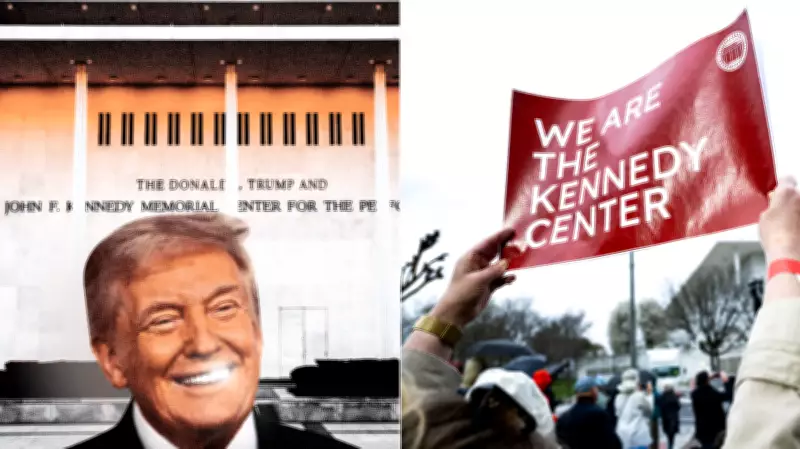
Proposing name changes for geographic features and federal buildings has been a persistent focus for Trump since assuming office. On his first day, he attempted to rename the Gulf of Mexico, bordered by the U.S., Mexico, and Cuba, as the "Gulf of America." He later admitted considering "Gulf of Trump" but reconsidered. Additionally, Trump has unilaterally renamed several prominent Washington, D.C., institutions. The U.S. Institute of Peace is now the Donald J. Trump U.S. Institute of Peace, described by the State Department as reflecting "the greatest dealmaker in our nation's history." Similarly, the John F. Kennedy Center for the Performing Arts has been rebranded as The Donald J. Trump and The John F. Kennedy Center for the Performing Arts.
Typically, renaming a building for a president requires an act of Congress or approval from state or local officials, but Trump has acted independently. Barbara A. Perry, a professor of presidential studies at the University of Virginia's Miller Center, noted, "Most previous presidents did not want to name things for themselves or have entities named for them during their lives, except for their libraries, because they didn't want to appear self-serving or self-aggrandizing."

Toponymic Narcissism and Political Reactions
Trump's approach aligns with his business model of self-branding, akin to corporate names like Ford or Hilton, according to Perry. She added, "Authoritarian leaders are also prone to make their name, image, and likeness as prominent as possible, to have their people both admire and fear them." Reuben Rose-Redwood, a geography professor at the University of Victoria, describes this behavior as "toponymic narcissism," comparing it to a pufferfish inflating itself to mask vulnerabilities. "It's a geographical form of self-aggrandizement that we typically see in cults of personality associated with authoritarian dictators," he explained.
This renaming spree has sparked backlash. Several artists canceled performances at the Kennedy Center after Trump's name was added, with the institution's president accusing them of political motives. Democrats are pushing back legislatively. Representative Joyce Beatty filed a motion to block Trump's name addition to the Kennedy Center, arguing it should honor John F. Kennedy alone. Senator Bernie Sanders and other Democrats introduced the Stop Executive Renaming for Vanity and Ego (SERVE) Act to prohibit naming federal property after sitting presidents.
Geographic Renaming and Its Implications
On his inauguration day in January 2025, Trump issued an executive order renaming the Gulf of Mexico to the Gulf of America and reverted Alaska's Mount Denali to Mount McKinley, citing the restoration of American heritage. This move reversed President Barack Obama's 2015 decision to restore the indigenous name "Denali." Bill Rankin, a Yale history professor, observed, "With Trump, I can't help but notice that the overall direction of renaming is to eliminate indigenous names, whether this is Denali, Mexico, or Hormuz."
While U.S. mapping platforms adopted the Gulf of America name, international bodies and foreign governments like Mexico continue using Gulf of Mexico. Rose-Redwood stated, "Beyond the borders of the United States, the 'Gulf of America' renaming is unlikely to have any lasting influence on global cartographic conventions." A future president could reverse these changes via executive order or through the U.S. Board on Geographic Names.

Monumental Projects and Legal Challenges
Trump's renaming extends to proposed monuments, such as the "Independence Arch," initially called the "Arc de Trump," a $100 million structure planned for Washington, D.C. Legal challenges from local residents argue the administration violated federal laws restricting new commemorative works. If construction stalls, Perry believes the project may not proceed, similar to the Hoover Dam, which was controversially named after Herbert Hoover but dedicated by Franklin D. Roosevelt without using Hoover's name.
Additionally, Trump is building a ballroom in the White House's East Wing, informally dubbed "the President Donald J. Trump Ballroom" by staff. Perry speculated that if completed, it might be named for Trump, like the Truman Balcony, but legal or political actions could influence its fate.
In summary, Trump's renaming efforts reflect a blend of personal branding and political strategy, with potential reversals depending on future administrations and congressional actions. As Gene Rhea Tucker, a history professor at Temple College, noted, place names endure when they are short, easy to pronounce, and tied to the land or its people rather than political figures, suggesting names like Gulf of Mexico may outlast temporary political changes.