The Lingering Costs of Trump's Iran Conflict
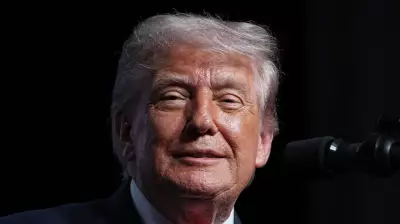
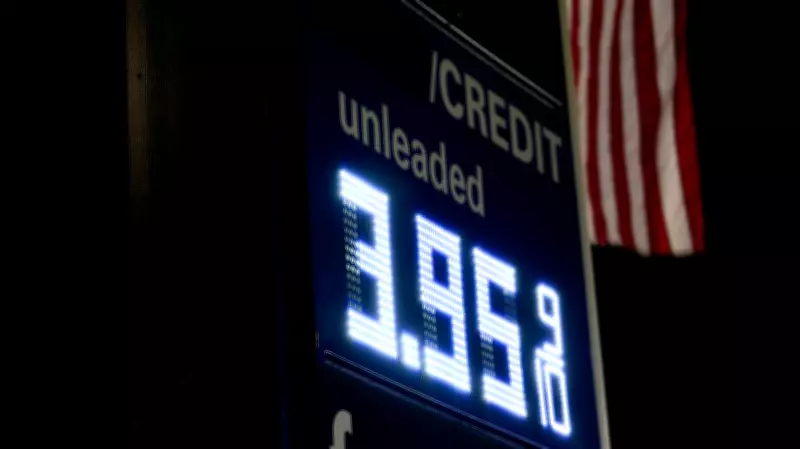
WASHINGTON – When will Donald Trump declare victory in Iran? The answer to this pivotal question could dictate whether American service members remain in peril for days, weeks, months, or longer, while gasoline prices at home hover near or exceed $4 per gallon. Trump has a history of retreating from bold statements when economic turmoil looms—a pattern dubbed TACO, or "Trump always chickens out." However, economists and national security analysts caution that even if such a reversal occurs with the Iran war, significant harm has already been inflicted and will not be easily reversed.
Economic and Strategic Consequences
Jason Furman, a former top economist in the Obama White House and current Harvard University professor, emphasized the lasting impact. "Even if this ended today, and it doesn’t look like that, there has already been a large amount of resources expended on the war," he said. "The period of high oil prices will take a toll, and I would expect uncertainty to continue elevating oil prices going forward. So no matter what, we have and will continue to pay for this." Trump White House officials did not respond to inquiries regarding these concerns.
On Monday, Trump asserted that the war was ahead of schedule but provided no clear timeline for ending attacks involving bombs, missiles, and drones. He previously estimated weeks to achieve his goals, yet also stated he would not allow Iran's regime to replace its slain supreme leader, Ali Khamenei, with his son. Over the weekend, Iran defied this by appointing Mojtaba Khamenei as the new supreme leader. "I think the war is very complete, pretty much," Trump told CBS News. "They have no navy, no communications, they’ve got no Air Force."

Market Reactions and Predictions
Wall Street traders, who coined the "TACO" acronym, speculated that a de-escalation might be imminent. Stocks closed higher on Monday as oil prices dropped below $90 per barrel, following a spike above $120 earlier. However, forecasting Trump's next moves remains an imprecise endeavor. While many assumed he would avoid deploying ground troops due to political backlash, Robert Kagan, a neoconservative scholar and Brookings Institution analyst, expressed uncertainty. "He had his chance to declare victory all last week. Now it looks like a loss," Kagan said. "Could a week of $100 oil change his mind? Sure."
Experts warn that even if the conflict subsides and oil flows resume from the Persian Gulf, negative repercussions for American businesses, consumers, and the nation's global standing could persist for months, years, or indefinitely. Early in the campaign, a U.S. missile strike killed approximately 175 people, mostly children, at a school near an Iranian military base, with seven American service members also perishing. The Strait of Hormuz was effectively closed, disrupting global oil supplies, followed by attacks on regional energy infrastructure by the U.S., Israel, and Iran.
Long-Term Regional and Economic Shifts
Jim Townsend, an analyst at the Center for a New American Security with experience at the Pentagon and NATO, predicted a transformed Middle East. "I think there will be a 'new normal' in the Middle East that is not dependent on the U.S. for defense and an angry, sulking Iran that is even more hard-line and anxious for revenge," he said. "The Gulf states will arm themselves to the teeth. The oil trade will resume, but not quickly. Too much uncertainty about Iran taking potshots at tankers or laying mines."
A former national security official from President Joe Biden's administration, speaking anonymously, noted that ending U.S. strikes might not guarantee oil movement resumption if Israel continues attacks. Trump's prior tariffs had already slowed economic growth, with inflation rising after his "Liberation Day" tariff announcement last April and job growth decelerating, including a loss of 92,000 jobs last month. The Iran war has exacerbated this by spiking petroleum costs, pushing U.S. gasoline prices toward $4 per gallon.

Global Business Uncertainty
On Monday, Iranian Foreign Minister Seyed Abbas Araghchi highlighted dramatic price increases—crude oil up 58% and UK natural gas up 109%—and mocked Trump's Operation Epic Fury as "Operation Epic Mistake," warning of surprises in store. Beyond Iran's actions, Trump's moves have injected uncertainty into the global business climate. Mark Zandi, chief economist at Moody's Analytics, stated, "The economic fallout will not fade quickly, particularly if the Iranian regime remains in power. There will be an ongoing risk premium built into global oil and natural gas prices. The conflict also cements the view that President Trump will take other actions around the globe that will add to business uncertainty and increase costs."
Justin Wolfers, an economist at the University of Michigan, argued that ending the war swiftly is preferable. "Undoing a reckless choice is always better than not undoing a reckless choice," he said. "But yes, there’s ongoing damage either way. Businesses have to build 'what if Trump starts a reckless adventure?' into their plans. There are plenty of businesses right now that have made an investment they thought would be economic, but realize it’s no longer economic in the midst of a war in the Middle East. Those folks wish they hadn’t invested or wish they had delayed. They won’t make the same mistake next time."