Trump's Election Overhaul Push Sparks GOP Turmoil in Senate
President Donald Trump's aggressive campaign to nationalize elections and dismantle mail-in voting ahead of the November midterms has plunged Senate Republicans into a deep political crisis. With the party struggling to muster the necessary votes, leaders are grappling with intense pressure from conservative factions demanding action, despite the mathematical improbability of success.
Filibuster Standoff and Vote Count Realities
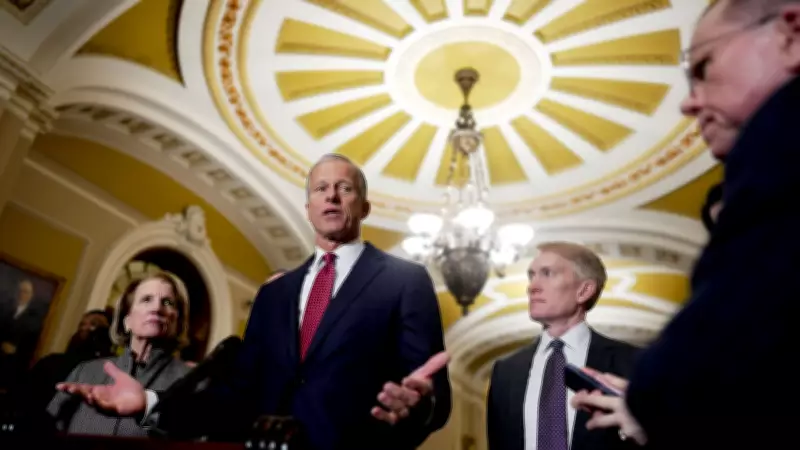
Senate Majority Leader John Thune, a Republican from South Dakota, has been at the epicenter of this storm, facing weeks of relentless pressure from conservatives to abolish or modify the Senate's filibuster rule. In a candid admission to reporters at the Capitol, Thune laid bare the harsh reality: "The votes aren't there, one, to nuke the filibuster, and the votes aren't there for a talking filibuster." He emphasized that delivering this "not-so-good news" is part of his role, noting that the numbers simply do not add up for passing the SAVE Act without Democratic support.
External Pressure and Apocalyptic Warnings
Outside the halls of Congress, right-wing influencers have amplified the stakes, framing the bill's failure as a near-apocalyptic event for democracy, despite voter fraud being statistically rare. Former White House aide Elon Musk declared on X, "Democracy without secure elections is not democracy at all." Meanwhile, commentators like Laura Ingraham and former GOP congressman Mark Meadows have insisted that passing the SAVE Act is paramount, with Meadows warning that failure could cost Republicans control of both the House and Senate.

Thune acknowledged this external fervor on Tuesday, stating, "You have a lot of optimists out there, and I appreciate that a lot of passion and energy behind getting an outcome here, but getting an outcome would require Democrat votes." Trump has only intensified the pressure, threatening to withhold signatures on other bills until the Senate advances the SAVE Act, which aims to mandate proof of citizenship for voter registration, require ID at polling places, and severely curtail mail-in voting.
Legislative Hurdles and Democratic Opposition
The SAVE Act, dubbed "Jim Crow 2.0" by Democrats, faces staunch opposition from Senate Minority Leader Chuck Schumer, who has declared it dead on arrival. The bill's provisions include requiring mail-in voters to submit photocopied IDs, with states obligated to provide free copying services, a move critics argue would suppress voter turnout.
Despite this, far-right Republicans like Senator Tommy Tuberville of Alabama are demanding passage "by any means necessary," including eliminating the filibuster. Senator Mike Lee of Utah, a lead sponsor, has proposed using a "talking filibuster" strategy, where opponents would be forced to talk until exhaustion before a vote. However, this tactic has never succeeded legislatively and faces procedural roadblocks, as Democrats could prolong debate indefinitely with amendments and points of order.
Thune conceded, "We don't have the votes either to proceed, to get on a talking filibuster, nor to sustain one if we got on it. That's just a function of math, and there isn't anything I can do about that." Even if attempted, Democrats like Senator Cory Booker of New Jersey, who holds the record for a 25-hour speech, are prepared to talk for extended periods to block the bill.
Broader Implications and State-Level Divisions
Trump's demands extend beyond the SAVE Act, including calls to ban transgender athletes in women's sports and further restrict mail voting, which he baselessly links to fraud. These proposals face resistance even within GOP ranks, such as from Senator John Curtis of Utah, where mail-in voting is widely used and successful. Curtis noted, "Voting right now in Utah has been done very successfully, and my instinct is to support my state."

Adding to the complexity, Trump is reportedly withholding an endorsement in Senator John Cornyn's Texas runoff election as leverage to pressure Senate Republicans on the SAVE Act. Meanwhile, House proponents like Representative Anna Paulina Luna of Florida suggest using must-pass intelligence reauthorization bills as hostages to force action, highlighting the ongoing political strife.
As the midterms approach, Senate Republicans remain caught between Trump's uncompromising demands and the stark realities of legislative math, with no clear path forward in sight.