Trump's Davos Address: A Calculated Display of Political Theater
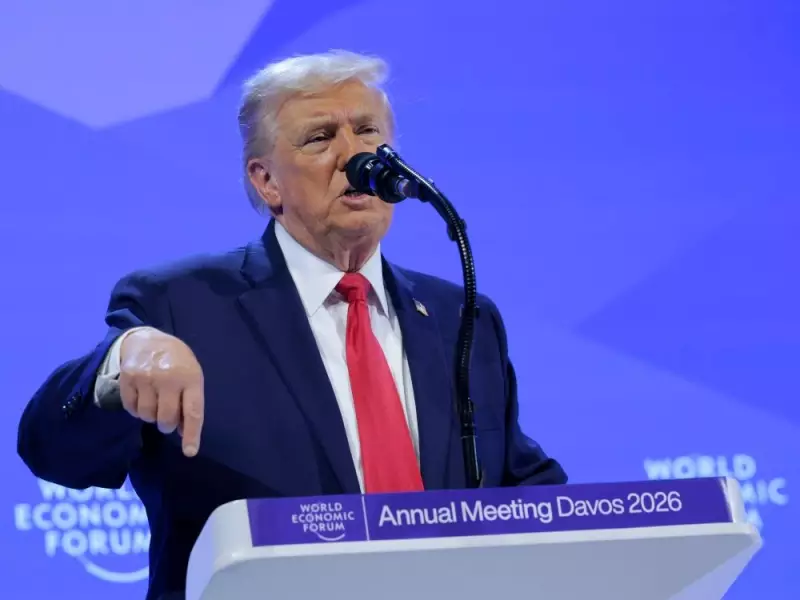
At the World Economic Forum in Davos, Switzerland, U.S. President Donald Trump delivered a speech that blended domestic achievements with provocative international commentary. His remarks, while generating headlines, revealed a pattern of behavior that some observers interpret as more theatrical than genuinely threatening.
The Greenland Gambit: Rhetoric Versus Reality
Trump's renewed interest in acquiring Greenland dominated his Davos presentation. He told the audience that "Those missiles will be flying right over the center of that piece of ice" in potential conflict scenarios, justifying his pursuit of the Danish territory. The president announced he was "seeking immediate negotiations" for Greenland's acquisition while simultaneously claiming he "won't use force" against NATO allies or Greenland itself.
This contradictory messaging has created understandable concern among European leaders. Danish officials and others have interpreted Trump's Greenland comments as annexation threats, particularly given recent context:

- Last week, Trump declared he "needs Greenland for the purpose of National Security"
- His press secretary recently stated the U.S. military remains "always an option" regarding Greenland
- A senior Trump aide's wife posted an image of Greenland painted in American stars and stripes
Europe's Security Blind Spots and Trump's Critique
Beyond the Greenland controversy, Trump used his Davos platform to criticize European leadership for what he perceives as fundamental security failures. He specifically targeted their handling of mass migration, claiming it has resulted in "heightened rates of crime, disorder and overall cultural degradation."
Trump's assessment was blunt: "Quite frankly, many parts of our world are being destroyed before our very eyes. And the leaders don't even understand what's happening. And the ones that do understand aren't doing anything about it." This critique extends to Canada, where similar concerns about demographic changes and security preparedness receive minimal attention from political leadership.
Canada's Inadequate Defense Posture
While Trump's rhetoric generates international headlines, Canada's response reveals significant security vulnerabilities. According to military analysis reported by the Globe and Mail, Canada lacks the conventional forces and equipment needed for effective defense against potential threats. The envisioned strategy involves "small groups of irregular military or armed civilians" employing unconventional tactics including:
- Ambushes and sabotage operations
- Drone warfare capabilities
- Hit-and-run tactical engagements
Paradoxically, the federal government is simultaneously implementing policies that undermine this very defense concept. A nationwide gun confiscation scheme targeting "assault-style" firearms would potentially disarm the civilian population that might form such resistance groups. Even if not completely successful, this initiative creates a comprehensive database of firearms owners - information that could potentially be exploited by adversaries with superior technical capabilities.
Prioritizing Ideology Over Security Preparedness
Canada's security challenges are compounded by what some critics describe as misplaced governmental priorities. Rather than focusing on conventional defense capabilities, the government continues advancing diversity initiatives within National Defence, including preferential hiring practices for minority applicants over white candidates.
Additional controversial measures include installing feminine hygiene product dispensers in men's washrooms across military bases and allocating military resources to support "humanism" as what some characterize as a "bizarre fake religion." These decisions occur while Canada participates in Denmark's upcoming military exercises in Greenland - a symbolic gesture of resistance that critics argue fails to address fundamental security deficiencies.

The Davos episode reveals a troubling disconnect: while Trump's rhetoric generates alarm, the response from Canadian and European leadership suggests either disbelief in the seriousness of the threat or fundamental unpreparedness for potential security challenges. This gap between perceived danger and practical preparation creates vulnerabilities that extend beyond rhetorical exchanges to tangible security concerns for North American and European allies.