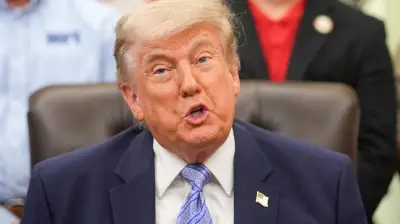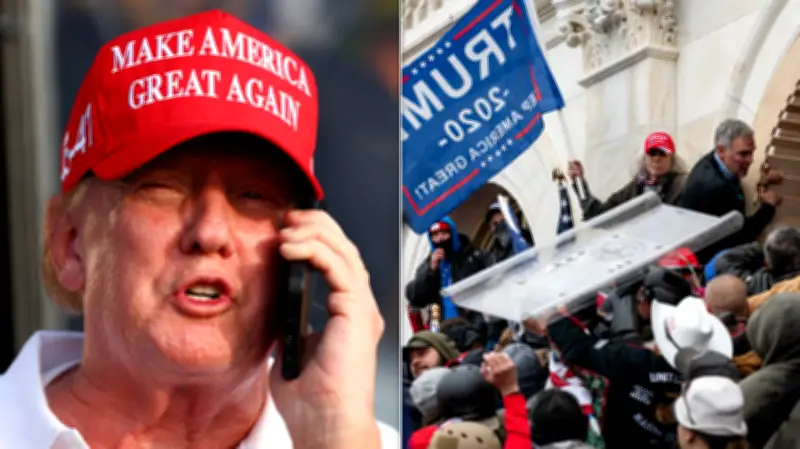
The $1.8 billion “Anti-Weaponization Fund” intended to compensate allies of President Donald Trump is “not moving forward,” according to acting Attorney General Todd Blanche. However, the president continues to advocate for payouts to individuals who stormed the U.S. Capitol on January 6, 2021, asserting they were unjustly targeted. During an appearance on “Pod Force One With Miranda Divine,” Trump stated, “Just so you understand, these are people who have been decimated. Who lost their lives over nonsense. They were supposed to serve five or 10 years in jail. People committed suicide. There’s never been anything like this that happened to these people. These were very great people, I was proud to give them pardons and I think they should be reimbursed by the government.”
Despite the fund's apparent suspension, legal experts suggest that Jan. 6 defendants may still have a viable path to compensation through other means. The Justice Department is scheduled to appear in court next week to clarify whether the fund is officially terminated. Even if the fund is dead, defendants could pursue settlements for malicious prosecution claims, which, while difficult to win in court, can be resolved through government settlements with relative ease.
Potential for Settlements
Molly Nixon, a senior fellow in executive power at the Cato Institute, explained that proving malicious prosecution requires a high bar, but settlements are more flexible. “There is a high bar for malicious prosecution in terms of winning a case,” she said. “But in the case of getting a settlement from the government, it’s whatever the government really wants it to be.”

One individual seeking compensation is Andrew Paul Johnson, who pleaded guilty to four counts for his role in the Capitol riot and later received a pardon. After his release, he was convicted on child sexual abuse charges and sentenced to life in prison. Despite his criminal record, Johnson expressed interest in pursuing a government payout, praising Trump’s support. He wrote to HuffPost, “Its truly a blessing to hear Mr. Trump has not forgot his people.”
Johnson’s case was highlighted during a congressional hearing where Sen. Chris Van Hollen pressed Blanche to ensure Johnson would not receive compensation. Blanche avoided making such a commitment. Johnson’s child abuse convictions occurred both before and after his Jan. 6 incarceration, leading some to argue that Trump’s clemency may have facilitated further criminal conduct.
Legal Pathways
An anonymous attorney familiar with Jan. 6 litigation noted that proving malicious prosecution requires demonstrating no factual or legal basis for the prosecution, which is challenging after a conviction. However, settlements bypass these hurdles. Proud Boys leader Henry “Enrique” Tarrio, convicted of seditious conspiracy, acknowledged this, stating that defendants could “settle the tort claims and lawsuits” for “a lot more money in compensation.” Tarrio and his co-defendants have already sued for $100 million in damages.
The Justice Department’s Judgment Fund, a taxpayer-funded pool, is used for settlements. Nixon explained that the department has discretion over settlements, and payments can be made even before a lawsuit is formally filed. “The Department of Justice also has authority to settle cases before they are filed,” she said. A draft lawsuit can be sent to the DOJ, and if the attorney general approves, a settlement can be reached without court proceedings. The Judgment Fund has no cap on payouts since 1977, providing significant flexibility.
Trump’s repeated public statements asserting that Jan. 6 rioters were wronged could bolster such claims. Nixon noted that these statements, combined with the pardons, create a favorable environment for settlements. However, the Justice Department maintains discretion, and the sudden influx of potential claims could pose logistical challenges.
Ultimately, while the Anti-Weaponization Fund is stalled, the possibility of compensation through settlements remains. As Nixon concluded, “There’s always a tradeoff in how Congress crafts authority it’s giving to the executive branch... But at the end of the day, all the process in the world can’t protect the government against people who don’t respect the spirit of law.”