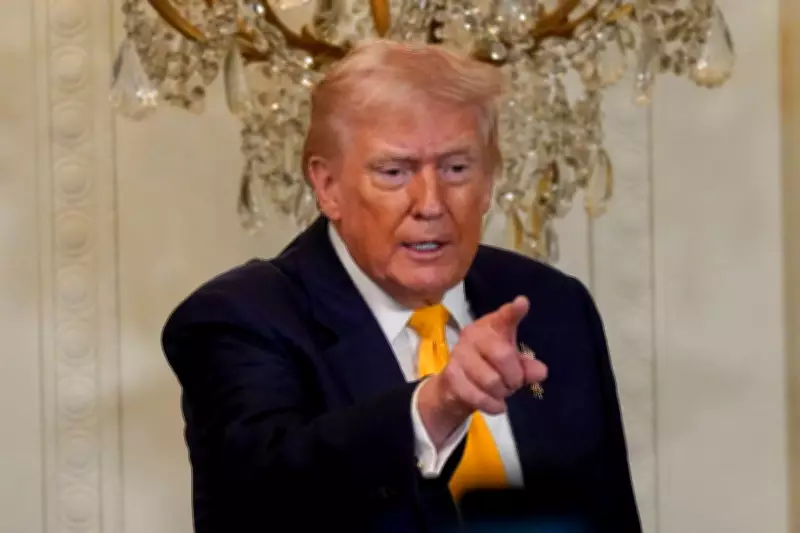
Trump Pledges Full Disclosure of U.S. Extraterrestrial Records
In a striking announcement that has reignited decades of public speculation, former President Donald Trump has declared his intention to order the comprehensive release of all United States government files concerning extraterrestrial life and unidentified flying objects. The statement, made during a recent public appearance, signals a potential unprecedented shift in official transparency regarding one of the most enduring mysteries of modern times.
A Commitment to Declassification
Trump explicitly stated that, should he return to the White House, he would issue directives to multiple federal agencies, including the Department of Defense and intelligence communities, to declassify and publicly release all documents, videos, and data pertaining to extraterrestrial phenomena. This move, he suggested, is aimed at ending what many have described as a long-standing government policy of secrecy and obfuscation on the subject.
The announcement comes amid a renewed cultural and political focus on UFOs, now more formally referred to as Unidentified Anomalous Phenomena (UAP). In recent years, congressional hearings and Pentagon reports have acknowledged the existence of numerous unexplained aerial incidents, though stopping short of confirming extraterrestrial origins. Trump's pledge represents the most direct promise from a major political figure to force full disclosure.

Historical Context and Public Interest
Public fascination with the possibility of alien life and government cover-ups has been a persistent element of American culture since the mid-20th century. Notable incidents, such as the alleged 1947 Roswell crash, have fueled countless theories and demands for transparency. Previous administrations have released some files through the Freedom of Information Act, but critics argue these have been heavily redacted and incomplete.
Trump's promise taps directly into this deep-seated curiosity. If fulfilled, it could potentially unveil information from decades of military and intelligence investigations, including reports from pilots, radar data, and analysis of recovered materials. The scope of such a release remains undefined, but the implication is a sweeping review of all classified materials on the topic.
Potential Implications and Reactions
The reaction to Trump's announcement has been predictably polarized. Proponents of greater transparency, including some members of Congress and civilian research organizations, have welcomed the pledge as a necessary step toward truth. They argue that the American public has a right to know if the government possesses evidence of non-human intelligence or advanced technologies of unknown origin.
Conversely, national security experts express caution. They warn that a blanket declassification could compromise sensitive sources and methods, potentially revealing U.S. military capabilities or intelligence-gathering techniques. The process would undoubtedly involve complex legal and security reviews to balance public interest with legitimate defense concerns.
Regardless of the outcome, Trump's statement ensures that the issue of extraterrestrial life and government secrecy will remain a topic of intense debate and speculation in the political arena. It adds a unique and unexpected dimension to the policy landscape, promising a potential revelation that could reshape humanity's understanding of its place in the cosmos.