Trump Sends Envoys to Pakistan for Iran Talks, Threatens Infrastructure Strikes
U.S. President Donald Trump announced on Monday evening that he will dispatch representatives to Pakistan for crucial talks aimed at ending the ongoing conflict with Iran. Simultaneously, he issued a stark warning, threatening to target civilian infrastructure in Iran if Tehran fails to agree to a proposed deal. This development comes as tensions escalate over the strategic Strait of Hormuz, which Iran recently closed again in response to a U.S. naval blockade.
High-Stakes Diplomatic Mission
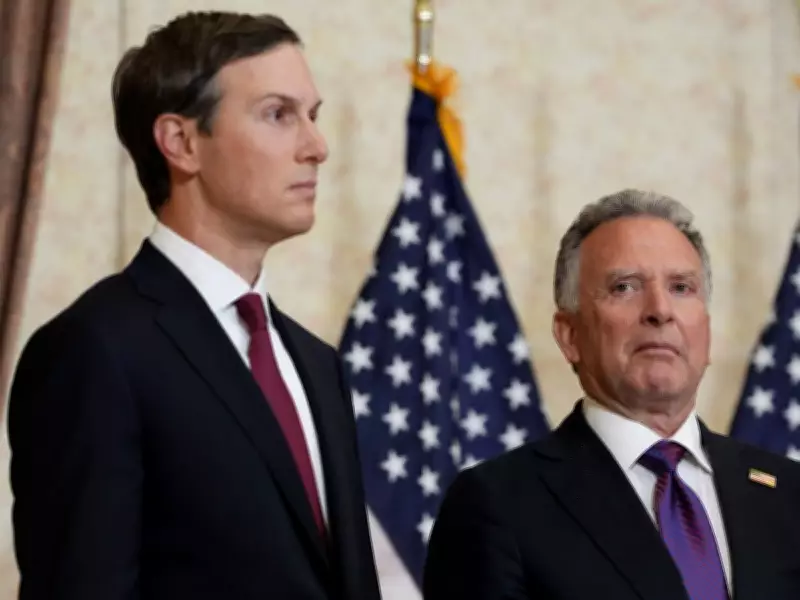
Special Envoy Steve Witkoff is scheduled to travel to Islamabad on Tuesday for negotiations that could extend through Wednesday. According to reports from the New York Post, Jared Kushner, Trump's son-in-law, will also participate in these high-level discussions. The talks focus on achieving a ceasefire in a war that has already claimed thousands of lives. The diplomatic push follows Iran's decision to reverse its earlier move to reopen shipping through the Strait of Hormuz, a critical global oil transit route.
In a social media post early Sunday, Trump emphasized the urgency of the situation, stating, "We're offering a very fair and reasonable DEAL, and I hope they take it because, if they don't, the United States is going to knock out every single Power Plant, and every single Bridge, in Iran." This threat underscores the administration's hardline approach as negotiations proceed.

Strait of Hormuz Standoff Deepens
The closure of the Strait of Hormuz poses significant risks to global energy markets, with approximately one-fifth of the world's oil previously flowing through this narrow passage before the U.S.-Israeli military campaign against Iran began. The standoff threatens to exacerbate the ongoing global energy crisis and undermine hopes for an imminent peace agreement. Beyond the strait, other unresolved issues in the peace talks include Iran's nuclear program and Israel's continued invasion of Lebanon.
Iran's semi-official Mehr news agency reported on Sunday that ships are awaiting instructions from Iran's armed forces regarding passage through the route. Meanwhile, Mohammad Bagher Ghalibaf, Iran's Parliament Speaker who led recent talks with the U.S. in Pakistan, acknowledged that while significant gaps remain, negotiations are making progress. He warned in a televised address, "It is impossible for others to pass through the Strait of Hormuz while we cannot," referencing the U.S. naval blockade.
Military Preparations and Warnings
According to a Wall Street Journal report citing anonymous American officials, the U.S. military is preparing to board Iran-linked oil tankers and seize commercial ships in international waters in the coming days to pressure Iran into reopening the strait. The White House has not yet commented on this report. In response, the Islamic Revolutionary Guard Corps' Navy issued a statement on Saturday afternoon, cautioning vessels against leaving their anchorages in the Persian Gulf and the Sea of Oman. The statement declared that approaching the strait "will be considered cooperation with the enemy, and the violating vessel will be targeted."
Trump addressed reporters on Saturday, accusing Iran of attempting to blackmail the United States by closing the strait, despite it being fully open until the U.S. and Israel initiated their bombing campaign seven weeks ago. He stated, "They wanted to close up the strait again like they've been doing for years and they can't blackmail us. We'll have some information by the end of the day, you know. We're talking to them. We're taking a tough stand."
Erratic Developments and Contradictory Statements
The past 72 hours have highlighted the unpredictable nature of the conflict and the sometimes contradictory nature of Trump's comments. On Friday, the president suggested that a deal with Iran was nearly finalized, including concessions Tehran has never publicly acknowledged, and expressed readiness to sign and shift focus to domestic issues. He even told ABC News that he trusted the Iranians, a notable shift from his recent threats against their civilization.

However, Trump maintained the blockade of the Strait of Hormuz until an agreement is finalized. Iran viewed this blockade as a violation of the ceasefire and responded by closing the waterway again, prompting Trump's latest threats against civilian infrastructure. This whiplash in diplomacy illustrates the volatile dynamics at play as both nations navigate toward a potential resolution.