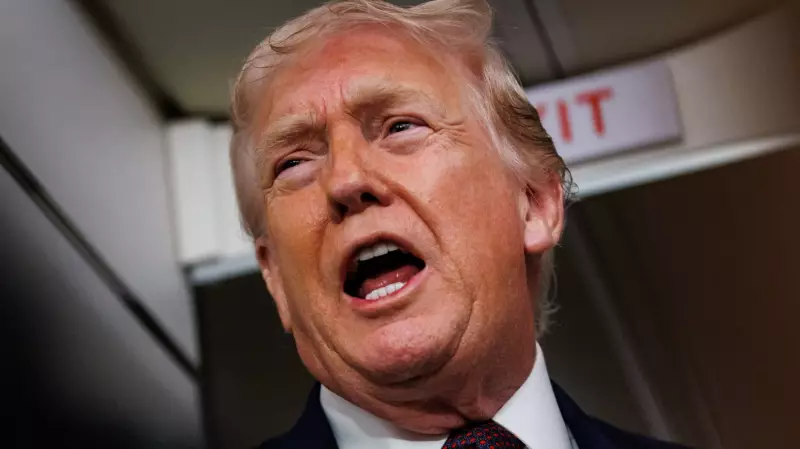
Former U.S. President Donald Trump is facing intense bipartisan and public criticism after posting a provocative image on his Truth Social platform this Sunday, January 12, 2026. The post featured a mock Wikipedia-style graphic that declared Trump the "acting president of Venezuela" as of that date, a move critics are labeling as authoritarian and delusional.
The Backdrop: Military Intervention and Oil Interests
This online declaration follows a significant real-world escalation earlier in January. Trump ordered the U.S. military into Venezuela to forcibly remove the country's leader, Nicolás Maduro. The stated objective was to bring Maduro to New York to stand trial on drug trafficking charges. Notably, this military action was taken without obtaining approval from the U.S. Congress, leading to a swift bipartisan rebuke in the Senate.
In the aftermath of the operation, Trump stated that the United States would be running the South American nation. Delcy Rodríguez, who had been serving as Maduro's vice president, is ostensibly the interim president, but Trump's assertion and subsequent social media post suggest he views ultimate authority as residing with him. The move is also tied to Venezuela's vast oil reserves; last week, Trump discussed the issue of Venezuela's oil with industry executives at the White House.

A Firestorm of Criticism Erupts Online
The "acting president" post ignited an immediate firestorm on social media, with commentators, lawmakers, and experts expressing alarm and ridicule.
Critics labeled the post as evidence of "authoritarian megalomania" and "complete insanity." U.S. Representative Ted Lieu pointedly criticized the administration's competence, noting, "Trump sucks at running America. Which is why he also sucks at running Venezuela." He highlighted the irony of the U.S. warning Americans to leave Venezuela while simultaneously expecting American companies to invest there.
Other reactions framed the action as a colonial pursuit. Commentator Jesse Lee stated, "Trump is under the impression that people like being colonized," calling it an argument against electing an ignorant person to a powerful office. The Ekklesia Network summarized the event as part of a pattern of "chaos, division, contempt for democracy, defiance of the law, political theatre, [and] normalisation of extremes."
Implications and a Nation in Limbo
The situation presents a profound constitutional and international crisis. The unilateral military action and subsequent claim of executive authority over a sovereign nation represent an extraordinary expansion of presidential power, drawing condemnation from both sides of the political aisle at home. Internationally, it sets a dangerous precedent for regime change and resource appropriation.
Venezuela now exists in a state of legal and political limbo. While an interim president is formally in place, the de facto control asserted by the U.S. and Trump's personal claim to the title create an unstable and unpredictable governance vacuum. The episode underscores deep concerns about the erosion of democratic norms and the blending of personal political theatrics with grave matters of state and foreign policy.