Mulcair: Trump's Iran Policy Flounders as Global Allies Withdraw Support
Donald Trump appears to be experiencing a similar shock to that which Russian President Vladimir Putin encountered when his vision of a swift victory in Ukraine evaporated into a deluded mirage. As Canadian Prime Minister Mark Carney and other international leaders retreat from their initial positions, Trump's approach to Iran shows increasing signs of incoherence and isolation.
The Bone Spurs Controversy and Military Experience
Trump famously avoided military service during the Vietnam War through a medical deferment for what he described as "temporary" bone spurs in his heels—a condition that curiously never interfered with his golf game. While military service alone wouldn't necessarily prepare someone to command the world's largest military, it might have provided Trump with crucial insight into the complexities and human costs of warfare.
Strategic Confusion and Unlikely Alliances
Over recent days, revelations have emerged that Trump may have significantly exaggerated his claims of victory over Iran. In a remarkable development, he has reportedly requested assistance from China—specifically asking the People's Liberation Army to help keep the Strait of Hormuz open. This represents a stunning diplomatic reversal, given that Iran has long maintained friendly relations with China.

When other nations including the United Kingdom, Germany, Japan, and South Korea offered noncommittal responses or polite refusals to Trump's requests for support, the U.S. president resorted to threatening NATO allies. This pattern reveals a fundamental breakdown in international coordination and strategic planning.
Global Consensus and Canadian Positioning
While most functioning democracies share the stated goal of preventing Iran from developing nuclear weapons, agreement ends there for two critical reasons. First, no country except Israel appears to have been consulted before U.S. strikes on Iran began on February 28. Second, the United States has failed to articulate consistent strategic objectives for its actions.
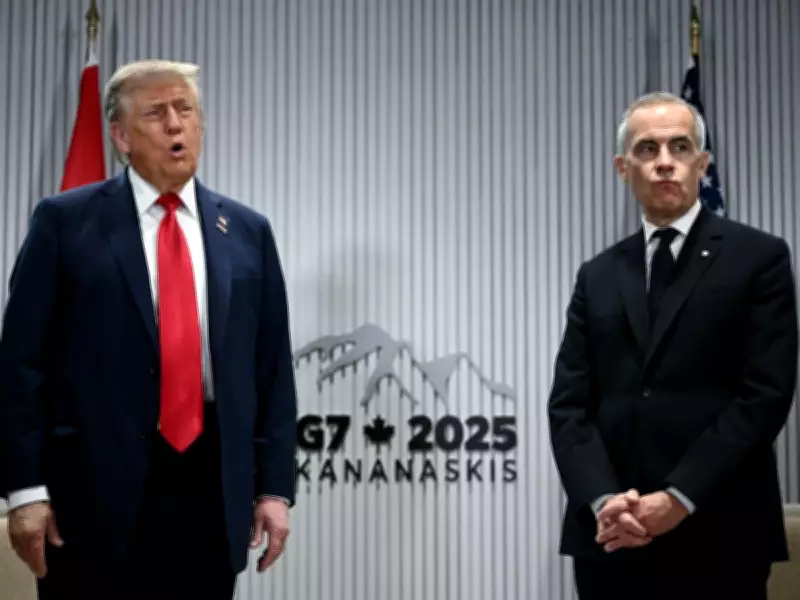
Canadian Prime Minister Mark Carney has spent the past two weeks carefully distancing himself from his initial full-throated support for Trump's approach. While Carney's original reaction likely reflected support for dismantling Iran's nuclear program, his subsequent repositioning demonstrates greater diplomatic caution and strategic foresight.
Historical Parallels and International Responses
British Prime Minister Keir Starmer's more measured response reflects the collective memory of former Labour Prime Minister Tony Blair's misadventure in supporting George W. Bush's war against Iraq based on fictitious weapons of mass destruction claims. Starmer eventually compromised by allowing U.S. forces to use British bases for defensive purposes, though recent footage of Cold War-era B-52 bombers at those bases—aircraft designed for heavy bombing campaigns rather than defensive operations—undermines this distinction.
As with Putin's growing derangement amid mounting Russian losses in Ukraine, Trump shows increasing signs of strategic confusion. The White House's production of cringeworthy videos splicing together Hollywood movie clips reflects this lack of cogency, suggesting a leader entering his dotage rather than commanding global respect.
Canada's Emerging Role and Future Prospects
Mark Carney recently marked his first anniversary as Canadian prime minister, a period during which his experience, expertise, and maturity have elevated Canada's international standing to its highest point since World War II. His remarkably prescient Davos speech in January drew widespread admiration for its insights and foresight.
The global community faces a challenging period ahead until Trump's influence is potentially curtailed in upcoming elections. Meanwhile, the growing wave of goodwill toward Carney and Canada represents the beginning of a reasoned bulwark against the unpredictable leadership to the south. As international alliances shift and recalibrate, Canada's steady diplomatic approach offers a stabilizing counterpoint to Trump's flailing Iran policy.
Tom Mulcair, a former leader of the federal NDP, served as minister of the environment in the Quebec Liberal government of Jean Charest.