

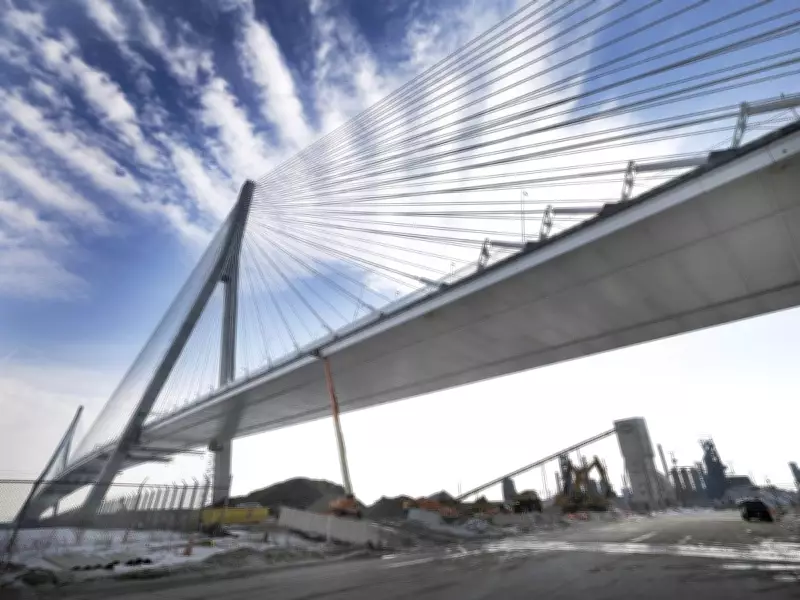
Trump's Border Staffing Threat Puts Gordie Howe Bridge Opening in Jeopardy
A straightforward yet potentially devastating tactic could allow former President Donald Trump to fulfill his recent threats against Canada and obstruct the opening of the Gordie Howe International Bridge. According to legal experts, the U.S. president possesses the authority to simply refuse to assign federal officers to customs booths at the border crossing.
How Trump Could Block the Bridge Opening
Jennifer Taub, a professor of law at Wayne State University, explained the mechanism to The Windsor Star. "He would just simply stamp his feet and refuse to staff the border, and then it wouldn't be possible to open it," Taub stated. "But I saw that our governor believes that it will open on time sometime this year. I remain hopeful."
This threat emerges as construction on the $6.4-billion bridge, which began in October 2018 after decades of political debate, was anticipated to open early this year. The project connects Windsor and Detroit across North America's busiest trade corridor.

Trump's Demands and Claims
In a Truth Social post on Monday, Trump made several assertions about the bridge project:
- He claimed Canada owns both the Canadian and U.S. sides of the bridge
- He stated the bridge was built with "virtually no U.S. content"
- He accused former President Barack Obama of "stupidly" granting Canada a waiver to bypass the Buy American Act
Trump declared he won't allow the bridge to open until Canada treats the U.S. fairly and "the United States is fully compensated for everything we have given them." He further demanded "at least one half" ownership of the bridge structure.
The Actual Facts About the Bridge Project
Contrary to Trump's claims, the reality of the Gordie Howe International Bridge arrangement is quite different:
- Ownership Structure: Canada and Michigan jointly own the bridge, not Canada alone
- Funding: Canada is fully financing construction after Michigan's legislature declined to contribute, with taxpayer investment to be reimbursed through toll collection
- Revenue Sharing: Once construction costs are recovered, Canada and Michigan will split future revenues
- Border Operations: U.S. Customs and Border Protection officers would staff the Detroit side, while Canada Border Services Agency officers would operate on the Windsor side
- Construction Materials: Both Canadian and American workers built the bridge using materials sourced from both nations
Historical Context of the Waiver
The waiver granted by the Obama administration in 2012 was justified "in the public interest" due to the unique financing arrangement and the fact that half the project exists outside U.S. territory. The waiver document specifically states: "the basic notion of fairness weighs in favor of allowing Canadian iron and steel to be used so long as American iron and steel is allowed to compete on an equal basis."
The bridge project originated from a 2001 binational study examining ways to improve commerce flow across this critical trade corridor. The current uncertainty represents yet another chapter in the long history of political wrangling surrounding this vital infrastructure project that has been decades in the making.






