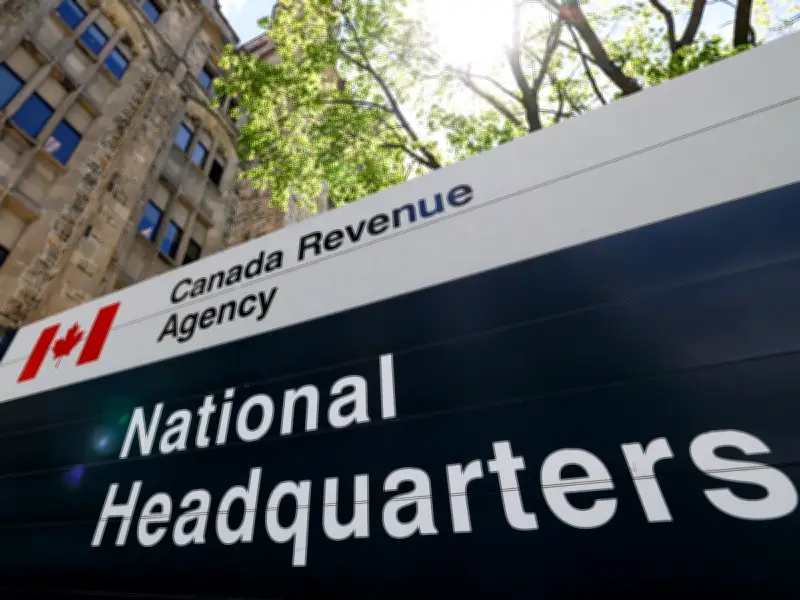
The Canada Revenue Agency’s service standard for processing complex changes to income tax returns is 20 weeks, but the agency is taking more than double that time. This has prompted federal taxpayers’ ombudsperson François Boileau to launch a systemic examination into the delays.
Ombudsperson Raises Concerns
“Forty-seven weeks is a long time for anyone to receive any news from the CRA, with regard to T1 adjustments that are complex, and we want to find out why it is so, and what is the root cause of the problem,” Boileau said in an interview on Thursday, the day he initiated the examination.
Boileau questioned whether the delays stem from a lack of resources, too many requests, or overly complex laws. He noted that simple T1 revisions take between two and eight weeks.

Lack of Communication
Boileau highlighted that the CRA can deem a taxpayer’s request complex but does not inform the taxpayer. “So, there’s also a lack of communication there,” he said. Examples of complex revisions include multiple years of returns, bankruptcies, deceased taxpayer returns, carry-back amounts, and pension-splitting.
“Well, all right then, but because the CRA is asking for more documents, should it take 47 weeks? Not too long ago, it was actually 50 weeks. 50 weeks,” he emphasized. “Wow. It’s like two weeks short of being a full year. Imagine that.”
Previous Criticism of CRA
This is not the first time the CRA has faced scrutiny. In September 2025, National Revenue Minister François-Philippe Champagne ordered the agency to launch a 100-day plan to improve service and reduce delays. Earlier, CRA call centre service was described as having hit “rock bottom” by then-minister Wayne Long. A subsequent auditor general report found that CRA call centres gave auditors incorrect information 83% of the time.
“So, this is not the first time we’ve done something like this,” said Boileau.
Service Improvement Request
In addition to the systemic examination, Boileau’s office sent a service improvement request to the CRA, urging changes to the T1 Adjustment Request webpage to encourage online filing instead of printing and mailing forms, which would speed up processing.
“We’re hopeful to get to the bottom of the CRA’s reasons and what can be done,” Boileau said. He suggested that changes to the Income Tax Act might be needed but added, “I’m not sure that’s the answer, by the way. Or is it just inefficiencies within the system? We just want to find out the real reasons.”
Boileau aims to complete the examination and publish a report by the end of November or early December.