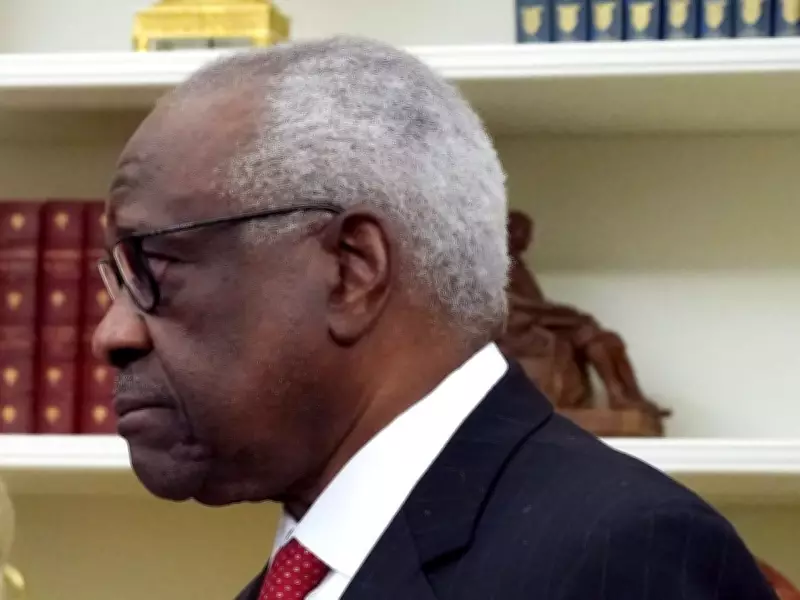
Supreme Court Associate Justice Clarence Thomas, joined by Justice Neil Gorsuch, issued a concurring opinion in a recent case that restricts the use of race in designing a Louisiana congressional district. Thomas argued that the Court should never have interpreted Section 2 of the Voting Rights Act of 1965 to guarantee racial groups proportional representation. He stated that this interpretation led to systematic racial division in electoral districts, which is repugnant to a color-blind Constitution. The decision, he said, should end this disastrous misadventure in voting-rights jurisprudence.
Critics and Supporters React
Critics contend that the ruling is not truly color-blind because race-neutral districting can dilute minority voting power. They assume that non-minority voters would not vote for minority candidates and that minority interests can only be represented by minority members of Congress. However, supporters argue that the decision removes race as a criterion, promoting a more equitable system.
Potential Political Fallout
For Democrats, the ruling could be politically catastrophic. A report from Fair Fight Action and Black Voters Matter Fund suggests that combined with Republican gerrymandering, the ruling could secure an additional 27 safe Republican House seats compared to 2024 maps, with at least 19 directly tied to the loss of Section 2.

House Minority Leader Hakeem Jeffries accused Republican extremists of voter suppression and racial gerrymandering, claiming the Supreme Court's conservative majority is corrupt and trying to cheat to win. However, it is unclear how removing race from districting amounts to cheating, or how the majority of justices appointed by Republican presidents renders the court corrupt.
Voter ID and Racial Gerrymandering
Jeffries' comments on voter ID laws are contradicted by polls showing a large majority of blacks support voter ID. Georgia's 2021 voter ID laws, criticized by President Biden as worse than Jim Crow, saw black voter turnout exceed pre-2021 levels. Regarding racial gerrymandering, former Attorney General Eric Holder launched the National Democratic Redistricting Committee to roll back Republican gains and prepare for redistricting. Holder supported race-conscious redistricting to increase black electoral influence, as seen in Alabama's 2024 district redrawing.
Racial Voting Patterns
Four black Republican House members represent districts that are not majority-black. Democrat Maxine Waters, a harsh critic of the ruling, represents a district that is only about 20% black. White Rep. Steve Cohen succeeded black Rep. Harold Ford Jr. in a majority-black district. Gallup polls show Trump's approval among blacks at 16%, up from 12% in his first term.
Contrary to Democratic rhetoric, America is not their grandfather's America. Many Democrat politicians do not want a color-blind society but a color-coordinated one overseen by them. The days of poll taxes and literacy tests are long over. As Thomas Sowell says, when people get used to preferential treatment, equal treatment seems like discrimination.