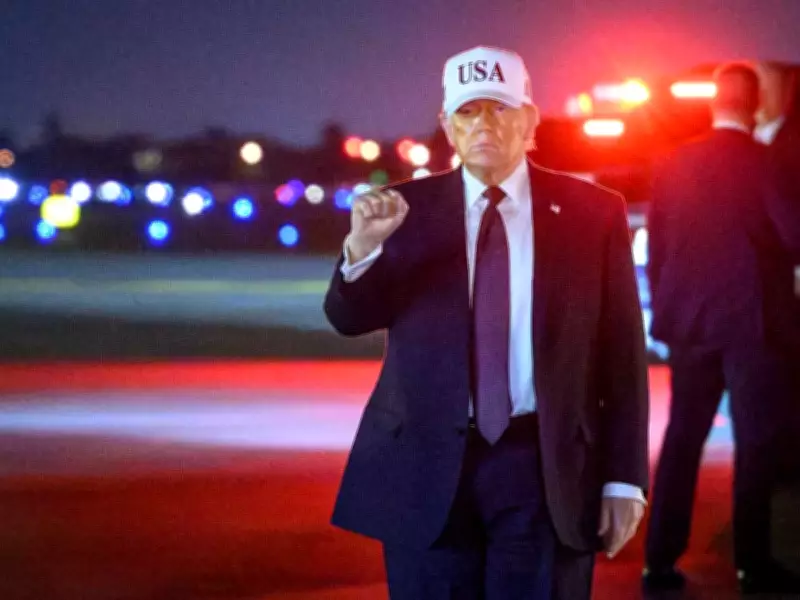
In a detailed analysis, columnist John Stossel has issued a report card for U.S. President Donald Trump's fifth year in office, offering a mixed review of his performance across various policy domains. The assessment, based on Trump's actions and statements, including his recent State of the Union address, provides a nuanced look at his presidency's successes and shortcomings.
Overall Assessment and Key Grades
Stossel's evaluation assigns letter grades to different aspects of Trump's administration, reflecting a blend of praise and criticism. The president received an A for his accessibility to the press, a notable contrast to his predecessor, Joe Biden, who often avoided reporters. However, Trump earned an F for what Stossel describes as "childish bragging" and mathematical inaccuracies, such as claiming to cut drug prices by percentages that defy basic arithmetic.
Regulatory and Economic Policies
On regulatory matters, Trump scored high marks for easing certain rules. For instance, the Transportation Security Administration no longer requires shoe removal at airports, and the Environmental Protection Agency halted mandates like "stop/start" features in vehicles. Stossel notes that these changes have been praised by entrepreneurs like Ken Griffin of Citadel, who credits Trump's criticism of regulation with boosting economic energy. Yet, the grade is tempered to a B- due to limited success in broader red tape reduction.

Economically, Trump self-assigned an "A+++++" rating, but Stossel offers a more modest C. While the stock market has reached record highs, unemployment has risen, and Trump's involvement in crony capitalism—taking ownership stakes in private companies—raises concerns about innovation decline and negative impacts on investors and consumers.
Spending and Debt Concerns
A significant area of criticism is the national debt, which has increased by over $2 trillion during Trump's tenure. Stossel quotes Ryan McMaken of the Mises Institute, who gives Trump a D grade, similar to Biden, for failing to cut spending. McMaken points out the political challenges in reducing popular programs like Social Security and Medicare, which dominate the budget.
Immigration and Executive Actions
On immigration, Trump receives an A for reducing illegal border crossings to their lowest level since 1970, restoring order to the southern border. However, he earns a D for the perceived cruelty of his deportation campaigns. Stossel also highlights that many of Trump's positive changes rely on executive orders rather than congressional collaboration, which could be easily reversed by a future administration.
Historical Context and Public Perception
Stossel addresses media portrayals of Trump as authoritarian, comparing him to past presidents like Richard Nixon and Franklin D. Roosevelt, who engaged in more severe actions such as bombing campaigns and economic policies that harmed citizens. McMaken argues that Trump has shown responsiveness to public opinion, as seen in his withdrawal of troops after incidents of ICE brutality, suggesting a less dictatorial approach than critics claim.
Looking ahead, Stossel notes that Trump has three more years to improve his record, with some unpopular policies already affecting electoral outcomes in Republican districts. The column concludes with a hope for positive change, emphasizing the ongoing battle between government and freedom that Stossel explores in his weekly videos.