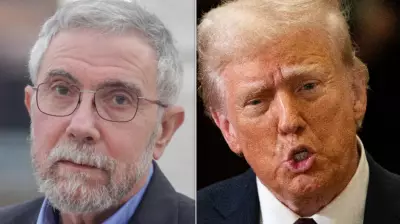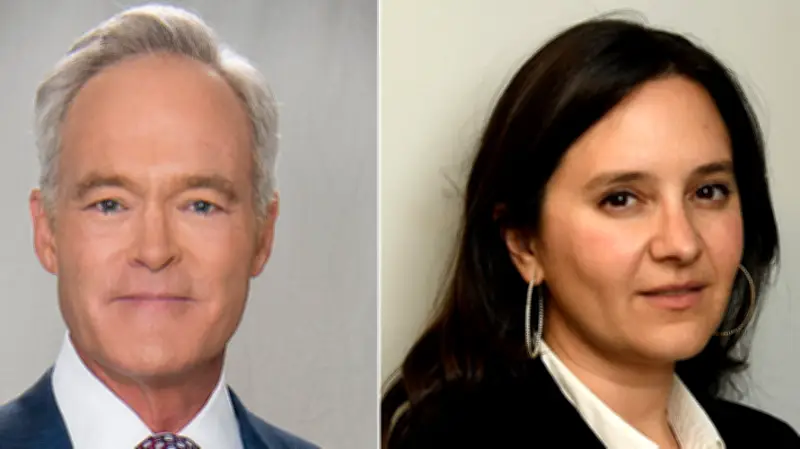
Scott Pelley, the veteran 60 Minutes anchor who was fired last week, has attacked CBS News leadership in his first interview since being dismissed from the storied news program and said Bari Weiss should be removed. Speaking to The New York Times, the reporter accused Weiss, CBS News editor-in-chief, of "putting a thumb on the scale" for President Donald Trump's administration after Weiss asked Pelley to edit his story on the Minneapolis protests against the Immigration and Customs Enforcement crackdowns to include protesters being more violent and to report that Renee Good was driving toward the police officer who shot and killed her — something that has been widely disproven. Pelley did not make the changes.
"My impression at the time was that she was putting a thumb on the scale on behalf of the administration. Constantly looking out for the views of the president," he told New York Times' Lulu Garcia-Navarro.
Pelley also mocked Weiss and the show's recently-installed executive producer, Nick Bilton, for their "disingenuous" attempts to modernize the program, when 60 Minutes had long ago embraced the internet.

"It's almost as if Bari Weiss and Nick Bilton were sealed in a time capsule in 1990, and it just cracked open," said Pelley, whose career at CBS News spanned more than three decades. "They've just discovered the internet, and they're running around telling everybody how important it is."
Pelley was fired after criticizing Weiss at a tense all-hands meeting last Monday, accusing the former right-wing columnist of "murdering '60 Minutes.'"
A CBS News spokesperson responded to Pelley's "thumb on the scale" claim, telling the Times that "there is no credible argument" to suggest this was ever the case.
Pelley got emotional several times throughout the hourlong interview, often tearing up when he would explain how 60 Minutes was a family. "My colleagues and I have worked together 10, 20, 30 years. We travel together. We dine together. We go into literal combat together. My former boss and former producer Bill Owens saved my life in a firefight in Iraq," Pelley said with tears in his eyes. "So, these bonds are pretty tight, and when somebody wipes out, murders a large number of your family members, people are desperate for some explanation, and as you and I sit here today, there still has been none."
Pelley defended confronting Bilton during the all-hands meeting last Monday, saying the confrontation was never meant to be public, and it came only after Bilton sent an "insulting" company-wide email a few days before, where he explained to the staff that it wasn't 1968 anymore and 60 Minutes needed to be modernized. "It betrayed the fact that Nick Bilton didn't know anything about us, didn't know anything about our culture, and yet was being imposed on us as our new leader," Pelley said.
During the all-hands meeting, Pelley said Bilton read a statement from his phone. This angered Pelley and when he realized he was the only senior staffer at the meeting, he said he knew he had to be the one to confront Bilton.
"There are people in that room who go to war zones when they are pregnant," Pelley said, tearing up. "Newsrooms are sort of like the military or the police or the beautiful people at the FDNY down the street. It is a life-threatening job in many instances. And to have people running CBS News, who don't know that, have never felt that, and don't understand it, is a tragedy."
A day after the tense meeting, Weiss and the president of CBS News, Tom Cibrowski, asked to meet with Pelley, where Pelley said Cibrowski accused him of "physically abusing" Bilton, and Weiss refused to answer any questions about the firing of his 60 Minutes colleagues. A few hours after the meeting, Pelley received an email that he was fired. Pelley said Weiss should be removed because television is "not her thing."
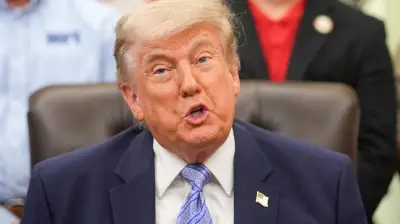
Pelley got emotional once again at the end of the interview when he responded to Trump calling him "stupid" and "stiff," and saying that he doesn't care about his country.

"Stupid? I can take that. Stiff? Yeah, probably," Pelley said. "Don't care about the country? I've never worn the uniform. But I've been in combat for this country, in Afghanistan and Iraq, Kuwait. I've been shot at, spent nights in foxholes filling up with water in the desert. I'm not aware that the president of the United States has ever done any of those things for his country. Please correct me if I'm wrong. You become a journalist because you love the First Amendment. You become a journalist because you love the country."
"And while all the other descriptions that the president used about me might be applicable, not that one," he said, tearing up. "There is no democracy without journalism. It can't be done. That is why I am a journalist."