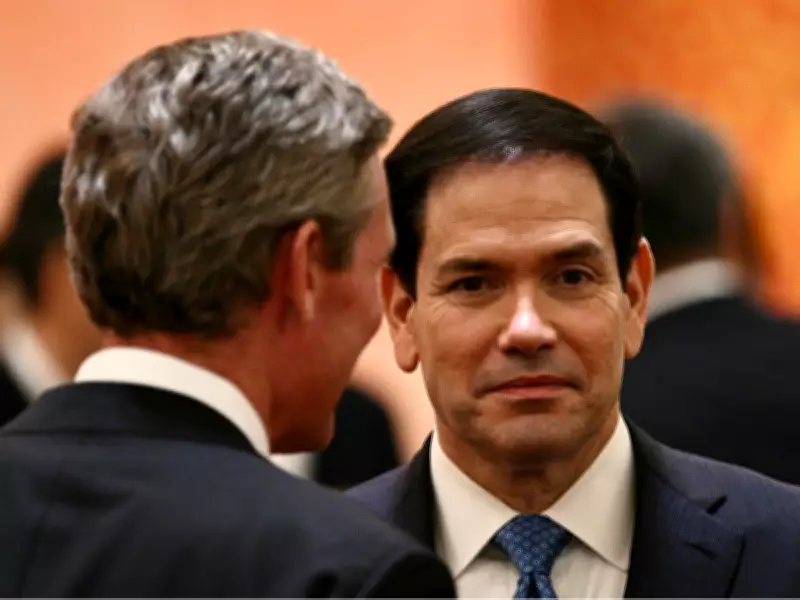
U.S. Secretary of State Marco Rubio's Chinese nameplate at a state banquet in Beijing sparked widespread speculation on Chinese social media this week, with many questioning whether a subtle linguistic change allowed him to circumvent a travel ban imposed in 2020. The character representing the first syllable of Rubio's name was altered from '卢' to '鲁,' prompting debates over whether this was a clever loophole or an intentional insult.
Background of Sanctions
China imposed sanctions on Rubio twice in 2020 during his tenure as a U.S. senator from Florida, following his vocal criticism of China's policies on Uyghur Muslims in Xinjiang and pro-democracy protests in Hong Kong. The sanctions barred him from entering China. However, during President Donald Trump's state visit to Beijing this week, Rubio was seen at a banquet with a nameplate reading '鲁比奥' instead of the original '卢比奥.'
Linguistic Workaround or Coincidence?
Chinese transliterations of English names are phonetic, and multiple characters can produce similar sounds. The change from '卢' (neutral) to '鲁' (meaning reckless, stupid, or crass) carries unflattering connotations. Two diplomats speaking to AFP suggested the alteration was directly linked to Rubio's sanctioned status. The new spelling began appearing in Chinese government notices and state media shortly before Rubio became secretary of state last year.

At his confirmation hearing, Rubio described China as the 'most potent and dangerous near-peer adversary' the U.S. has faced, but he has adopted a more diplomatic tone since taking office. When asked about Rubio's inclusion in the U.S. delegation, Chinese embassy spokesman Liu Pengyu stated, 'The sanctions are aimed at Mr. Rubio’s actions and rhetoric on China when he served as a U.S. senator.' Officials have not confirmed whether the transliteration change allowed Rubio entry or if sanctions were lifted.
Connotations and Controversy
The substitution of '鲁' for '卢' is significant beyond its phonetic function. As The Times of London notes, '鲁' can mean 'reckless,' 'stupid,' or 'crass,' adding a layer of potential insult to the name change. This has led to further speculation about China's intentions.
Rubio also faced ridicule on social media for wearing a grey Nike tracksuit aboard Air Force One, drawing comparisons to the attire of Venezuelan leader Nicolas Maduro after his arrest by U.S. forces in January. White House communications director Steven Cheung tweeted, 'Secretary Rubio rocking the Nike Tech ‘Venezuela’ on Air Force One!' Rubio denied copying Maduro, telling NBC Nightly News, 'You know what — he copied me because I had it before. I don’t know when he bought his.'
The incident highlights the complex dynamics of U.S.-China relations, where even a name change can become a diplomatic flashpoint.