Robert Mueller, Former FBI Director and Special Counsel, Dies at 81
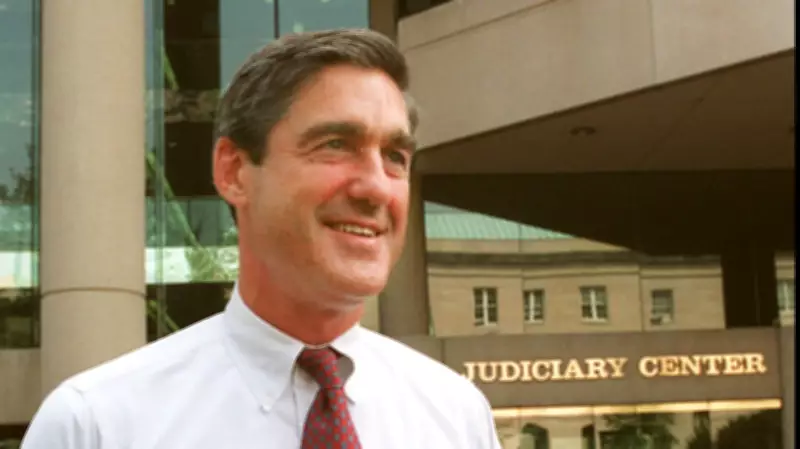
WASHINGTON — Robert S. Mueller III, the former FBI director who reshaped the nation's premier law enforcement agency into a counterterrorism powerhouse following the September 11, 2001, attacks and later served as the special counsel investigating Russian interference in the 2016 presidential election, has died. He was 81 years old.
"With deep sadness, we are sharing the news that Bob passed away" on Friday night, his family announced in a statement released on Saturday. "His family asks that their privacy be respected."
A Career Defined by National Security and High-Stakes Investigations
Mueller's tenure as FBI director began just one week before the catastrophic events of 9/11, thrusting him into a role that required an immediate and profound overhaul of the bureau's mission. Nominated by Republican President George W. Bush, he served for 12 years across administrations of both major political parties, becoming the second-longest-serving director in FBI history, behind only J. Edgar Hoover.

The attacks instantaneously shifted the FBI's primary focus from solving domestic crimes to preventing terrorism, a monumental task that set an almost impossibly high standard: preventing 99 out of 100 terrorist plots was deemed insufficient. Mueller spearheaded this transformation, reallocating resources and enhancing intelligence capabilities to meet the law enforcement needs of the 21st century.
Later, in a second act that would further cement his legacy, Mueller was appointed as special counsel by Deputy Attorney General Rod Rosenstein to lead the Justice Department's investigation into potential coordination between the Trump campaign and Russia during the 2016 election. His stern demeanor and taciturn approach matched the gravity of the inquiry, which he conducted with notable secrecy, avoiding public appearances despite intense political pressure.
The Russia Investigation and Its Aftermath
Mueller's team spent nearly two years on the investigation, resulting in criminal charges against six associates of former President Donald Trump, including his campaign chairman and first national security adviser. The 448-page report, released in April 2019, detailed substantial contacts between the campaign and Russia but did not allege a criminal conspiracy.
It also outlined Trump's efforts to influence or terminate the probe, though Mueller declined to make a definitive judgment on obstruction of justice, citing department policy against indicting a sitting president. In a memorable passage, the report stated: "If we had confidence after a thorough investigation of the facts that the president clearly did not commit obstruction of justice, we would so state. Based on the facts and the applicable legal standards, we are unable to reach that judgment."
The ambiguous conclusion left room for interpretation, with then-Attorney General William Barr asserting that Trump did not obstruct justice, leading to private disputes with Mueller over the report's summary. Mueller's subsequent congressional testimony in July 2019 was marked by terse responses and apparent uncertainty, disappointing some Democrats who had hoped for a more commanding performance.
Transforming the FBI and Facing Challenges
Under Mueller's leadership, the FBI underwent a significant restructuring, shifting 2,000 of its 5,000 agents from criminal programs to national security duties. This move aimed to proactively disrupt terrorist plots rather than merely investigate crimes after they occurred. While ultimately successful in thwarting numerous threats, the transformation was not without its difficulties.
Issues included findings that the FBI circumvented laws to obtain phone records, delays in communicating policies on interrogation techniques, and costly failures in implementing new computer systems. Despite these hurdles, Mueller maintained an apolitical reputation, nearly resigning over a surveillance program he deemed unlawful and famously joining then-Deputy Attorney General James Comey in a 2004 hospital standoff to protect Attorney General John Ashcroft from administration pressure.

His tenure also saw high-profile successes, such as the prosecution of fraudster Bernie Madoff and the prevention of multiple terror plots. In a vote of confidence, Congress approved a two-year extension for him to remain as director at the request of the Obama administration.
Early Life and Military Service
Born in New York City and raised in a affluent Philadelphia suburb, Mueller earned a bachelor's degree from Princeton University and a master's in international relations from New York University. He served as a Marine officer in the Vietnam War, leading a rifle platoon and receiving a Bronze Star, Purple Heart, and two Navy Commendation Medals. After his military service, he obtained a law degree from the University of Virginia.
Mueller began his legal career as a federal prosecutor, quickly rising through the ranks in U.S. attorneys' offices in San Francisco and Boston. He later headed the Justice Department's criminal division, overseeing prosecutions of figures like Panamanian dictator Manuel Noriega and New York crime boss John Gotti. In a surprising mid-career move, he left a prestigious Boston law firm to join the homicide division in Washington, D.C., tackling drug-related murders in a violent city.
Throughout his career, Mueller was known for his hands-on approach, often delving into the details of investigations, even as FBI director. He reflected on the weight of his responsibilities, particularly after terrorist attacks like the Boston Marathon bombing and Fort Hood shootings, acknowledging the personal toll of meeting with victims' families and questioning if more could have been done.
In response to Mueller's death, former President Trump posted on social media: "Robert Mueller just died. Good, I'm glad he's dead. He can no longer hurt innocent people!" The FBI has not yet commented on his passing.