Politicians Embrace 'Epstein Class' Term to Criticize Elite Wealth and Justice System
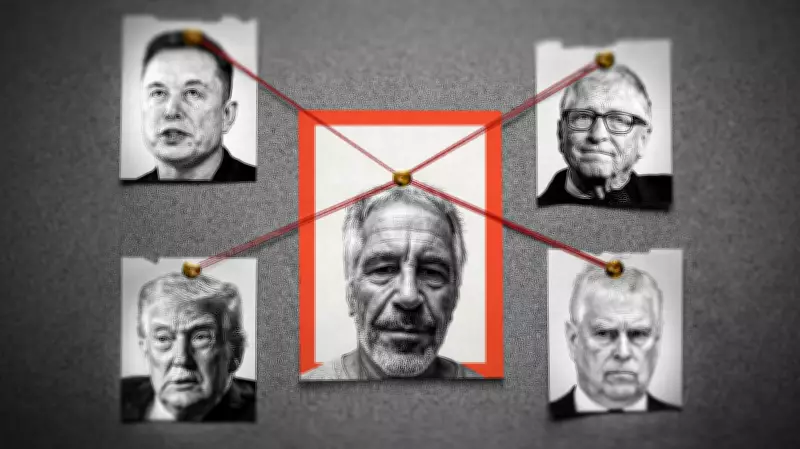
As documents linked to the disgraced financier and convicted sex offender Jeffrey Epstein continue to be released, critics of the Justice Department's approach are increasingly vocal. They argue that redactions in these files often shield powerful individuals rather than protect victims, leading to the emergence of a potent new term in political discourse: "the Epstein class."
A Political Rallying Cry Against Elite Impunity
Senator Jon Ossoff, a Democrat from Georgia, prominently used the phrase in a speech on February 7th. "We were told that MAGA was for working-class Americans. But this is a government of, by, and for the ultra-rich. It is the wealthiest Cabinet ever," Ossoff declared. "This is the Epstein class." He elaborated further, stating, "They are the elites they pretend to hate." Ossoff criticized policies he claims harm rural communities to benefit billionaires, directly naming figures like George Soros and Elon Musk.
The term has circulated for years in online comment sections across platforms such as X, Instagram Reels, and Threads. It attempts to define an uncomfortable social reality: a protective network of immense wealth, mutual favors, and controlled information that allegedly sustained Epstein's criminal enterprises for decades. By 2026, the phrase has permeated public consciousness sufficiently to feature in official political speeches.

Lawmakers Push for Accountability and Transparency
Representative Ro Khanna, a Democrat from California, was among the early political adopters of the term. In a statement, Khanna explained his motivation was to challenge wealthy elites who operate under a perceived different set of rules. "Americans are sick of elite impunity. There cannot be two tiers of justice, where wealthy men who abused young girls are protected while survivors are silenced," Khanna asserted. "That is what the effort to release the Epstein files has been about, and why I started calling it the 'Epstein class.'"
Khanna emphasized the need for sustained public pressure and congressional action, including forming a committee to subpoena individuals connected to Epstein. "They want us to move on, but people need to keep speaking out," he insisted, noting his efforts to engage media across the political spectrum to maintain focus on the issue.
The Linguistic Power of Naming a Social Phenomenon
Josephine Lukito, a professor of digital communication at the University of Southern Denmark who studies political language, observes the term's growing resonance. "Every time the Epstein case comes up, I feel like [the term 'Epstein class'] reemerges more and more," Lukito noted. She described it as having a "catchy quality" that resonates when discussing the case, akin to other impactful phrases like "Me Too" or "Black Lives Matter." These short, adjective-noun combinations, she explained, are particularly effective in American political discourse.
Lukito highlighted that while class is often a complex and loaded topic in the United States, this terminology cuts through by directly linking extreme wealth to abuse of power. "Historically, we talk about the ruling class, the wealthy class, the bourgeoisie class — and so, a lot of times when we do talk about class, it's a really quick indicator for wealth," she said. "I think that really speaks to the uniqueness of the Epstein case in particular."
The professor pointed out that the abusers in the Epstein case are united not by partisanship or profession, but by their immense wealth and its use to exploit children. "Americans recognize that wealth is bipartisan, and wealth contributes to abuse. And 'Epstein class' encapsulates a lot of that," Lukito stated.

Economic Disparity Fuels Public Anger and Term's Traction
Terms like "the Epstein class" help overcome American reluctance to discuss class dynamics by explicitly critiquing the fusion of economic and political power. Lukito connected this to broader public sentiment. "A lot of Americans, especially given economic disparity right now, they have a lot of anger and frustration towards the wealthy and the ruling class," she explained. This rage manifests in various contexts, from healthcare debates to criticism of technology executives and political connections.
Lukito described a widespread, though not fully formed, class consciousness driven by frustration toward wealth extraction. "I don't know if I would go so far as to call it class consciousness, but there's certainly a widespread frustration, hatred, anger towards those who extract wealth and keep it for themselves," she remarked.
Assessing the Term's Longevity and Cultural Impact
For a phrase to achieve lasting significance, Lukito notes it must transcend single platforms or communities, appearing across diverse social media and user groups. Unlike many hashtag-driven movements, "Epstein class" is currently in a more nascent stage, often found in video comments rather than as a centralized hashtag.
The staying power of the underlying news story is crucial. "I think when catchphrases are really powerful, it's because there's a sort of staying power when it comes to the news story that's being covered," Lukito said, citing issues like police brutality or sexual assault. She anticipates the Epstein case will resurface repeatedly, each time potentially boosting the term's popularity.
Ultimately, adoption by prominent public figures like Ossoff and Khanna may be pivotal. "I think when we see that sort of adoption, especially by larger public figures, those are all signs that a term like 'Epstein class' is gaining momentum," Lukito concluded. As files continue to be unsealed and public scrutiny intensifies, this phrase stands as a stark emblem of deepening critiques against concentrated wealth and perceived injustices within the American system.