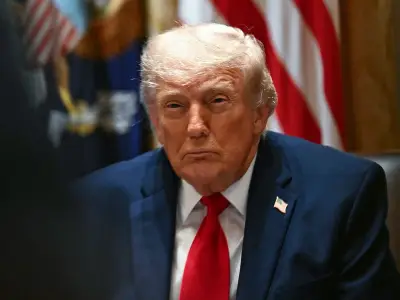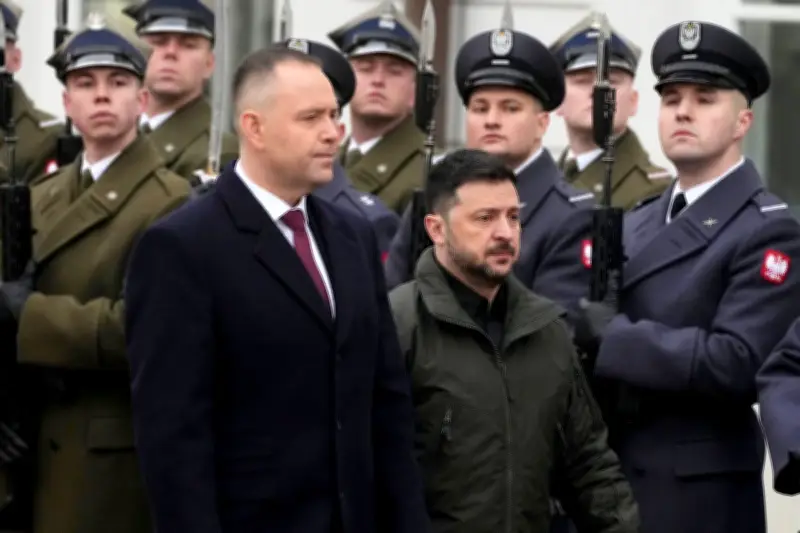
Polish President Karol Nawrocki has revoked a state honor previously awarded to Ukrainian President Volodymyr Zelenskyy, citing the naming of a Ukrainian army unit after a notorious World War II-era group. The decision, announced on June 19, 2026, marks a significant escalation in diplomatic tensions between the two neighboring countries.
Background of the Controversy
The dispute centers on the Ukrainian military's decision to name a unit after the Ukrainian Insurgent Army (UPA), a nationalist formation that operated during WWII. The UPA is widely condemned in Poland for its role in the Volhynia massacre, in which tens of thousands of ethnic Poles were killed between 1943 and 1944. Polish officials and historians view the UPA as a criminal organization, while in Ukraine, some regard it as a symbol of resistance against Soviet and Nazi forces.
Official Reactions
President Nawrocki's office issued a statement explaining that the honor was revoked because the Ukrainian government's actions contradicted the values of mutual respect and historical reconciliation. The statement emphasized that Poland would not tolerate glorification of groups responsible for atrocities against Poles. In response, Ukrainian officials expressed regret over the decision, arguing that the unit's name was chosen to honor all Ukrainian fighters for independence, not to offend Poland.

The move has drawn mixed reactions internationally. Some European leaders have urged both sides to engage in dialogue to prevent further deterioration of relations. Others have criticized Nawrocki's decision as counterproductive to regional stability, especially amid the ongoing war with Russia.
Impact on Bilateral Relations
The revocation of the honor is expected to strain cooperation between Poland and Ukraine on security and economic issues. Poland has been a key ally of Ukraine since the Russian invasion, providing military aid, humanitarian support, and hosting millions of refugees. However, historical grievances have periodically surfaced, complicating the partnership.
Analysts suggest that the incident could affect future joint initiatives, including Ukraine's aspirations to join the European Union and NATO, for which Polish support is crucial. The timing of the dispute is particularly sensitive, as both nations face challenges related to the ongoing conflict and post-war reconstruction.
Historical Context
The Volhynia massacre remains a painful chapter in Polish-Ukrainian relations. In recent years, both countries have made efforts at reconciliation, including joint commemorations and educational programs. However, the naming of the army unit has reignited old wounds, leading to protests in Poland and calls for a more assertive stance from the government.
President Zelenskyy has not publicly commented on the revocation, but his office reiterated Ukraine's commitment to honoring the memory of all victims of WWII and maintaining friendly ties with Poland.