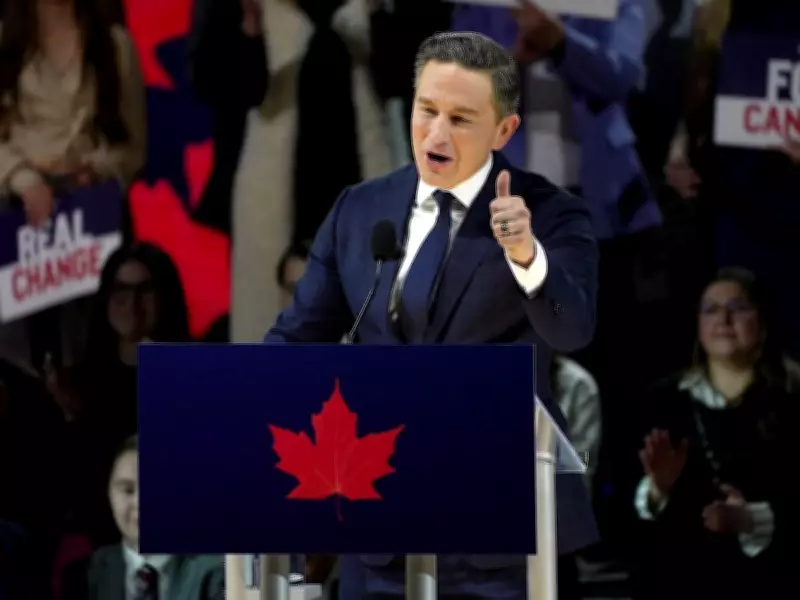
Poilievre's 'Complete Deportation' Gambit Raises Trump Comparisons
Conservative Leader Pierre Poilievre has ignited a political firestorm with his recent video addressing asylum seeker benefits in Canada, employing language that critics argue mirrors the rhetoric of former U.S. President Donald Trump. The controversy centers on Poilievre's call for "complete deportation" of rejected claimants, a phrase that has become politically charged in North American immigration debates.
Healthcare Disparities Fuel Immigration Debate
In his video statement, Poilievre highlighted what he described as preferential treatment for asylum seekers under Canada's Interim Federal Health Program (IFHP). He noted that while 6 million Canadians lack access to a family doctor and specialist wait times average 30 weeks, rejected asylum claimants receive supplementary healthcare benefits including physiotherapy, dental care, and eyecare that many citizens must pay for out-of-pocket.
The IFHP, originally designed to assist refugees fleeing persecution such as during the 2015 Syrian refugee crisis, has expanded significantly due to processing backlogs. Current estimates indicate approximately 300,000 claimants in the system, with program costs projected to reach $1.5 billion annually by 2029-30 for 680,000 eligible beneficiaries.

Conservative Motion Seeks Program Restrictions
Following a Parliamentary Budget Office report detailing these costs, the Conservative Party presented a motion to curb what they characterize as system abuses. The proposal would limit rejected asylum seekers to "life saving emergency care" only and require judges to impose full sentences on foreign nationals who commit crimes in Canada, preventing reduced sentences that could allow them to avoid deportation.
"Enough is enough," declared Poilievre. "We can't allow foreign criminals to take advantage of our system."
Political Timing and Rhetorical Parallels
The timing of Poilievre's statements has raised questions about political strategy. With the Liberal government implementing modest reforms in Budget 2025 requiring claimants or sponsors to pay 30 percent of supplementary care costs and $4 for prescriptions, some observers question why the Conservative leader has chosen this moment to escalate rhetoric.
The most controversial aspect of Poilievre's approach is his adoption of "complete deportation" terminology, which directly echoes language used by Donald Trump during his 2024 presidential campaign. In the current political climate, the word "deportation" has become a lightning rod, evoking images of aggressive immigration enforcement measures.
"You can't talk about this issue, and use the identical vocabulary, without being linked to the current administration in Washington," noted political commentators, suggesting Poilievre's language creates unavoidable associations with Trump's immigration policies.
Strategic Calculations and Party Dynamics
Analysts suggest two possible explanations for Poilievre's rhetorical choices:
- His communications team may have overlooked the Trumpian parallels
- This represents a calculated appeal to Conservative base voters sympathetic to MAGA-style politics
The strategy comes at a delicate time for the Conservative leader. Despite receiving 87 percent support at his party's policy convention, Poilievre recently lost MP Matt Jeneroux to the Liberals and faces internal grumbling about potential extended opposition status if Prime Minister Mark Carney assembles a majority government.
With Liberals holding a 12-point lead in recent polls and the potential for an early election, some observers interpret Poilievre's immigration rhetoric as more about rallying base support than achieving policy reform. Approximately one-third of Conservative voters identify as Trump supporters, suggesting potential political benefits from this alignment.
Broader Implications for Canadian Politics
While concerns about immigration system integrity resonate with many Canadians, the framing of these issues carries significant consequences. The debate raises fundamental questions about:

- How political parties communicate about complex policy matters
- The influence of American political discourse on Canadian politics
- The balance between addressing legitimate concerns and avoiding inflammatory rhetoric
As immigration remains a pivotal issue in Canadian politics, Poilievre's "complete deportation" language represents both a policy position and a political calculation that will likely shape debates in the coming election cycle. The controversy underscores how vocabulary choices can transform policy discussions into broader cultural and political battles with implications extending beyond Canada's borders.