Poilievre Dismisses Carney's Davos Address as Mere Rhetoric
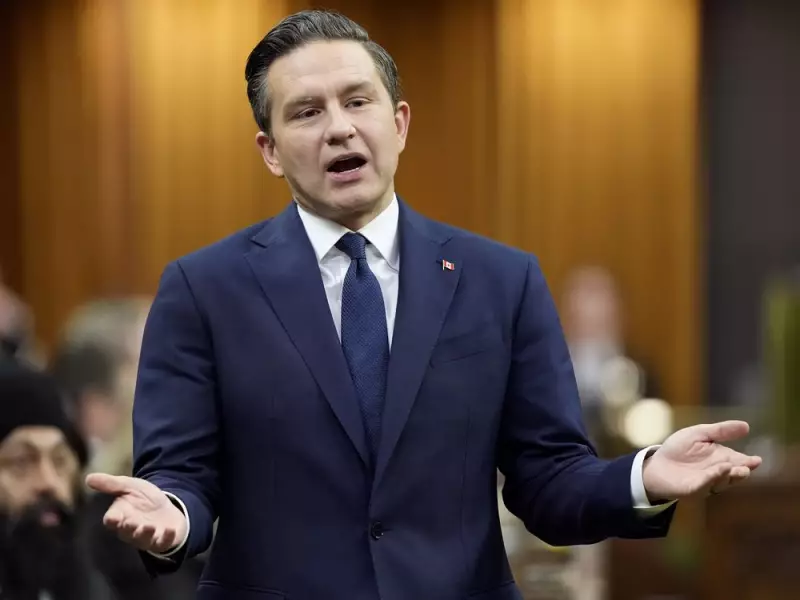
Conservative Leader Pierre Poilievre has launched a sharp critique of Prime Minister Mark Carney's recent address at the World Economic Forum in Davos, characterizing the prime minister as "lucky" to be judged by his rhetoric rather than by concrete achievements. Poilievre's rebuttal comes just days after Carney's speech, which called for middle-power nations to unite against global hegemons, received international acclaim from leaders like Mexican President Claudia Sheinbaum and Australian Treasurer Jim Chalmers.
Substance Versus Style in Political Discourse
In a statement released on Thursday afternoon, Poilievre acknowledged that Carney's speech was "well-crafted and eloquently delivered," but he emphasized that style should not overshadow substance. "So far, Mr. Carney has been lucky that he's been judged by his rhetoric and his stated intention, by the number of his trips and meetings overseas," Poilievre stated. He argued that nearly a year into Carney's term, the reality for Canadians has not improved, despite changes in political rhetoric.
"Because nearly a year into his term, the rhetoric has changed, but reality has not," Poilievre continued. "There is an illusion of purpose, but no results to back it up." This critique highlights a growing tension in Canadian politics, where eloquent speeches are being contrasted with tangible outcomes on domestic and international fronts.

Conservative Caucus Amplifies Criticism on Key Issues
Members of Poilievre's caucus have reinforced this message through social media posts over the past two days, focusing on several areas where they claim the Carney government has failed to deliver. Key points of contention include:
- Pipeline construction: Lack of progress on plans for new infrastructure projects.
- Military capacity: Insufficient bolstering of Canada's defense capabilities.
- Affordability concerns: Ongoing struggles with high food and housing costs for Canadians.
Poilievre pointed out that since Carney became prime minister almost a year ago, issues like rising living expenses and military shortcomings have only "gotten worse." He specifically noted the government's failure to pass proposed Criminal Code reforms and to fulfill Carney's "signature promise" of negotiating a trade deal with U.S. President Donald Trump.
The Enduring Importance of U.S.-Canada Relations
Despite political disagreements, Poilievre underscored the critical nature of Canada's relationship with the United States. "I know it's tempting to say our relationship with America is over forever. But here is the reality: We still live next door to the biggest economy and military the world has ever seen," he said. Poilievre highlighted that Canada sells 20 times more to the U.S. than to China, and one in ten Canadian jobs relies directly or indirectly on trade with America.
This perspective serves as a reminder that diplomatic rhetoric must be paired with practical diplomacy to maintain and strengthen vital international partnerships. Poilievre expressed a willingness to collaborate, stating, "Conservatives are, as always, willing to work with him to turn these words into results."
Broader Implications for Canadian Governance
The exchange between Poilievre and Carney reflects a broader debate about accountability and performance in governance. As Carney's speech resonates globally, Poilievre's critique brings the focus back to domestic concerns, challenging the prime minister to translate his international vision into actionable policies that benefit everyday Canadians. This dynamic sets the stage for ongoing political discourse as both leaders navigate the complexities of leadership in a rapidly changing world.