Poilievre Distances Conservative Party from Jivani's Washington Visit
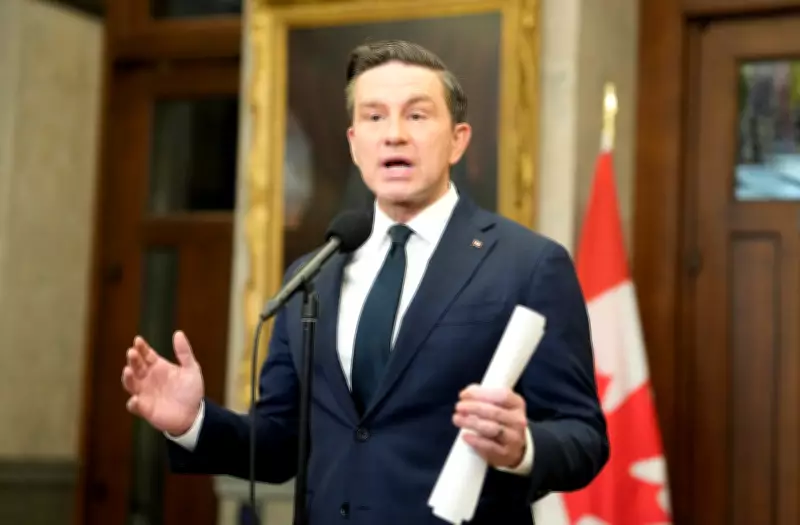
Conservative Leader Pierre Poilievre has publicly addressed the recent trip to Washington by MP Arpan Khanna, emphasizing a clear distinction between individual actions and official party positions. Speaking in the Foyer of the House of Commons in Ottawa on Tuesday, February 17, 2026, Poilievre stated, 'He speaks for himself, and I speak for the party', in reference to Khanna's diplomatic engagement.
Context and Political Implications
The comments come amid heightened political scrutiny, as Khanna's visit to the United States capital has sparked discussions about foreign policy alignment and internal party dynamics. Poilievre's remarks underscore a strategic effort to maintain party unity while acknowledging the autonomy of individual members in their parliamentary roles. This incident highlights the ongoing balancing act within Canadian politics, where personal initiatives by MPs can sometimes intersect with broader party narratives.
Broader Political Landscape
This development occurs against a backdrop of other significant political events, including debates over education funding, public sector job cuts in British Columbia, and various provincial budget announcements. Poilievre's clarification serves to reinforce the Conservative Party's messaging discipline, ensuring that official stances are communicated solely through designated leadership channels. The leader's statement aims to preempt potential misinterpretations of Khanna's trip as representing formal party policy.

Analysis and Future Outlook
Political analysts suggest that such delineations are crucial in maintaining coherent party platforms, especially in the lead-up to future electoral cycles. By explicitly separating Khanna's personal advocacy from the party's collective voice, Poilievre navigates the complexities of modern political communication. This approach may set a precedent for how the Conservative Party handles similar situations involving member-led international engagements moving forward.