The United States has informed its European allies of its plan to significantly cut its military contribution to NATO, according to a report by the German news outlet Spiegel on Tuesday. The Europeans are scrambling to fill the gaps left by departing American warships and fighter jets. However, the ripple effects may extend far beyond Eastern Europe, potentially reshaping Canadian politics.
Potential Shift in Conservative NATO Policy
Could the Conservative Party of Canada adopt a more transactional approach to NATO, proposing to divert resources from Europe to reinforce North America? This would be a logical extension of Conservative Leader Pierre Poilievre's trade and foreign policy, marking a clear departure from Prime Minister Mark Carney's plan to seek deeper integration with Europe.
Canada's Strategic Realignment
Canada has attempted to diversify its alliances by joining the Security Action for Europe defence initiative and signing the Security and Defence Partnership. This has led to speculation that Carney intends to deepen ties, though he has ruled out applying to join the European Union. As the Liberals push Canada into Europe's orbit, it would make sense for the Conservatives to focus on tightening trade and defence ties with the United States.

Conservative Discussions and Arctic Focus
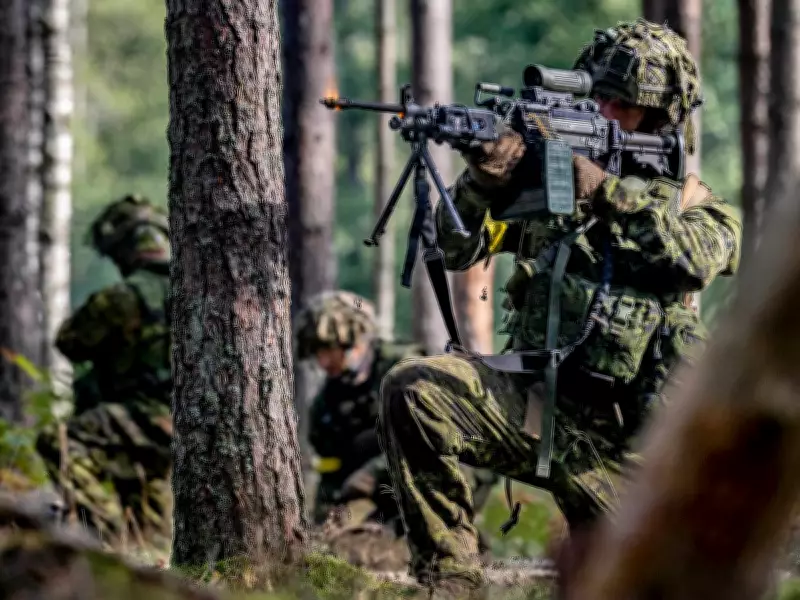
Conservatives suggest that discussions are already underway, as the Canadian-led brigade in Latvia under Operation Reassurance finds itself at the forefront of a potential flashpoint with Russia. In the last election, the Conservatives campaigned on rebuilding Canada's military capacity in the North, including a permanent Arctic base in Iqaluit, while pledging to strengthen alliances with countries sharing Canadian values.
As Carney rejects President Donald Trump's perceived weaponization of economic integration and pivots toward European allies, Poilievre has been far more placatory toward the White House. Last week, the Conservative leader called on Carney to override the CRTC after it sought to force American streaming giants like Netflix to pay more of their Canadian revenues for homegrown content. Poilievre argued that the cost would be passed to consumers and could invite U.S. retaliation, a move that also made him sound more accommodating toward the Americans.
Realism and Geography
“I don't think we're becoming more Trumpian. I think it's about being realistic and recognizing our geography and our own leverage,” said one Conservative MP. In a March speech in New York, Poilievre rejected Carney's claim that relations with the U.S. have been ruptured. “I reject the idea that we can afford to treat the current and real problems as a permanent end to our relationship. They are not. We have an incredible friendship. We live next door to each other and geography is permanent,” he said.
If Canadian troops in Latvia were dragged into another European war, or if Ottawa fails to renew the Canada-United States-Mexico Agreement (CUSMA), a more North American policy could gain favour with voters. Poilievre's strategy may prove shrewd as he backs America's alliance while Carney embraces Europe.