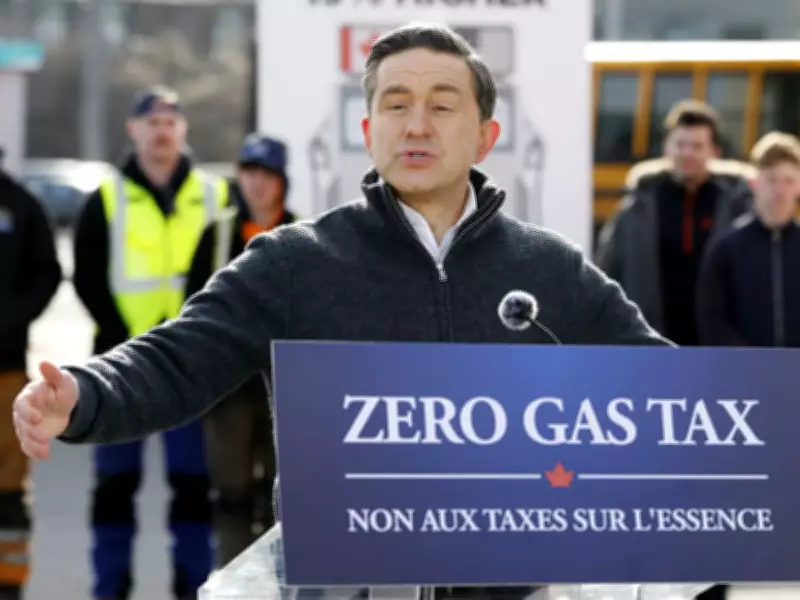
Conservative Party of Canada Leader Pierre Poilievre has issued a forceful demand for the immediate suspension of all federal fuel taxes through the end of 2026. Speaking at a press conference held at an Ottawa gas station on April 2, 2026, Poilievre argued that this drastic measure is essential to provide relief to Canadians who are grappling with rapidly escalating gasoline and diesel costs.
Proposed Tax Suspension Could Slash Prices by 25 Cents per Litre
Poilievre provided specific calculations to support his proposal, stating that eliminating the fuel excise tax, the goods and services tax (GST), and the clean fuel standard would collectively reduce gasoline prices by approximately 25 Canadian cents per litre. This significant reduction would bring Canadian fuel prices more in line with those in the United States, where consumers typically pay less at the pump despite Canada being one of the world's largest oil producers.
Current Price Surge Reaches Historic Proportions
The urgency of Poilievre's call comes against the backdrop of unprecedented fuel price increases across Canada. According to data from the Canadian Automobile Association, the current national average price for gasoline has reached about $1.78 per litre. This represents a staggering 35 percent increase from just one month ago, translating to nearly US$5 per U.S. gallon.

Bank of Montreal economists have confirmed that March 2026 witnessed the largest monthly percentage increase in Canadian gasoline prices since records began in 1950. This historic surge has placed tremendous financial pressure on households and businesses nationwide.
Poilievre Attributes High Costs to Government Taxation Policies
While acknowledging that recent price spikes have been exacerbated by shipping disruptions in the Strait of Hormuz following the war in Iran, Poilievre placed primary blame on long-standing government policies. "To be fair, the recent increase in gas prices is the result of the war in Iran," Poilievre told reporters. "But the long-term high costs in Canada are the result of Liberal taxes."
The Conservative leader's comments reflect his party's ongoing criticism of the current government's approach to taxation and energy policy, positioning fuel costs as a central economic concern for Canadian voters.
Government Response and Broader Economic Context
Prime Minister Mark Carney's administration has not yet announced any specific measures targeting gasoline prices directly. However, in January 2026, the government did increase the goods and services tax credit for lower-income Canadians, framing this move as assistance with rising grocery costs.
The debate over fuel taxation occurs within a complex economic landscape where global market forces, geopolitical tensions, and domestic policy decisions intersect. Poilievre's proposal highlights the growing political pressure on the federal government to address cost-of-living concerns as Canadians face what may become a prolonged period of elevated energy expenses.