Hungary's Orbán Concedes Defeat in Historic Election After 16 Years in Power
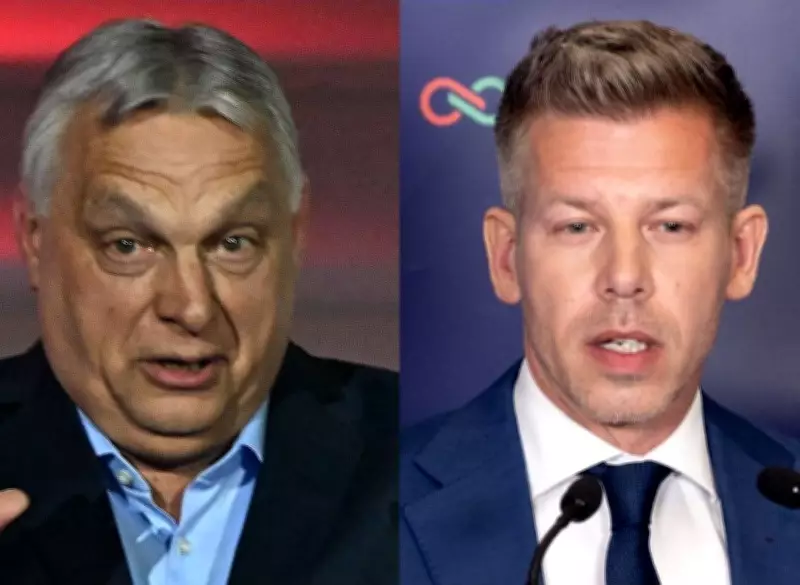
In a monumental political shift, Hungary's long-serving Prime Minister Viktor Orbán has conceded defeat in the country's parliamentary election, ending his 16-year tenure. The upstart Tisza party, led by Peter Magyar, secured a decisive victory that will redefine Hungary's domestic policies and international relationships.
Super Majority for Change
Peter Magyar's Tisza party was headed for a supermajority in parliament, according to partial results released by the Election Office in Budapest on Sunday. With 67 percent of votes counted, Tisza had captured 69 percent of parliamentary mandates compared to just 28 percent for Orbán's Fidesz party.
This commanding majority will enable the new government to deliver on its bold promises to dismantle what Orbán had proudly called his "illiberal system" - a political framework that had drawn both domestic criticism and international scrutiny.

Orbán's Concession and Market Reaction
Orbán acknowledged his defeat in emotional remarks to supporters, describing the election result as "painful" while confirming he had congratulated Magyar on his victory. The political transition was immediately reflected in financial markets, with the Hungarian forint extending a months-long rally against the euro following the publication of partial results.
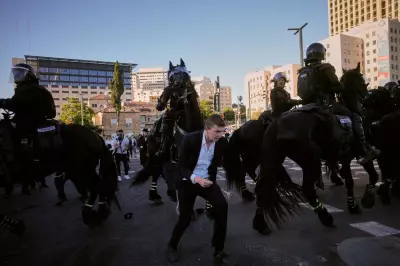
The 45-year-old Magyar, a former ruling party insider, had galvanized the country over the past two years with his message of change in the face of what many perceived as an increasingly authoritarian regime. As election results trickled in, spontaneous celebrations erupted across Budapest, with drivers honking horns in celebration along the Danube river.
International Implications
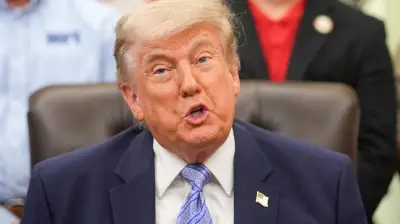
The election outcome represents a significant blow to both former U.S. President Donald Trump and Russian President Vladimir Putin, who had actively sought to maintain Orbán's position as the European Union's longest-serving prime minister. Trump had repeatedly endorsed Orbán and dispatched Vice President JD Vance to Budapest for campaign appearances just days before the vote.
Putin had relied heavily on the Hungarian leader to sow division within the EU, block aid to Ukraine, and dilute sanctions against Moscow. Orbán's ouster now likely paves the way for the release of approximately €90 billion (US$106 billion) in assistance that Ukraine desperately needs to continue its defense against Russia's ongoing invasion.
European Commission President Ursula von der Leyen welcomed the results, stating on social media: "Hungary has chosen Europe. Europe has always chosen Hungary. Together, we are stronger."
End of an Era
The election marks a defeat for the nationalist camp in Europe, where Orbán had served as both trailblazer and driving force behind the Patriots party, currently the third-largest faction in the European Parliament. In Hungary itself - once celebrated as a poster child for the transition from communism to market democracy - the impact of Sunday's elections will be most profoundly felt.
Magyar successfully tapped into growing public anger over cronyism, economic stagnation, and rapidly deteriorating public services to challenge and ultimately break Orbán's stranglehold on power. The former prime minister's political journey had taken him from liberal, anti-communist student leader in the 1980s to center-right conservative prime minister in 1998 at age 34, before returning to office in 2010 as a pro-Kremlin nationalist determined to reshape Hungary's democratic institutions.
What Comes Next
Magyar campaigned on a pledge not merely to oust the populist icon but to dismantle his entire political system. With Tisza appearing to have surpassed the 133-seat threshold necessary for a two-thirds parliamentary majority, fulfilling that promise has become significantly more manageable. The party now faces the monumental task of implementing its reform agenda while navigating Hungary's complex relationships with both European partners and global powers.
This historic transition represents one of the most significant political shifts in Central Europe in decades, with implications that will reverberate across the continent and beyond as Hungary charts a new course under fresh leadership.