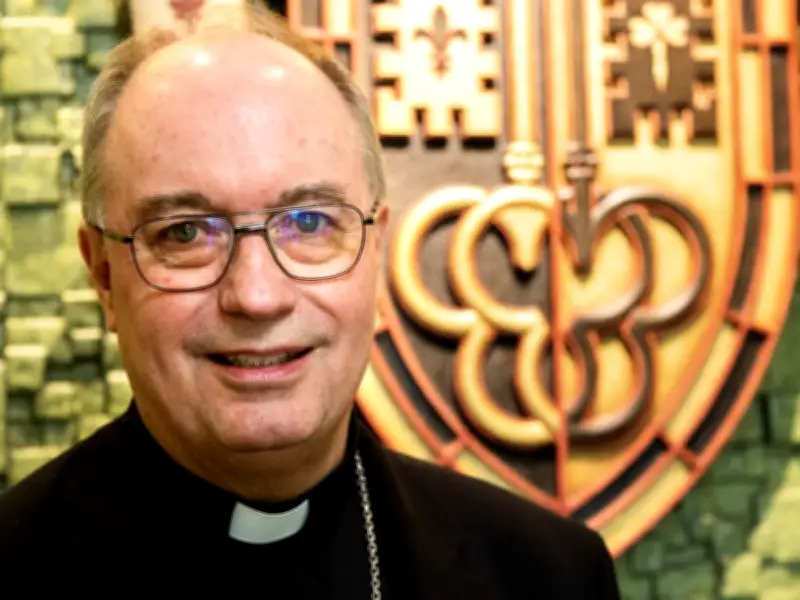
Rev. Daniel Miehm is preparing to become bishop of the Roman Catholic Diocese of London on June 29, serving about 400,000 Southwestern Ontario worshippers. Miehm spoke with LFP's Ryan Goodison about his new role and the challenges ahead.
Tenure and Age
When asked if he expects to serve as long as his predecessor, Bishop Ronald Fabbro—who led the diocese for 24 years—Miehm replied, "No, because I'm too old. Bishop Fabbro was ordained and installed at quite a young age, and I've already hit my mid-60s. So, if God graces me, I think I've got about 10 years to serve in the Diocese of London. It won't match the duration of Bishop Fabbro by a long shot, but if my health holds out, it'll be long enough for a really good and fruitful ministry in London."
Adapting from Peterborough
Miehm previously led the Diocese of Peterborough. He noted that while every diocese shares similar ministries, each has unique features. "In Peterborough, I had the chance to work closely with priests and a good lay staff, and I know I'll have that in London as well. One thing I'll have to adapt to is the size and scale of London. It's about four times the number of Catholics."

Challenges Facing the Church
Miehm identified secularism as a major challenge. "We live in a society where secularism seems to be advancing, and yet we are seeing hopeful signs of people interested in the faith. We're seeing more young families coming to the church and learning more about the life of faith, but we have to proclaim the good news of Jesus Christ in a more secular surrounding these days."
Priorities and Pastoral Approach
Miehm emphasized his people-oriented nature. "I'm looking forward to meeting people and getting out to the parishes, especially on weekends and Sundays. To celebrate mass with people, meet groups and interact with the priests. I think it's the most important thing that a bishop can do. Both Pope Francis and Pope Leo emphasized this idea of pastors who are close to the people and accompany them."
Technology and Human Connection
Reflecting on declining religious connection, Miehm said, "I think we've seen a real advance of technology in the last 20 years, and you don't want to blame everything on technology. But I do think the advent of the internet and social media has taken away a little bit from that person-to-person kind of contact, and I think churches have suffered from some of that. But I think we're starting to see a reverse trend in which people are realizing the need for more human interpersonal contact."
Engaging Young People and Families
Miehm stressed the importance of engaging entire families. "If we're going to tackle this, you can't just focus on young people apart from families. You have to find a way to engage entire families when children are younger and then have youth ministry be an outgrowth of that. Family is the bedrock of society and the bedrock of the church." He also highlighted the role of campus ministry: "Effective campus ministry can have a big impact on the lives of young people, and that's something where we need to put a lot of attention and resources."